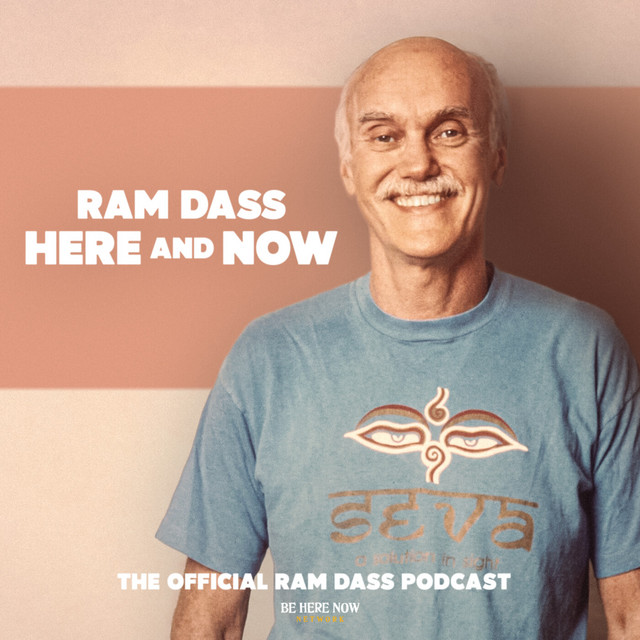
In this brief teaching, Ram Dass and collaborator Bogdan Djukic explore the practice of "being yourself" — not as a self-help slogan, but as a spiritual discipline of authentic presence within community. The video, filmed in Tulum, addresses how genuine connection emerges when we release performative layers and show up as we actually are, making it relevant for anyone navigating relationships, group settings, or spiritual gatherings.
What Does It Mean to Be Yourself in Spiritual Practice?
Ram Dass has long taught that spiritual awakening involves peeling back the accumulated layers of conditioning, defense, and persona that we've built up since childhood. "Being yourself" in this context is not simply doing whatever you want or indulging every impulse — it's a disciplined return to your essential nature, stripped of pretense. This is particularly challenging in group settings, where social conditioning tells us to monitor ourselves, adapt, and present a curated version of who we are.
The teaching points toward a paradox: the more we try to be someone we think others want us to be, the more disconnected we become from genuine connection. Others sense the performance, even if unconsciously, and respond to the mask rather than the person wearing it. True presence, by contrast, creates a field of permission around others — when one person shows up authentically, it becomes safer for others to do the same.
Why Is Presence More Important Than Perfection?
In spiritual communities and retreats, there's often an unspoken hierarchy of enlightenment or spiritual advancement. Ram Dass's teaching in Tulum challenges this: the most powerful offering isn't a perfectly composed version of yourself or a display of spiritual credentials. It's your actual presence — your willingness to be seen, to stumble, to be uncertain, to laugh at yourself, and to show up for others from that authentic place.
This is especially relevant in retreat settings like Tulum, where people gather with the hope of experiencing something real. That reality doesn't come from teachers performing wisdom or participants pretending they're further along the path than they are. It comes from the collective decision to drop the act and meet each other human-to-human.
How Does Authenticity Transform Community?
When you bring your actual self into a room — your doubts, your quirks, your humanity — you create an implicit permission structure. Others unconsciously recognize this vulnerability and reciprocate. Over time, a gathering shifts from a collection of individuals managing impressions to a genuine community where real exchange can happen.
This has practical implications: conflicts get resolved more directly, learning deepens because people ask genuine questions rather than performing understanding, and the joy in the space becomes tangible rather than forced. The teaching suggests that one of the most profound spiritual contributions you can make is simply to stop pretending and start showing up.
What About Fear of Being Judged?
The resistance to being yourself in community typically stems from fear: fear of rejection, judgment, or exposure. Ram Dass's approach doesn't deny these fears; it acknowledges them and suggests moving through them anyway. This isn't about reckless oversharing or burdening others with your unprocessed material. Rather, it's about bringing your genuine self — including your vulnerabilities and uncertainties — into the space with discernment and care.
Part of the spiritual path involves recognizing that the judgment you fear from others is usually the judgment you carry from yourself. When you relax your grip on the need to be perfect in others' eyes, you also relax the grip of your own inner critic.
Where to Go From Here
Consider where in your life you're performing rather than being present. Where do you monitor yourself most intensely? In what settings do you feel safest dropping the mask? These are not problems to solve but invitations to practice. Start with small moments: a conversation where you say what's actually true rather than what you think you should say, a gathering where you show up as you are rather than as your best version. Notice what happens to the quality of connection. The spiritual teaching here is that authenticity, practiced consistently, becomes a gift to everyone around you — including yourself.