What Is Sonic Technology and How Do Ancient Cultures Use It?
At the core of this live set sits a profound observation about indigenous cultures and their relationship to sound. Native cultures historically developed sound technologies—chanting, drumming, rattling—not primarily for entertainment but as empirically refined methods to induce non-ordinary states of consciousness. Rather than haphazard practice, these cultures engaged in what might be called sonic engineering: they observed which rhythmic patterns, frequencies, and timbral combinations produced the deepest trance states, and they refined these methods over generations.
This wasn't mystical guessing. Indigenous sound practitioners understood, long before neuroscience confirmed it, that certain rhythmic patterns could alter brain synchronization and desynchronization. Drumming patterns, for example, don't just produce pleasant sounds—they create specific neural cascades that shift consciousness away from ordinary waking awareness toward states of absorption, dissolution of ego boundaries, and access to different layers of perception.
How Does Electronic Music Mirror Ancient Sonic Ritual?
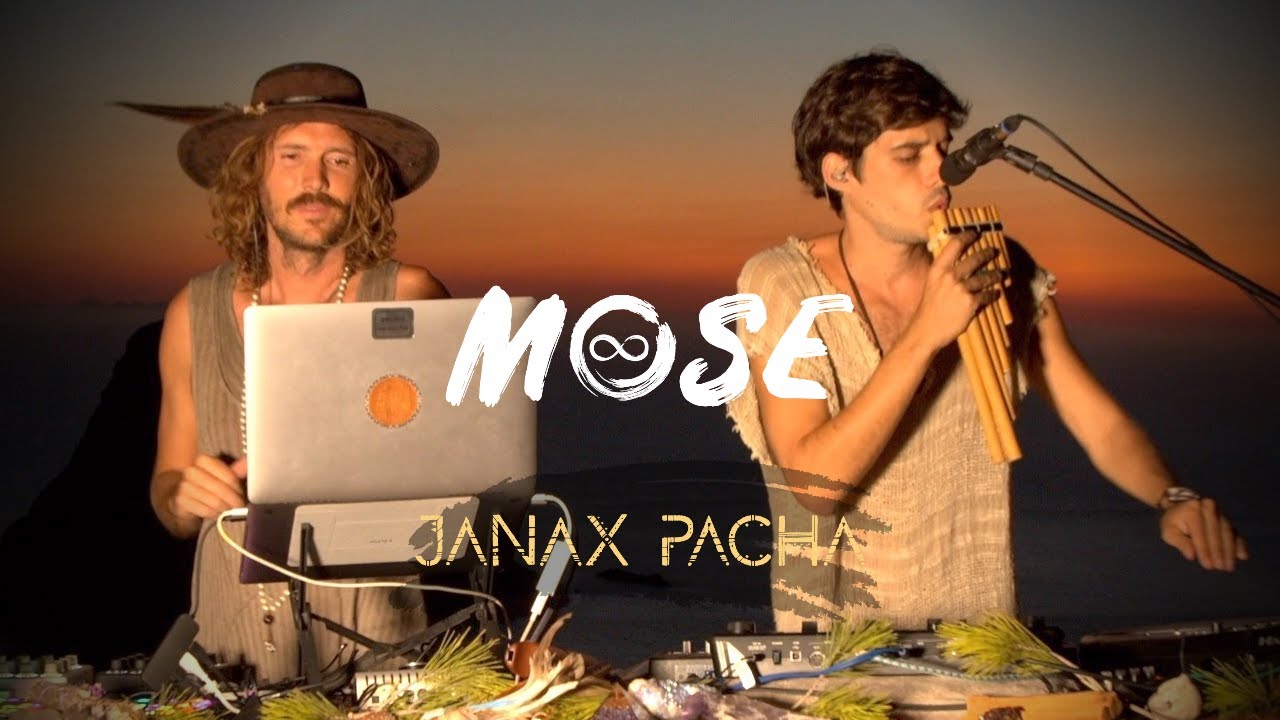
The distinction Mose's performance illustrates is crucial: while most contemporary electronic music is designed first and foremost to entertain audiences, there exists a parallel lineage that treats electronic production as modern sonic ritual. Rather than abandoning the ancestral knowledge embedded in indigenous sound practices, this approach translates that wisdom into contemporary sonic languages—synthesizers, frequency modulation, layered ambient textures, and digital processing become the modern tools for what drumming and rattling once accomplished.
The live set demonstrates this through deliberate compositional choices. The opening incorporates a drone by Sheila Chandra layered with a quote from Stanislav Grof, the pioneering consciousness researcher. This isn't random pairing; it signals the performance's intention: to work with consciousness itself through sound. The drone serves as a sonic anchor—a stable, unchanging frequency around which other elements orbit—much as a rhythmic pulse in a traditional drum circle provides the foundation for group trance induction.
What Role Does Rhythm Play in Altering Brain States?
Rhythm isn't decorative in sonic ritual; it's functional. Specific tempos and polyrhythmic patterns can entrain brainwave frequencies, pulling listeners' neural activity toward particular frequency bands associated with deep meditation (theta waves) or heightened receptivity (alpha waves). Indigenous cultures discovered empirically that 4-5 beats per second, or slightly slower, tends to produce profound trance states—a frequency window that corresponds to theta brainwave activity.
In electronic music designed with this knowledge, production choices become precision tools. A repetitive kick drum, subtle synth pulse, or layered rhythmic pattern maintains this entrainment over extended periods, allowing a listener's nervous system to gradually relax ordinary vigilance and surrender into a different mode of awareness. The live performance structure—extending single pieces across many minutes—gives brainwave entrainment time to deepen, similar to how a traditional ceremonies might sustain drumming for hours.
How Do Vocal Elements and Samples Deepen the Experience?
Beyond rhythm, the performance incorporates vocal samples and chanting elements—fragments like "I am the Sun so high above, I am the sky"—which function similarly to how mantras or chants operate in traditional practice. Vocal frequencies and specifically chosen words create their own resonance in the body and nervous system. When a vocal phrase repeats within the sonic texture, it becomes a mantra-like element, anchoring attention and intention even as the instrumental layers shift.
The inclusion of Sheila Chandra's opening drone, which carries spiritual weight through its pedigree and context, signals the performance's commitment to this deeper layer of work. A drone is perhaps the most "timeless" sonic element—it exists across cultures and eras precisely because a single sustained tone or pitch creates a field of resonance that quiets mental chatter and focuses consciousness inward.
What Is the Purpose of Extended, Immersive Soundscapes?
One critical difference between entertainment music and ritual music is duration and immersion. Entertainment music typically follows three-to-five-minute song structures designed around attention spans and radio formats. Ritual music, by contrast, often requires extended exposure to achieve its neurological and psychological effects. A trance state doesn't typically arise in 90 seconds; it emerges through 15, 30, 45 minutes of consistent sonic pressure that gradually dissolves the listener's resistance and boundaries.
The performance structure—stretched across 86 minutes—reflects this understanding. Rather than cycling through novelty and variation to hold attention, the music creates deep immersion through repetition, gradual evolution, and hypnotic development. Layers introduce themselves slowly, dissolve, re-form. A listener doesn't track discrete "songs" but instead experiences a continuous sonic journey where clock time becomes irrelevant and interior space opens.
How Do Frequency and Timbre Work as Consciousness Tools?
Beyond rhythm and repetition, the specific frequencies and timbral qualities of electronic production act as consciousness shaping forces. Certain frequencies are associated with particular states: very low frequencies (below 20 Hz, infrasound) can induce feelings of awe, unease, or dissolution of boundary. Mid-range frequencies carry different qualities; high frequencies above 10 kHz create brightness and openness. A skilled producer carefully shapes the frequency content to guide consciousness in particular directions.
The production quality and clarity of electronic music offer advantages over acoustic ritual instruments in this regard: precise frequency control, layering of multiple timbral colors, and subtle modulation become possible in ways traditional drums cannot match. Yet the principle remains the same: sound shapes the inner landscape of the listener's awareness.
What Does "Meeting Yourself" in Meditation Mean in This Context?
A key phrase emerges in the performance's quoted material: "that silent moment when you meet yourself, bound by neither mind nor thought." This phrase, drawn from contemplative traditions, describes a specific state of consciousness that can arise in deep meditative or trance conditions. When ordinary mental chatter quiets—when the inner voice that constantly narrates experience falls silent—what remains? Not emptiness, but a different quality of awareness, a presence that isn't thinking about itself but simply is.
Sonic ritual creates conditions for this meeting. By occupying the mind's auditory attention with repetitive, non-complex patterns, the conscious mind becomes less demanded of; the deeper layers of awareness can surface. In this state, one may experience what traditions call the "witness"—a quality of consciousness that observes without the filter of personal identity, thought patterns, or reactivity. The quoted line "slowly, gently you slip into infinite space" describes this dissolution of spatial boundaries that can accompany such states.
Where to go from here
To explore electronic music as sonic ritual, listen with intention rather than as background. Create a dedicated listening space—darkness, minimal visual stimuli, seated or lying comfortably—and allow extended pieces to work over time rather than sampling briefly. Investigate the lineage of electronic artists who draw explicitly from shamanic and ritual traditions: artists who consider consciousness work, not mere entertainment, as their primary intention. Explore the neuroscience of binaural beats and frequency entrainment to understand the mechanics beneath the art. Consider how your own musical practice might integrate this understanding—whether as a listener, a creator, or both. Finally, recognize in your body what indigenous cultures already knew: sound shapes consciousness, and when applied with intention and care, it becomes one of the most direct technologies we have for collective and individual transformation.