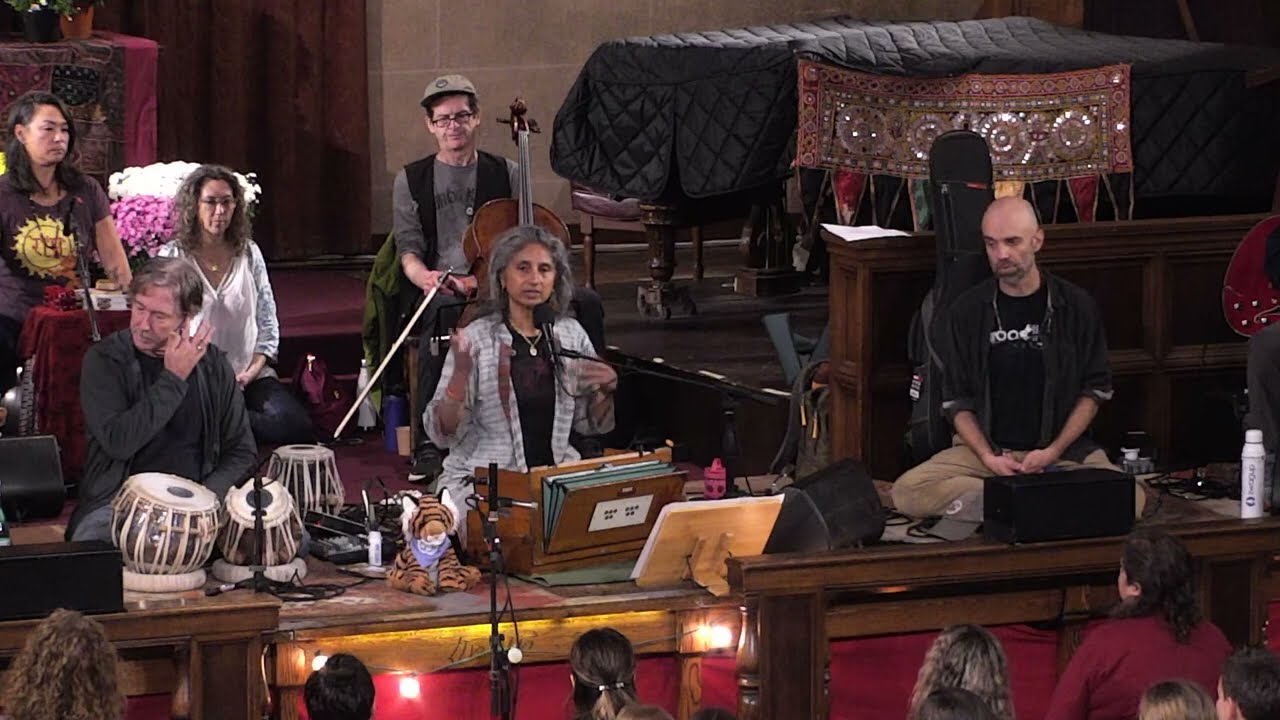
The Linga Bhairavi Arati is a Sanskrit devotional chant offering to Devi—the Divine Feminine—consisting of three powerful mantras sung by Sadhguru. The arati describes Linga Bhairavi as an exuberant expression of divine power that is simultaneously fierce and compassionate. The practice serves as an offering to the Devi and creates an opening for the practitioner to receive her grace. The mantras invoke qualities of transcendence, divine form, compassion, and sanctity, traditionally sung during Navratri as a means of aligning oneself with the sacred feminine principle.
What is the Linga Bhairavi Arati?
The Linga Bhairavi Arati is a consecrated devotional chant comprised of three Sanskrit mantras dedicated to Devi—the goddess embodying the Divine Feminine. An arati itself is an ancient Hindu ritual of worship in which an offering is made to the divine, often involving light, sound, and intention. In this case, the arati takes the form of sung mantras that serve a dual purpose: as an offering to the Devi and as a vehicle for making the individual practitioner available to her grace.
Consecrated by Sadhguru, these chants describe the manifold qualities of Linga Bhairavi Devi. The name itself carries significance—Bhairavi derives from Sanskrit roots meaning fierce and powerful, while Linga refers to the non-dual principle or formless divinity. Together, Linga Bhairavi represents the dynamic, untamed, and compassionate expression of the ultimate divine principle.
Who is Linga Bhairavi and what does she represent?
Linga Bhairavi is understood in yogic and tantric traditions as an exuberant expression of the Divine Feminine—one that holds both tremendous power and deep compassion. She is not the soft or passive feminine, but rather the fierce, all-consuming, transformative aspect of the divine. This duality is central to her significance: she is simultaneously powerful and roudra (fierce), yet her grace flows with infinite compassion.
In Hindu and yogic cosmology, the Divine Feminine represents the active, dynamic principle of creation and dissolution. While often depicted with fierce features or in wrathful form, this fieriness is not malevolent—it is the power to consume ignorance, transform resistance, and awaken consciousness. The compassion paired with this ferocity ensures that her power serves the evolution and liberation of those who open to her.
The arati invokes these qualities explicitly in its mantras, calling upon Devi to recognize the devotee and offer her grace. This recognition and acceptance by the divine feminine is considered essential for spiritual growth and transformation.
What do the Linga Bhairavi Arati mantras say?
The lyrics of the arati are composed in Sanskrit and carry layers of meaning. The primary mantra invokes:
"Hey Devi… Ati Mahima Yute Bhairavi / Sada Roudra Vadana Yuta Moorte / Svikuru Mam Tava Nissima Karuna Katakshe / Savinayam Tava Pavana"
Breaking down the Sanskrit:
- Ati Mahima Yute Bhairavi: "O Bhairavi adorned with supreme greatness"—this invokes the transcendent majesty and supreme glory of the Devi.
- Sada Roudra Vadana Yuta Moorte: "Your form is always fierce"—acknowledging the fierce, untamed, and powerful aspect of her divine form. Roudra refers to the fierce manifestation of divinity.
- Svikuru Mam Tava Nissima Karuna Katakshe: "Accept me in your infinite compassion and grace"—a direct invocation for the Devi to recognize and accept the devotee. Katakshe refers to a glance of grace, the moment when the divine sees and blesses the seeker.
- Savinayam Tava Pavana: "Your purifying, sacred presence"—acknowledging the sanctifying power of the Devi to cleanse and elevate consciousness.
The mantra sequence moves from invoking greatness to acknowledging fierce power, then requesting acceptance and grace, and finally honoring the purifying nature of the divine principle. This progression creates a complete arc of devotional offering.
How does the arati function as a spiritual practice?
The Linga Bhairavi Arati is more than recitation—it is a structured practice of devotion. When sung with intention, the arati operates on several levels simultaneously. First, it is an offering: the devotee offers their voice, attention, and intention to the divine. This act of offering dissolves the boundaries between the individual and the sacred, creating an opening for grace to flow.
Second, the vibration and meaning of Sanskrit mantras are designed to attune the nervous system and consciousness to specific frequencies. Sanskrit is considered a vibrational language in yogic science, where the sounds themselves carry and transmit energetic qualities. When sung, the mantras create an internal resonance that begins to reorganize the practitioner's energetic and psychological state.
Third, the arati creates availability. By consciously calling upon the Devi and inviting her grace, the practitioner signals their willingness to receive transformation. This receptivity is crucial—without it, even if grace is present, the individual remains closed off. The arati is the act of opening that door.
Traditionally, the Linga Bhairavi Arati is sung during Navratri, the nine-day festival honoring the Divine Feminine in her various manifestations. During this period, the veil between the human and divine is considered thin, and practices performed with sincerity carry amplified potency. However, the arati can be sung at any time as a daily devotional practice to maintain alignment with the sacred feminine principle.
Why is Navratri significant for chanting this arati?
Navratri, meaning "nine nights," is a sacred Hindu festival celebrating the Divine Feminine in nine different forms across nine days. Each day honors a different aspect of Devi—from the warrior goddess Durga to the abundance-granting Lakshmi to the wisdom-bestowing Saraswati. This progression moves through different dimensions of the divine feminine's power.
The Linga Bhairavi Arati is particularly resonant during Navratri because it invokes the fierce, untamed, protective aspect of the Devi—the force that destroys ignorance and protects the seeker on their spiritual path. By chanting the arati during this festival period, practitioners align themselves with the heightened frequency of divine feminine energy that is naturally more accessible during these nine days.
The practice also creates a collective resonance when performed by communities together, amplifying the energetic impact of the mantras and deepening the opening for grace.
What is the intended outcome of practicing the Linga Bhairavi Arati?
The ultimate aim of the arati is not merely emotional comfort or temporary peace, though these may arise. Rather, the practice is designed to create a fundamental shift in the practitioner's relationship with the divine and with their own consciousness. By repeatedly offering oneself to the Devi and invoking her grace, the individual gradually dissolves the separation between self and source.
The fiercer, more untamed aspect of the Devi invoked in this arati is particularly powerful for burning away illusions and obstacles. Her grace, paired with her fierce power, serves to awaken dormant potential and clarify the path toward liberation. Practitioners who engage consistently with this arati often report increased clarity, reduced resistance to spiritual growth, and a deeper sense of being held and guided by a force greater than the personal ego.
The practice is an invitation—not a demand or bargain with the divine. The Devi's grace cannot be earned or purchased; it can only be invited and received. The arati is the devotee's way of saying: "I am here, I am open, I recognize your power, and I welcome your presence in my life."
Where to go from here
To engage with the Linga Bhairavi Arati, approach it as a daily devotional practice during Navratri or year-round. Begin by listening to the chant sung by Sadhguru to absorb the correct pronunciation and rhythmic quality. Then, learn the Sanskrit lyrics so you can sing them yourself—the act of producing the sounds yourself deepens the impact far more than passive listening alone.
For those new to Sanskrit mantras, understand that perfect pronunciation comes with practice and sincerity matters far more than technical precision. Even a stumbling attempt offered with genuine devotion carries potency. Consider establishing a consistent time each morning or evening to chant the arati, creating a sacred container within your day for this practice.
If you are drawn to the deeper dimensions of devotion and the yoga of the Divine Feminine, explore other practices from the Isha Yoga tradition that work with divine feminine principles. Study the tantric and yogic texts that describe the nature of Shakti—the primordial feminine energy—to deepen your intellectual and experiential understanding. Above all, approach the practice with openness rather than doubt, recognizing that spiritual grace operates through the gateway of receptivity.