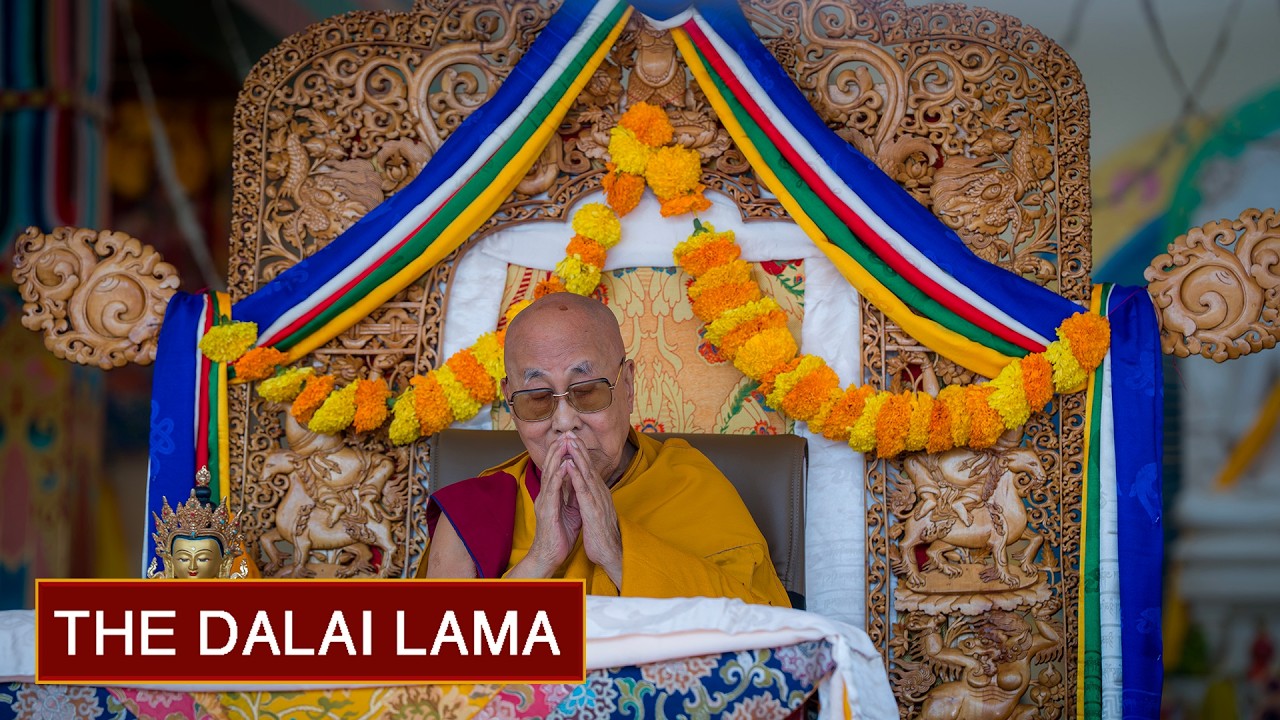
In this brief but profound video message, Sharon Salzberg offers a heartfelt birthday tribute to His Holiness the Dalai Lama on his 80th birthday. The message centers three interconnected themes: gratitude for the Dalai Lama's decades of spiritual teaching and humanitarian work; a wish for his continued health and long life; and a recognition that the fruits of his work extend far beyond himself to countless beings worldwide. Rather than focusing on doctrine or technique, Salzberg's message emphasizes the ripple effect of compassion—how one person's commitment to spiritual practice and service creates lasting benefit across generations and continents.
What Does a Life Dedicated to Compassion Mean?
Sharon Salzberg's birthday greeting is not a casual well-wish but a recognition of what sustained spiritual commitment looks like across eight decades. The Dalai Lama's work—teaching, writing, engaging in interfaith dialogue, and advocating for nonviolence and human rights—represents a lifetime of translating internal spiritual practice into external action. Salzberg, herself a pioneering teacher of loving-kindness meditation in the West, understands intimately what it means to dedicate one's life to reducing suffering. Her gratitude is directed not at a distant figure but at a fellow practitioner whose choices have shaped the global conversation around compassion and mindfulness.
The phrase "thank you for everything you do" acknowledges both the visible work—the teachings, the books, the public advocacy—and the invisible work of spiritual practice that underlies it. In Buddhist traditions, both inner cultivation and outer service are considered essential. The Dalai Lama's long career demonstrates that these two dimensions of practice are inseparable.
Why Does Wishing Someone Long Life Matter in Spiritual Practice?
Salzberg's wish that His Holiness "continue to have long life and good health" is not merely sentimental. In Buddhist and contemplative traditions, the wish for someone's longevity when they are engaged in meaningful work is a form of compassionate action in itself. It reflects the recognition that continuing presence matters. The Dalai Lama's voice, teachings, and example have value to countless people—both those who have encountered him directly and those who benefit from the cultures, institutions, and teachings he has influenced.
This blessing also contains an implicit acknowledgment of vulnerability and interdependence. A long life does not happen by accident; it depends on health, circumstance, and community support. By publicly extending this wish, Salzberg invites others to do the same, creating a collective intention for the Dalai Lama's wellbeing.
How Does Individual Practice Create Benefit for Many Beings?
The concluding line—"May many beings enjoy the fruits of your work"—points to a principle central to both Salzberg's and the Dalai Lama's teaching: that individual transformation ripples outward. The Dalai Lama's own meditation practice, his emotional regulation, his ethical commitments, and his intellectual honesty have shaped his public impact. His writings on compassion, his dialogues with scientists about the nature of mind, his consistent nonviolent stance on geopolitical issues—these all flow from internal cultivation.
Salzberg, who founded the Metta Institute and has spent decades teaching loving-kindness meditation, knows that the fruits of practice are not private. When one person genuinely develops compassion, patience, and clarity, those qualities affect how they move through the world. They change conversations, influence institutions, and provide models that others can follow. The Dalai Lama's particular fruits include generations of Western students of Buddhism, interfaith initiatives, scientific research on meditation and wellbeing, and a consistent voice for ethical action in response to suffering—all traceable to his own practice and commitment.
What Is the Significance of a Global Celebration Around Compassion?
The video's call to action—inviting people to share their own messages of compassion using #withcompassion—transforms a birthday tribute into a collective practice. Rather than treating the Dalai Lama's milestone as an isolated celebration, Salzberg frames it as an opportunity for a global recognition of compassion itself. This echoes the Dalai Lama's own emphasis on the universality of compassion as a human capacity, not a religious monopoly.
By encouraging others to post their own messages, the campaign extends beyond praise for one individual. It invites participants to reflect on what compassion means to them, to consider how they might cultivate it, and to recognize that this work is something humanity can do together. Salzberg's 15-second message thus becomes a seed for others' practice and intention-setting.
Where to Go From Here
If you are interested in exploring the concepts Salzberg references, consider beginning with her own written work on loving-kindness meditation, particularly Lovingkindness: The Revolutionary Art of Happiness. To engage with the Dalai Lama's teaching directly, his books Ethics for the New Millennium and The Art of Happiness (co-written with psychologist Daniel Goleman) offer accessible entry points. For a contemplative practice that aligns with Salzberg's message, guided loving-kindness meditations are widely available through apps, recordings, and Buddhist centers. Finally, consider what it might mean to extend a genuine wish for someone's wellbeing and notice what arises internally when you do so—this simple gesture is itself a form of compassion practice.