EveryEvent Barcelona

Alle Events durchsuchen

Find every event in Barcelona

events

Concerts & Live Music
Festivals
Sports & Recreation
Food & Drink
Arts & Culture
Community
Family & Kids
Nightlife
Comedy
Theater
Beliebte Reiseziele
BaliSedonaLos AngelesCosta RicaNew YorkSan FranciscoAustinMiamiJoshua TreeTulum
Alle Kategorien anzeigenAlle Reiseziele anzeigen

Alle Funktionen entdecken

Leistungsstarke Tools für Ihre Veranstaltungen

Plattform-Funktionen

Intelligente dynamische Preisgestaltung
Ticket-Kategorien
Sitzplatzreservierung
Warenkorbabbruch-Wiederherstellung
Besucher-Wiedergewinnung
Spenden & Staffelpreise
Affiliate-System
Ticket-Scanner
Rabattcodes
Individuelle Fragen
Ticket-Teilen
Upsells & Extras
Analysen & Berichte
E-Mail-Sequenzen
Warteliste / Benachrichtigen / Erinnern
Entdecken
Discovery HubArtists & PerformersVenuesKnowledge Base
Alle Funktionen anzeigenÜber uns
PreiseBlog
Language
Saved events
Alle Veranstaltungen durchsuchen

events

Concerts & Live MusicFestivalsSports & RecreationFood & DrinkArts & CultureCommunityFamily & KidsNightlife

Beliebte Reiseziele

BaliSedonaLos AngelesCosta RicaNew YorkSan Francisco

Entdecken

Discovery HubArtists & PerformersVenuesKnowledge Base

Plattform-Funktionen

Intelligente dynamische PreisgestaltungTicket-KategorienSitzplatzreservierungWarenkorbabbruch-WiederherstellungBesucher-WiedergewinnungSpenden & StaffelpreiseAffiliate-SystemTicket-ScannerRabattcodesIndividuelle FragenTicket-TeilenUpsells & ExtrasAnalysen & BerichteE-Mail-SequenzenWarteliste / Benachrichtigen / Erinnern
Alle Funktionen anzeigenÜber uns
PreiseBlog
AnmeldenRegistrierenVeranstalter
  • Browse All Events
  • Concerts & Live Music
  • Festivals
  • Sports & Recreation
  • Food & Drink
  • Arts & Culture
  • Community
  • Family & Kids
  • Nightlife
  • Alle Kategorien →
  • All Destinations →
  • For Promoters
  • For Artists
  • For Venues
  • For Festivals
  • For Event Spaces
  • For Nonprofits
  • For Bloggers
  • For Speakers
  • Brand Ambassador
  • Case Studies
  • 350.000+ Käufernetzwerk
  • Warenkorbabbruch-Wiederherstellung
  • Intelligente dynamische Preisgestaltung
  • Ticket-Kategorien
  • Wiederkehrende Veranstaltungen
  • Sitzplatzreservierung
  • Affiliate-System
  • Warteliste / Benachrichtigen
  • Ticket-Scanner
  • Einbettungs-Widget
  • Event-Syndication
  • Nachrichten
  • Integrationen
  • Berichte
  • Alle Funktionen →
  • Über uns
  • Das Ökosystem
  • Blog
  • Glossar
  • Inspiration
  • Hilfe-Center
  • Kontakt
  • API-Dokumentation
  • Marken-Assets
  • Karriere
  • Presse
  • Nutzungsbedingungen
  • Datenschutzrichtlinie

Events

  • Browse All Events
  • Concerts & Live Music
  • Festivals
  • Sports & Recreation
  • Food & Drink
  • Arts & Culture
  • Community
  • Family & Kids
  • Nightlife
  • Alle Kategorien →

Getaways

  • All Destinations →

For Organizers

  • For Promoters
  • For Artists
  • For Venues
  • For Festivals
  • For Event Spaces
  • For Nonprofits
  • For Bloggers
  • For Speakers
  • Brand Ambassador
  • Case Studies

Funktionen

  • 350.000+ Käufernetzwerk
  • Warenkorbabbruch-Wiederherstellung
  • Intelligente dynamische Preisgestaltung
  • Ticket-Kategorien
  • Wiederkehrende Veranstaltungen
  • Sitzplatzreservierung
  • Affiliate-System
  • Warteliste / Benachrichtigen
  • Ticket-Scanner
  • Einbettungs-Widget
  • Event-Syndication
  • Nachrichten
  • Integrationen
  • Berichte
  • Alle Funktionen →

Unternehmen

  • Über uns
  • Das Ökosystem
  • Blog
  • Glossar
  • Inspiration
  • Hilfe-Center
  • Kontakt
  • API-Dokumentation
  • Marken-Assets
  • Karriere
  • Presse
  • Nutzungsbedingungen
  • Datenschutzrichtlinie
EveryEvent
© 2026 EveryEvent Barcelona. Alle Rechte vorbehalten.
Inspiration

Shine Your Light: A Kirtanon Living in Inescapable Love

Miten
Miten
Nov 30, 2015
7 Min. Lesezeit
Ansehen · 6
Lesen · 8 Abschnitte

What Is the Core Teaching of This Kirtan?

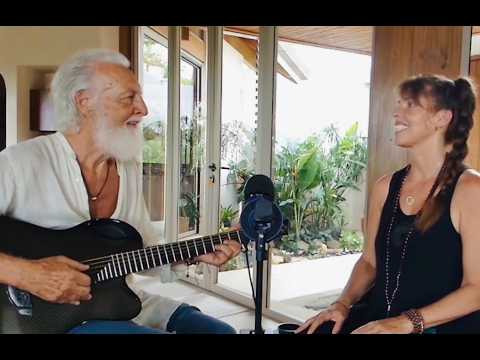
This live kirtan from Budapest in October 2015 weaves together a central paradox: we are living in inescapable love, yet we must actively choose to become the light unto ourselves. The performance, led by Miten alongside Deva Premal, Manose, and percussionist Rishi, merges the reggae sensibility of Bob Marley's "No Woman No Cry" with Sanskrit mantras and English chant phrases. The structure is not random—it reflects a spiritual teaching about the relationship between recognizing an omnipresent love and accepting our personal responsibility to embody and radiate that love into the world.

The kirtan begins with the refrain "living in the inescapable"—a term that appears across multiple contexts in the chant: inescapable love, inescapable unforgettable love, inescapable unpredictable love. This repetition is deliberate. Rather than presenting these as separate states, the kirtan suggests they describe a single reality. Love is not something we achieve or attain; it is the ground of existence itself. Yet this recognition alone is incomplete. The second movement of the teaching—"be the light unto yourself"—introduces individual agency and responsibility. We cannot simply rest in the knowledge of universal love; we must translate it into embodied practice, becoming conscious vessels for that love to shine into the world.

How Does Repetition Deepen the Teaching?

Kirtan relies on call-and-response and layered repetition to create a container for inner experience. In this performance, Miten initiates each phrase and the audience echoes or joins in. The repetition of "living in the inescapable" (around 27–48 seconds, then again at 233–264 seconds) is not mere musical embellishment—it is a contemplative technology. Each repetition moves the listener deeper into the meaning, allowing the intellect to quiet and direct experience to emerge.

The performance layers descriptors across the refrain: "inescapable love," "unforgettable love," "unpredictable love" (88–156 seconds). Each adjective opens a different door into the same reality. Love is unforgettable because once we truly encounter it, we cannot unsee or forget it. Love is unpredictable because it operates outside the logic of the rational mind—it confounds expectation and arrives when we least anticipate it. By cycling through these variations, the kirtan prevents the mind from settling into dull familiarity and instead keeps the heart engaged and receptive.

What Does "Be the Light Unto Yourself" Mean in Practice?

The phrase "be the light unto yourself" appears repeatedly (172–192 seconds, 266–293 seconds, 420–447 seconds), and it carries specific spiritual weight. It is an invitation to self-authority and luminosity—not ego-driven self-aggrandizement, but rather an awakening to one's intrinsic clarity. In Hindu and Buddhist philosophy, the self (Atman, Buddha-nature) is fundamentally luminous; it is by nature radiant. The teaching here echoes the Upanishadic assertion that consciousness itself is self-illuminating.

What makes this call radical is its implications: you do not need another's permission, another's approval, or external validation to shine. You are already equipped with the light. The practice is to recognize it, claim it, and let it move outward. The kirtan reinforces this with the immediate follow-up: "and shine upon the world" (192–204 seconds, 287–293 seconds, 447–455 seconds). The light is not for private use. It is meant to radiate outward, to touch others, to brighten the collective field.

How Does the Chant Invite Collective Participation?

A striking moment occurs around 352–362 seconds when Miten interrupts the musical flow: "I want you to take out your mobile phone." This is a deliberate shift from the internal, meditative work toward a contemporary gesture of visibility and sharing. In 2015, when this performance was recorded, asking people to use mobile phones in a kirtan was unusual and slightly transgressive. By inviting the audience to document the moment—to literally shine light through their camera flashes or phone screens—Miten was weaving modern technology into an ancient practice.

The phrase "Shine Your Light" then becomes multi-layered: it is both a mantra and a call to action in the actual room, in Budapest, in that moment. The specific location is named repeatedly: "shine our light here in Budapest," "here in Budapest Town" (309–316 seconds, 347–351 seconds). This grounds the teaching in the actual, the local, the relational. It is not an abstract spiritual principle floating in transcendence; it is happening now, here, with these particular people in this particular place.

What Is the Spiritual Function of Call-and-Response?

The call-and-response structure of the kirtan creates a living dialogue between the leaders (Miten, Deva Premal) and the participants. When Miten sings "living in the inescapable," the audience responds "living in the inescapable." This is not mere imitation. Psychologically and spiritually, call-and-response dissolves the separation between speaker and listener, teacher and student. Everyone becomes a voice for the teaching. The truth being sung is not possessed by Miten alone; it becomes a collective utterance.

Furthermore, call-and-response prevents the mind from drifting into passive consumption. There is a constant demand for active participation. You must listen, anticipate, and voice the mantra yourself. This keeps the nervous system engaged and alert. Over time, this practice of active listening and responsive singing becomes a meditation. The thinking mind quiets because it is absorbed in the task of listening and repeating. In that silence between thought, the direct experience of the teaching can arise.

How Do the Mantras Relate to the Spoken Teachings?

The kirtan concludes with Sanskrit chanting—"Om Namah Shivaya"—though the transcript provided does not include this final section. However, the structure of the piece suggests a conscious progression. The English-language affirmations ("be the light unto yourself," "shine upon the world") frame and contextualize the universality of the Sanskrit mantra. Om Namah Shivaya translates as "I bow to Shiva" or, more broadly, "I honor the divine consciousness within and as all things." By ending with this Sanskrit invocation, the kirtan returns the listener to the non-dual ground from which all light arises.

This is not incidental. The sequence moves from recognizing an inescapable love (which could seem passive—we are already in it, nothing to do) to claiming personal responsibility to shine that light (which could seem egoic and active) to ultimately bowing before the mystery of Shiva (which transcends both activity and passivity). It is a teaching arc embedded in the music itself.

What Makes This a Live Kirtan Performance Rather Than a Recording?

The performance is notably responsive to its immediate context. Miten acknowledges the audience ("you look so pretty," 370–374 seconds), engages with the Budapest setting explicitly, and adapts the chant based on the energy in the room. A recorded studio album is fixed; a live kirtan breathes and shifts. The musicians are reading the room, sensing where the energy wants to go, extending certain phrases, pivoting to new ones, creating an alchemical moment that could never be exactly replicated.

The inclusion of Manose and Rishi—who provide instrumentation and arrangement—further shapes the sonic container. Percussion and melody together create a gravitational field that draws participants into a coherent experience. This is why kirtan is traditionally performed live, with singers and an audience: the collective field generated by many voices and hearts together is qualitatively different from any solitary practice.

Where to Go from Here

If this kirtan resonates, the next step is to seek out live kirtan events in your area or to explore recorded kirtan sessions with intention. The teaching here is not merely intellectual—it must be embodied through chanting, singing, and breathing alongside others. Begin with the core invocation: "Be the light unto yourself and shine upon the world." Sit with this in meditation, asking yourself: What does my light look like? What am I called to illuminate? How does recognizing inescapable love change my sense of personal responsibility?

Consider also exploring the philosophical and spiritual contexts from which these teachings emerge. The Upanishads contain numerous passages on the luminosity of consciousness. Advaita Vedanta emphasizes the non-dual truth that you are already whole, already light, already love—and that recognition itself is the practice. Hindu devotional traditions like bhakti yoga use chanting and music as direct paths to awakening. By understanding the lineage and philosophy behind the kirtan, you ground the practice in wisdom traditions that have sustained these teachings for millennia.

Transcript

[0:20] No Woman No

[0:27] Cry living in the in in

[0:33] escapable living in

[0:35] escapable

[0:39] love living in the

[0:45] incapable in

[0:48] inescapable

[0:51] love in in

[0:57] escapable oh now

[1:01] oh

[1:14] now sing it with

[1:24] us the

[1:28] M I say we living living in the

[1:35] unforgettable living

[1:38] Unforgettable

[1:40] love we're living in the

[1:46] gettable it's this

[1:50] inescapable

[1:52] love I say in in

[1:56] escapable love

[2:24] and I say we're living in the

[2:27] unpredictable

[2:31] living

[2:33] unpredictable

[2:36] love we living in the

[2:43] incapable in

[2:46] inescapable

[2:49] love in

[2:52] inescapable love so I say now be the

[2:58] light unto yourself

[3:01] oh

[3:03] now be the light unto yourself be the

[3:07] light

[3:09] now be the light unto

[3:12] yourself and shine upon the

[3:19] world shine upon the

[3:24] world go out shine upon the world

[3:53] one more time I say living in the

[3:57] incapable

[4:02] living in

[4:04] escapable

[4:07] love living in the

[4:12] incapable you know it's in

[4:16] inescapable

[4:18] love what I say in

[4:22] escapable

[4:24] love oh

[4:26] now be the light unto yourself

[4:30] be the light now

[4:33] baby be the light unto

[4:36] yourself

[4:39] oh be the light unto

[4:42] yourself and shine upon the

[4:47] world I say shine upon the

[4:53] world oh now shine upon the world

[5:01] shine our light tonight shine our light

[5:05] oh right shine our light tonight oh

[5:09] shine our light here in shine our light

[5:13] tonight here in Budapest shine our light

[5:16] we going to shine our light shine our

[5:19] light yes shine our light I want you to

[5:24] shine shine a

[5:27] light shine a light sing it with me now

[5:31] shine a light come

[5:33] on shine a light oh now shine a light

[5:39] shine a light shine

[5:43] light shine a light shine a light shine

[5:47] a light here in Budapest Town shine a

[5:51] light

[5:52] oh shine a light oh well I want you to

[5:58] take out your mobile phone

[6:02] I want you take out your mobile

[6:07] phon Shine Your

[6:10] Light Shine Your Light oh you look so

[6:14] pretty Shine Your Light Shine Your Light

[6:17] tonight Shine Your Light Shine Your

[6:19] Light all over the world Shine Your

[6:21] Light we're going to shine our light

[6:24] shine a light shine a light shine a

[6:28] light oh shine our light sing it with me

[6:32] now shine our light woo shine shine our

[6:37] light shine I light now shine I light oh

[6:42] yes shine I light you look so pretty

[6:46] shine a

[6:48] light shine a light

[6:51] is shine a light say shine a light oh

[7:00] the light unto

[7:02] yourself be the light

[7:04] now be the light unto yourself

[7:11] oh be the light unto yourself one more

[7:15] time I

[7:17] say be the light unto yourself one more

[7:21] time I say

[7:23] now be the light un to yourself and

[7:27] shine upon the world

[7:35] shine upon the world

Miten
AutorMiten

British musician who transformed from 1970s rock performer to internationally renowned mantra singer. Born Andy Desmond, he became a disciple of Osho in 1980 and now tours globally…

Profil ansehenWebsite
Themen erkunden
KirtanMantrasInescapable-loveInner-lightDevotional-chanting

Hast du Fragen?

Häufig gestellte Fragen

Inescapable love refers to the recognition that love and divine consciousness are the fundamental ground of existence—not something we achieve, but something we are already immersed in. The kirtan suggests this is both unforgettable (once recognized, it cannot be unseen) and unpredictable (it transcends rational logic and expectations).
Kirtan uses repetitive call-and-response chanting to quieten the thinking mind while keeping the nervous system engaged and alert. As the intellect becomes absorbed in listening and vocally responding to the mantras, the space between thoughts widens, allowing for direct spiritual experience beyond conceptual understanding.
This phrase points to the inherent luminosity of consciousness itself (Atman in Hindu philosophy). It invites practitioners to recognize their intrinsic clarity and radiance—not as ego-driven but as an awakening to their true nature—and then to radiate that light outward into the world.
By asking the audience to use their phones to shine light during the performance, Miten was integrating modern technology into the ancient practice of kirtan while making the metaphorical teaching concrete: 'shine your light' becomes literally visible in the moment, grounding a universal principle in the actual, the local, and the relational.
The kirtan moves from recognizing inescapable love (seemingly passive) to claiming personal responsibility to shine that light (seemingly active) to ultimately bowing before divine mystery in Om Namah Shivaya (transcending both activity and passivity). This arc weaves together philosophy, personal agency, and ultimate non-dual truth.
Live kirtan is responsive to the immediate context—the energy of the room, the specific people present, the moment in time. The musicians adapt phrases based on group energy, creating an unrepeatable alchemical experience that a fixed studio recording cannot replicate.
The chanting draws on Hindu devotional (bhakti) traditions, Vedantic philosophy (the non-dual recognition of Atman as consciousness), and the Upanishadic assertion that consciousness is inherently luminous and self-illuminating. The use of Om Namah Shivaya roots the practice in Shaivism's worship of divine consciousness.
While kirtan is traditionally performed live in community, the core practice of repetitive chanting and mantra can be adapted for solo practice. However, the collective field generated by singing with others creates a qualitatively different energetic container that amplifies the depth of the experience.

Weiterlesen

More from Miten

Alle anzeigen
Sanskrit Chanting & Kirtan: South America Tour 2026
Featured

Sanskrit Chanting & Kirtan: South America Tour 2026

Deva Premal and Miten return to South America for their first tour in over a decade, bringing sacred Sanskrit mantras and healing kirtan to …

1 min read
Ide Were Were: Ochun Chant and Sacred Feminine Power
Featured

Ide Were Were: Ochun Chant and Sacred Feminine Power

Deva Premal and Miten's revisited chant honoring Ochun, the Yoruba goddess of fresh water, fertility, and sacred feminine power.…

1 min read
Deva Premal & Miten Australia Tour 2026: Singing Our Prayers
Featured

Deva Premal & Miten Australia Tour 2026: Singing Our Prayers

Deva Premal and Miten announce their return to Australia in October 2026 for three concerts and a Gayatri Gathering Retreat in Byron Shire.…

1 min read
Monthly Satsang Meditation: Mantras, Sound Healing & Presence
Featured

Monthly Satsang Meditation: Mantras, Sound Healing & Presence

A guided meditation satsang exploring the healing power of mantras, sacred sound resonance, and collective spiritual gathering across contin…

1 min read

Weiter erkunden

Setze deinen Weg fort

Mehr Weisheit und Zusammenkünfte aus dem BrightStar-Verzeichnis.

Mehr Artikel

Durchstöbere die ganze Bibliothek an Lehren, Interviews und Leitfäden.

Zu allen Artikeln →

Lehrer & Künstler

Entdecke die Linien, Musiker und Wegbegleiter der bewussten Welt.

Künstler erkunden →

Event finden

Kirtan, Retreats, Klangbäder, Atemarbeit, Festivals — bald in deiner Nähe.

Events ansehen →