EveryEvent Barcelona

Alle Events durchsuchen

Find every event in Barcelona

events

Concerts & Live Music
Festivals
Sports & Recreation
Food & Drink
Arts & Culture
Community
Family & Kids
Nightlife
Comedy
Theater
Beliebte Reiseziele
BaliSedonaLos AngelesCosta RicaNew YorkSan FranciscoAustinMiamiJoshua TreeTulum
Alle Kategorien anzeigenAlle Reiseziele anzeigen

Alle Funktionen entdecken

Leistungsstarke Tools für Ihre Veranstaltungen

Plattform-Funktionen

Intelligente dynamische Preisgestaltung
Ticket-Kategorien
Sitzplatzreservierung
Warenkorbabbruch-Wiederherstellung
Besucher-Wiedergewinnung
Spenden & Staffelpreise
Affiliate-System
Ticket-Scanner
Rabattcodes
Individuelle Fragen
Ticket-Teilen
Upsells & Extras
Analysen & Berichte
E-Mail-Sequenzen
Warteliste / Benachrichtigen / Erinnern
Entdecken
Discovery HubArtists & PerformersVenuesKnowledge Base
Alle Funktionen anzeigenÜber uns
PreiseBlog
Language
Saved events
Alle Veranstaltungen durchsuchen

events

Concerts & Live MusicFestivalsSports & RecreationFood & DrinkArts & CultureCommunityFamily & KidsNightlife

Beliebte Reiseziele

BaliSedonaLos AngelesCosta RicaNew YorkSan Francisco

Entdecken

Discovery HubArtists & PerformersVenuesKnowledge Base

Plattform-Funktionen

Intelligente dynamische PreisgestaltungTicket-KategorienSitzplatzreservierungWarenkorbabbruch-WiederherstellungBesucher-WiedergewinnungSpenden & StaffelpreiseAffiliate-SystemTicket-ScannerRabattcodesIndividuelle FragenTicket-TeilenUpsells & ExtrasAnalysen & BerichteE-Mail-SequenzenWarteliste / Benachrichtigen / Erinnern
Alle Funktionen anzeigenÜber uns
PreiseBlog
AnmeldenRegistrierenVeranstalter
  • Browse All Events
  • Concerts & Live Music
  • Festivals
  • Sports & Recreation
  • Food & Drink
  • Arts & Culture
  • Community
  • Family & Kids
  • Nightlife
  • Alle Kategorien →
  • All Destinations →
  • For Promoters
  • For Artists
  • For Venues
  • For Festivals
  • For Event Spaces
  • For Nonprofits
  • For Bloggers
  • For Speakers
  • Brand Ambassador
  • Case Studies
  • 350.000+ Käufernetzwerk
  • Warenkorbabbruch-Wiederherstellung
  • Intelligente dynamische Preisgestaltung
  • Ticket-Kategorien
  • Wiederkehrende Veranstaltungen
  • Sitzplatzreservierung
  • Affiliate-System
  • Warteliste / Benachrichtigen
  • Ticket-Scanner
  • Einbettungs-Widget
  • Event-Syndication
  • Nachrichten
  • Integrationen
  • Berichte
  • Alle Funktionen →
  • Über uns
  • Das Ökosystem
  • Blog
  • Glossar
  • Inspiration
  • Hilfe-Center
  • Kontakt
  • API-Dokumentation
  • Marken-Assets
  • Karriere
  • Presse
  • Nutzungsbedingungen
  • Datenschutzrichtlinie

Events

  • Browse All Events
  • Concerts & Live Music
  • Festivals
  • Sports & Recreation
  • Food & Drink
  • Arts & Culture
  • Community
  • Family & Kids
  • Nightlife
  • Alle Kategorien →

Getaways

  • All Destinations →

For Organizers

  • For Promoters
  • For Artists
  • For Venues
  • For Festivals
  • For Event Spaces
  • For Nonprofits
  • For Bloggers
  • For Speakers
  • Brand Ambassador
  • Case Studies

Funktionen

  • 350.000+ Käufernetzwerk
  • Warenkorbabbruch-Wiederherstellung
  • Intelligente dynamische Preisgestaltung
  • Ticket-Kategorien
  • Wiederkehrende Veranstaltungen
  • Sitzplatzreservierung
  • Affiliate-System
  • Warteliste / Benachrichtigen
  • Ticket-Scanner
  • Einbettungs-Widget
  • Event-Syndication
  • Nachrichten
  • Integrationen
  • Berichte
  • Alle Funktionen →

Unternehmen

  • Über uns
  • Das Ökosystem
  • Blog
  • Glossar
  • Inspiration
  • Hilfe-Center
  • Kontakt
  • API-Dokumentation
  • Marken-Assets
  • Karriere
  • Presse
  • Nutzungsbedingungen
  • Datenschutzrichtlinie
EveryEvent
© 2026 EveryEvent Barcelona. Alle Rechte vorbehalten.
Inspiration

Why Self-Love Creates Internal Conflict:Duality and Mental Health

Sadhguru
Sadhguru
Dec 23, 2016
5 Min. Lesezeit

Sadhguru argues that the modern advice to "love yourself" contains a logical flaw: love requires two separate entities, and if you fragment yourself into two—a "lover" and a "loved"—you are creating internal duality that leads toward psychological instability. True well-being comes not from self-love but from a unified, whole state of being where you are integrated rather than divided against yourself.

Lesen · 6 Abschnitte

The Problem with the Self-Love Framework

In contemporary wellness culture, "loving yourself" has become standard advice for building self-respect, confidence, and mental health. However, Sadhguru challenges this framework at its foundation. The core issue, he explains, is grammatical and ontological: love, by definition, requires two entities. One entity cannot love itself—that would be a tautology. When you say "I love myself," you are linguistically and psychologically creating a split: you become both the lover (subject) and the loved (object).

This is not merely semantic wordplay. Sadhguru argues that when you internalize this instruction and actually try to practice it, you are literally dividing your consciousness into two parts—one that observes, judges, and loves, and another that is observed, judged, and loved. This internal fragmentation is not a pathway to wholeness; it is a pathway toward psychological conflict.

What Respect and Belief Actually Require

In the context of a conversation with Piyush Pandey about skill and self-respect, Sadhguru clarifies that respect, love, and belief are fundamentally relational concepts. They require an "other"—a second entity. You cannot genuinely respect, love, or believe in something if there is no distinction between the believer and the believed. Respect implies hierarchy or distinction; love implies care for an entity separate from oneself; belief implies conviction about something outside the self.

The problem arises when people try to direct these relational emotions inward toward themselves. In doing so, they create an artificial internal "other"—a second self that stands apart from their unified being. This internal other then becomes an object of judgment, criticism, and conditional regard. Rather than generating self-respect, this mechanism generates self-surveillance and self-division.

Duality as a Path Toward Madness

Sadhguru's central warning is stark: "If you have become two within yourself, then you are heading for madness." This is not hyperbole. Psychological research on dissociation, internal family systems, and fragmented identity supports the core insight: excessive internal division is associated with anxiety, depression, and in extreme cases, dissociative disorders.

When the psyche is unified—when there is no internal observer constantly judging the observed self—the mind can rest. There is no conflict because there is no duality. But when you practice self-love as modern wellness prescribes, you may inadvertently reinforce the very split that causes suffering.

This is why meditation and contemplative practices in many traditions aim at non-duality: the dissolution of the subject-object split within consciousness. The goal is not to make the observer and observed love each other better; it is to recognize they were never truly separate to begin with.

Self-Respect Without Self-Division

If self-love and self-respect cannot be achieved through internal duality, how are they actually cultivated? Sadhguru's implication, drawn from yogic and Advaita philosophy, is that genuine respect emerges from a state of integrated being. When you are not divided against yourself—when your actions, thoughts, and values are coherent—you do not need to manufacture respect for yourself through psychological techniques. Respect becomes a natural byproduct of wholeness.

Skill development, which was part of Pandey's original question, also aligns with this principle. You develop skill through focused, unified effort. You do not develop skill by splitting your attention between an observing ego that judges and a performing self that tries to earn approval. When your effort is whole and undivided, skill emerges naturally.

The Western Individualism Problem

Part of why "self-love" has become so prevalent is Western individualism's emphasis on self-validation and self-sufficiency. The underlying assumption is: if you do not love yourself, no one will; if you do not respect yourself, you are doomed to external invalidation. There is truth in the observation that self-abandonment creates suffering. But the solution prescribed—learning to love and respect yourself as a separate entity loves and respects another—may be trading one problem for another.

Instead, the solution may be simpler and more radical: become whole. Do not create an internal "other" to love or respect. Do not split your consciousness into observer and observed. This is the insight at the root of non-dual philosophy and is supported by the modern understanding that integration and coherence are markers of mental health.

Where to Go From Here

If you find yourself caught in a cycle of trying to love yourself—checking whether you approve of yourself, judging your self-judgment, trying to feel worthy—pause and notice the dualism at work. Rather than deepening that split through more self-focused emotional work, consider practices that integrate consciousness: meditation that dissolves the observer-observed distinction, embodied movement that unifies awareness with action, or any activity where you become so absorbed that the sense of a separate self observing itself dissolves. The goal is not better internal relationships but the recognition that there is ultimately only one entity here, not two. That is where genuine peace, respect, and well-being emerge.

Sadhguru
AutorSadhguru

Indian yogi, mystic, and founder of the Isha Foundation. Through his programs (Inner Engineering, Bhava Spandana, Samyama) and books, he has introduced millions worldwide to a cont…

Profil ansehenWebsite
Themen erkunden
Self-loveDuality-consciousnessMental-healthNon-dualitySelf-respect

Hast du Fragen?

Häufig gestellte Fragen

Love requires two separate entities, so telling yourself to "love yourself" creates an artificial internal split between a lover and a loved self. This internal duality and self-division can lead to psychological conflict and fragmentation rather than genuine well-being.
Yes. Genuine self-respect emerges from a unified, integrated state of being rather than from one part of yourself learning to love another part. When your consciousness is whole and undivided, respect arises naturally as a byproduct of coherence and wholeness.
Creating an internal observer that judges, loves, and validates a separate "self" fragments your psyche into conflicting parts. This dualism is associated with anxiety, self-surveillance, and in extreme forms, dissociative disorders—essentially a path toward psychological instability.
Skill develops through focused, unified effort without internal conflict. When you split your attention between an observing ego that judges and a performing self seeking approval, you obstruct the natural, integrated development of skill.
Self-love creates internal duality (one part loving another). Integration means dissolving the split entirely so consciousness is whole and undivided. Integration leads to genuine well-being; duality leads toward psychological fragmentation.
Confidence emerges naturally from coherence and wholeness—when your actions, values, and thoughts are aligned and your effort is undivided. Rather than manufacturing self-approval, focus on developing skill and integration through meditative or embodied practices that unify consciousness.
Non-dual philosophy suggests that the sense of a separate self needing validation is itself an illusion. Well-being comes from recognizing there is fundamentally only one unified consciousness, not a divided self constantly seeking approval from an internal other.
Meditation that dissolves the observer-observed distinction, embodied movement where awareness merges with action, or any activity where you become so absorbed that self-surveillance stops. The goal is integration where consciousness is unified rather than split.

Weiterlesen

More from Sadhguru

Alle anzeigen
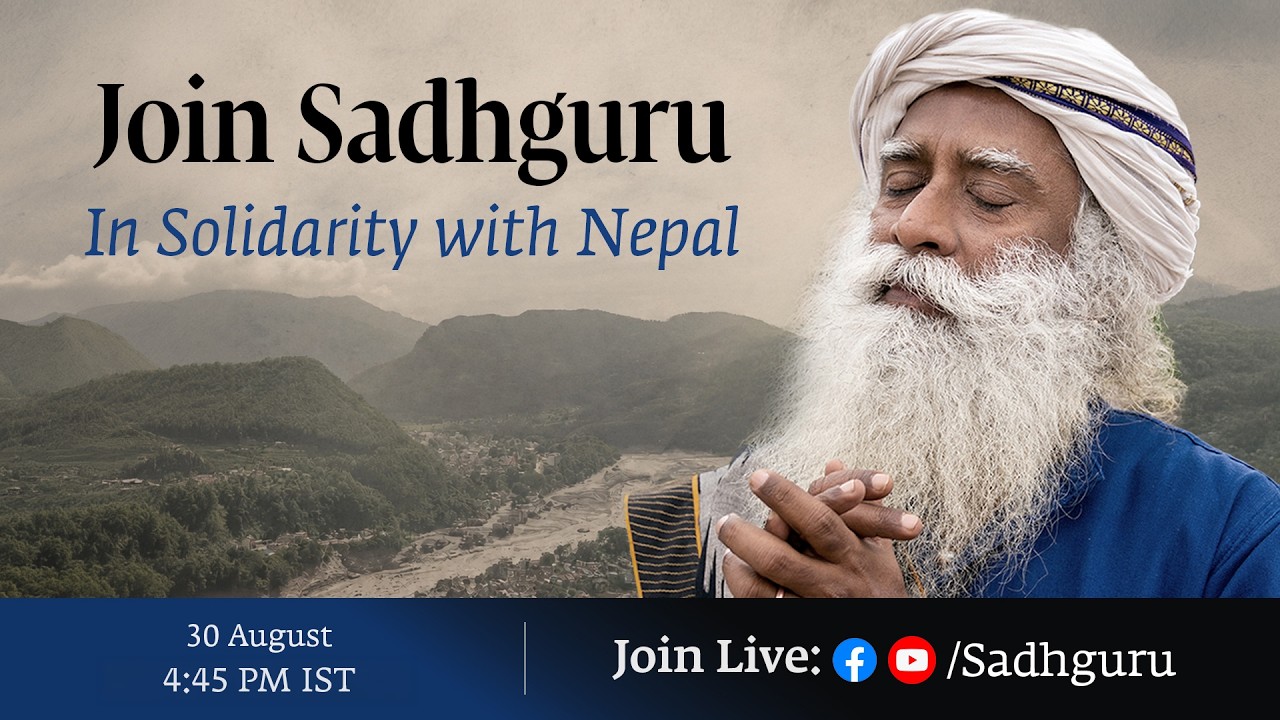
When Grief Becomes a Mirror: What the Nepal Floods Teach
Featured

When Grief Becomes a Mirror: What the Nepal Floods Teach

A flash flood on the Nepal-Tibet border devastated communities and claimed lives. This event became a moment to examine how we respond to tr…

1 min read
Mount Kailash's Hidden Dimensions: Mystical Phenomena Beyond Logic
Featured

Mount Kailash's Hidden Dimensions: Mystical Phenomena Beyond Logic

A 21-year pilgrimage reveals Mount Kailash and Lake Manasarovar as repositories of consciousness and extraordinary life forms defying conven…

1 min read
Dark Night of the Soul: What It Actually Is
Featured

Dark Night of the Soul: What It Actually Is

The dark night of the soul is not what most people think it is. Eckhart Tolle distinguishes it from the many forms of depression that affect…

1 min read
Stop Self-Judgment: Building Inner Compassion
Featured

Stop Self-Judgment: Building Inner Compassion

Discover why your inner critic feels relentless and learn grounded practices to replace self-judgment with genuine compassion and acceptance…

1 min read

Weiter erkunden

Setze deinen Weg fort

Mehr Weisheit und Zusammenkünfte aus dem BrightStar-Verzeichnis.

Mehr Artikel

Durchstöbere die ganze Bibliothek an Lehren, Interviews und Leitfäden.

Zu allen Artikeln →

Lehrer & Künstler

Entdecke die Linien, Musiker und Wegbegleiter der bewussten Welt.

Künstler erkunden →

Event finden

Kirtan, Retreats, Klangbäder, Atemarbeit, Festivals — bald in deiner Nähe.

Events ansehen →