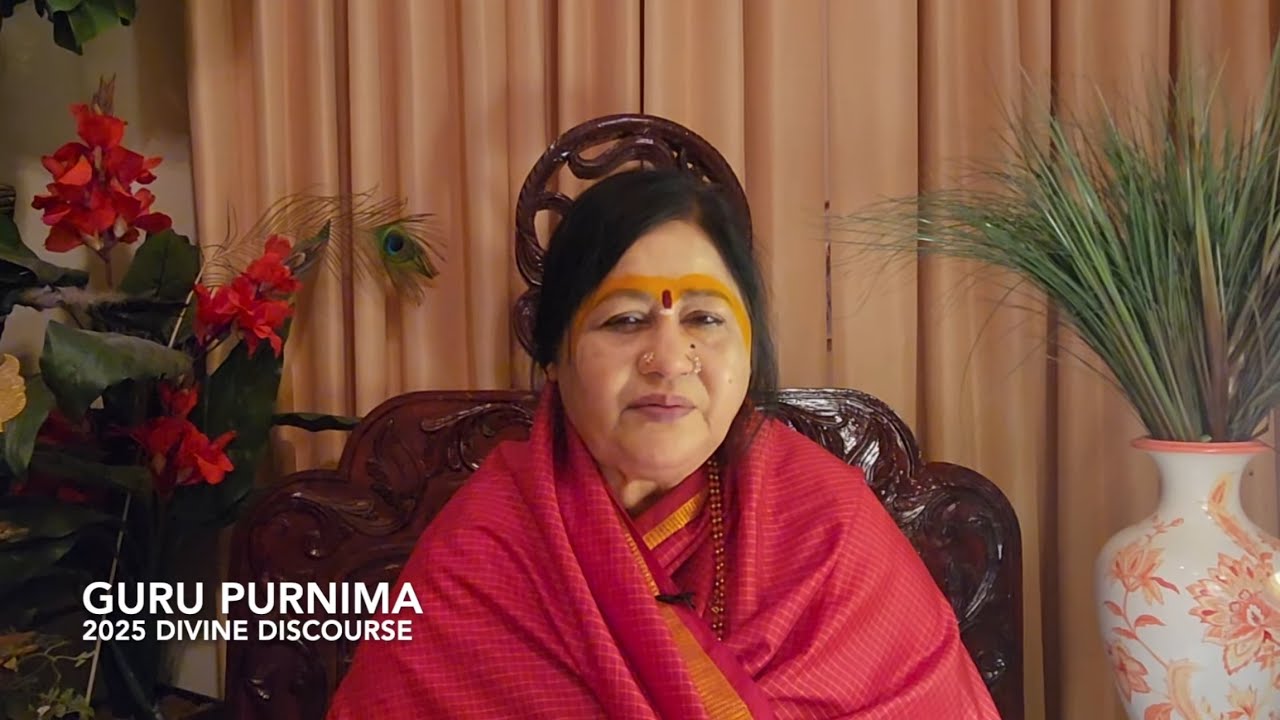
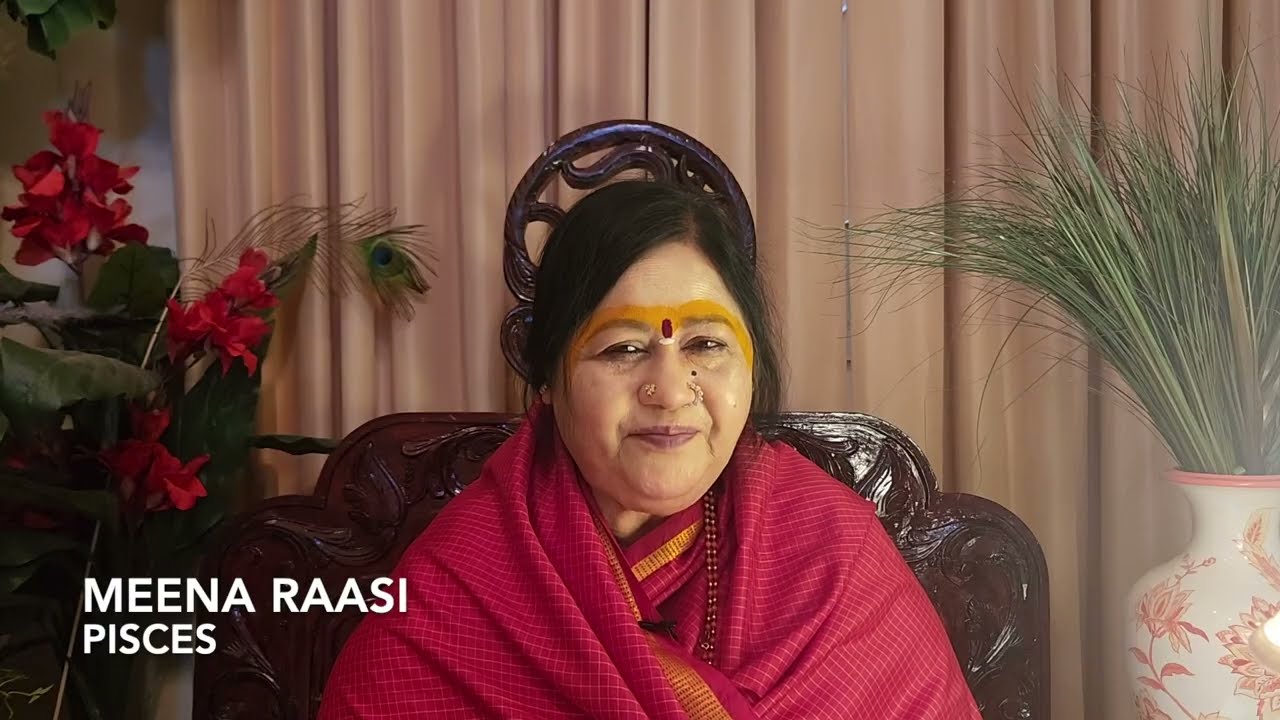
In this New Year discourse, Sri Karunamayi addresses the themes of spiritual transformation through mantra recitation, the significance of inner purity and self-discipline, and the ultimate goal of self-realization (moksha). She emphasizes the role of devotion (bhakti), meditation, and sacred mantras—particularly the Rudra mantra—as pathways to liberation. The teaching draws on Vedic knowledge and Advaitic philosophy, grounding spiritual practice in both ritual observance and inward contemplation. Listeners are guided to recognize their fundamental nature as consciousness (Brahman) and to use spiritual disciplines as tools for realizing this truth.
What Is the Foundation of Spiritual Practice?
Sri Karunamayi begins by establishing the sacred context of spiritual life. The opening invocations honor the Divine Mother in various forms—Lalitambika, Mahatripurasundari—invoking their blessings and protection. This ritualistic opening is not mere formality; it represents the recognition that spiritual practice itself begins with acknowledgment of the sacred dimension that permeates existence.
The foundation of practice, according to Karunamayi, rests on three pillars: jnana (knowledge), bhakti (devotion), and karma yoga (action without attachment). These are not separate paths but complementary dimensions of a single journey toward self-realization. Many practitioners make the mistake of treating these as alternatives—choosing only ritual, or only meditation, or only intellectual study. Instead, Karunamayi suggests that an integrated approach weaves all three together. The mind that is purified through devotion becomes capable of receiving knowledge. The heart that is devoted becomes the fertile ground for understanding the non-dual truth.
How Does Mantra Practice Work in Spiritual Life?
A central theme of the discourse concerns the power and proper use of mantras. Karunamayi specifically addresses the Rudra mantra, a foundational sound formula in Tantric and Vedic spirituality. The Rudra mantra is not presented as a mere verbal repetition but as a sonic representation of divine consciousness itself. When chanted with proper intention, understanding, and regularity, it is said to awaken corresponding energies within the practitioner's own being.
The mechanism she describes involves resonance: the mantra, when repeated with focused attention, creates vibrations that attune the subtle body (the energy channels and centers) to higher frequencies. This is not metaphorical but, in the Tantric understanding, a literal recalibration of the nervous system and consciousness. Karunamayi emphasizes that mantra practice is not about mechanical repetition. The mind must be engaged, the heart must be sincere, and the practice must be done with the understanding that one is not invoking an external deity but awakening the divine nature within.
She notes that consistent practice—particularly on auspicious days or during specific planetary alignments (as mentioned in relation to Mercury and Monday practices)—amplifies the efficacy of the mantra. However, the most important factor remains the quality of one's intention and the purity of one's inner state. A mantra recited by a mind filled with doubt or resentment will have limited effect. A mantra recited by a heart full of faith and devotion, even if technically imperfect, carries transformative power.
What Is the Role of Inner Purity and Discipline?
Karunamayi places considerable emphasis on the inner state as the prerequisite for spiritual progress. The discourse references "nirmalata" (purity) repeatedly. This purity is not merely physical cleanliness but a state of mental clarity, emotional balance, and freedom from distorting emotions like greed, anger, and delusion.
She teaches that spiritual disciplines (sadhana) serve the purpose of purifying the mind and heart. Fasting, meditation, mantra recitation, and ritual observance are not arbitrary practices imposed by tradition but skillful means designed to systematically remove the obstacles to self-knowledge. The mind that is restless, attached to sensory pleasures, or clouded by ignorance cannot perceive its own true nature. Discipline gradually quiets the mind and redirects its energy inward.
This is not asceticism for its own sake. Karunamayi does not advocate harshness or self-punishment. Rather, she presents discipline as a form of self-love—choosing practices that genuinely serve one's highest welfare. When one understands that true peace and joy lie within, not in external acquisitions, the willingness to engage in sustained practice naturally arises. The mind that has tasted even a glimpse of inner peace through meditation or mantra becomes eager to explore deeper.
How Does Devotion Lead to Self-Realization?
A key distinction in Karunamayi's teaching is the relationship between devotion and non-dual knowledge. In many spiritual traditions, there is an apparent tension: non-dualism (Advaita Vedanta) teaches that the self and God are one, while devotion seems to presume a lover and the beloved, a worshiper and the worshiped. Karunamayi addresses this apparent paradox.
She explains that devotion is the gateway through which the separate ego-sense can be dissolved. As long as the mind identifies with the individual "I" and sees God as other, there remains separation. But through genuine devotion—through sincere longing, surrender, and love for the Divine—the practitioner's sense of separation gradually weakens. The boundaries between lover and Beloved blur. Eventually, when the final veil of ego dissolves, the devotee realizes directly that there was never truly any separation. What was sought outside was always within. The Divine was always one's own deepest nature.
This is why Karunamayi emphasizes both the journey of devotion and its destination in non-dual realization. Bhakti is not a path that leads away from Advaita; it is the most natural, most heart-centered path toward Advaitic understanding. The love that drew the seeker to God ultimately becomes the recognition of one's identity with God.
What Is Meant by Moksha in This Teaching?
Karunamayi addresses moksha (liberation) not as an escape from the world or a distant future reward, but as a present possibility—the recognition of one's true nature. Moksha is not something to be attained in heaven after death; it is the realization that consciousness itself is always free. The perceived bondage exists only in ignorance.
She teaches that bondage consists of misidentification: taking oneself to be the limited body-mind, to be subject to time and circumstance, to be dependent on external conditions for happiness. This misidentification creates a sense of lack, vulnerability, and separation. The spiritual path systematically corrects this misunderstanding through knowledge, practice, and direct experience.
Moksha, then, is the natural state that emerges when this misidentification is seen through. It is not a reward for the pure or a punishment withheld from the wicked; it is the truth that becomes evident to those who look within. Karunamayi suggests that even in this very moment, one's true nature is untouched by circumstances—it is the witnessing consciousness that observes thoughts, emotions, and experiences without being affected by them.
How Should a Practitioner Approach the New Year?
The context of this discourse—delivered at New Year—is significant. Karunamayi offers guidance for those who wish to use the new year as an opportunity for spiritual deepening. She recommends renewed commitment to practice, clarification of one's spiritual intention, and an honest assessment of where one stands on the path.
The New Year provides a natural break, a symbolic death of the old cycle and birth of the new. Practitioners are encouraged to use this moment to recommit to their disciplines: to establish or renew a regular meditation practice, to take on mantra recitation with sincerity, and to consciously work toward greater purity of heart and mind.
She also emphasizes the importance of having a living teacher or spiritual guide. The path of self-realization is not merely a matter of following instructions from a book or a video. Direct transmission from a qualified teacher—through presence, grace, and personal guidance—accelerates the process. A teacher who has walked the path can recognize where a student is stuck, offer specific practices suited to that student's nature, and most importantly, embody the possibility of what realization actually looks like.
Where to Go from Here
For those moved by these teachings, several immediate steps suggest themselves. First, consider establishing or deepening a mantra practice. Choose a mantra that resonates with your heart—whether the Rudra mantra Karunamayi emphasizes, or another mantra from your own spiritual tradition—and commit to reciting it daily with attention and devotion. Even fifteen to thirty minutes daily, done with consistency and sincerity, will begin to shift consciousness over weeks and months.
Second, examine the quality of your inner state. What emotions or habits keep you clouded or restless? What small disciplines might support greater clarity? This might mean establishing a regular meditation practice, simplifying your diet, limiting exposure to stimulating media, or dedicating time to prayer or self-inquiry. The specific practices matter less than the intention behind them: to know yourself more fully.
Third, if you have not yet found a spiritual teacher or community, consider seeking one. The transmission of genuine knowledge and the grace of a living teacher are invaluable. Look for a teacher who points you toward your own highest nature rather than creating dependency, and for a community that supports rather than distracts from your inner work.
Finally, remember that the goal of all practice is recognition rather than achievement. You are not becoming something you are not; you are awakening to what you have always been. This understanding itself is liberating.