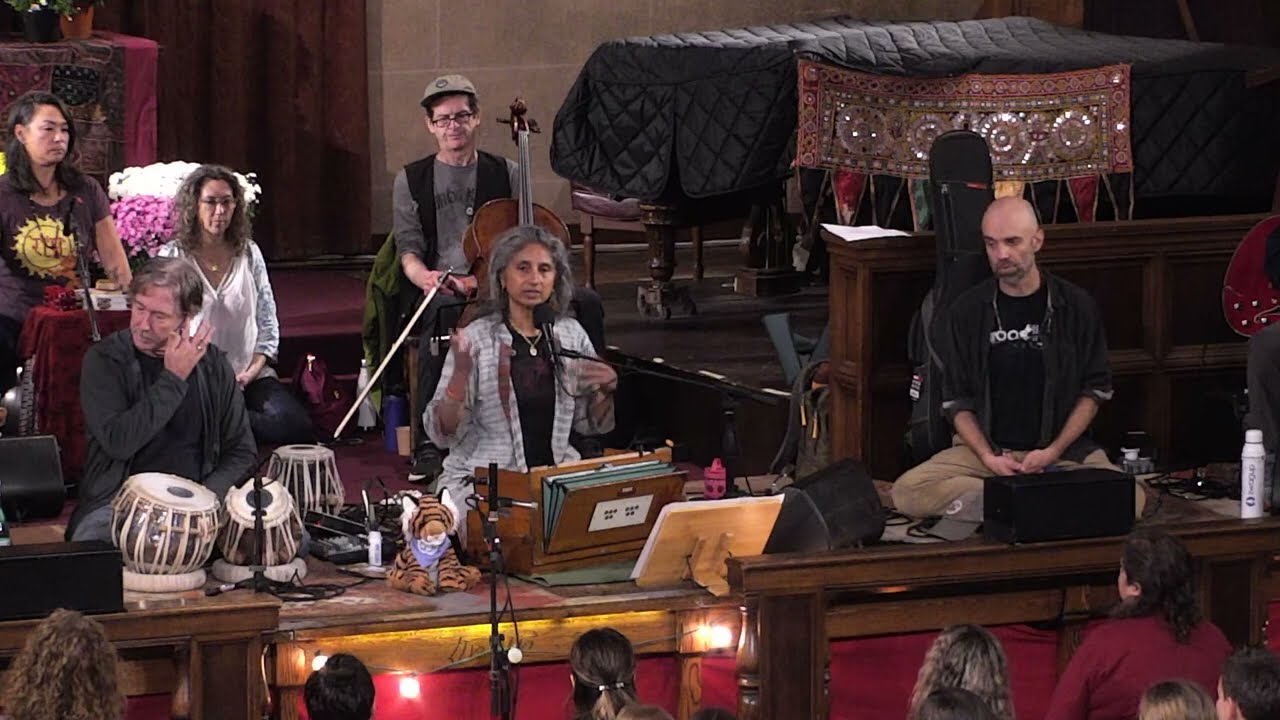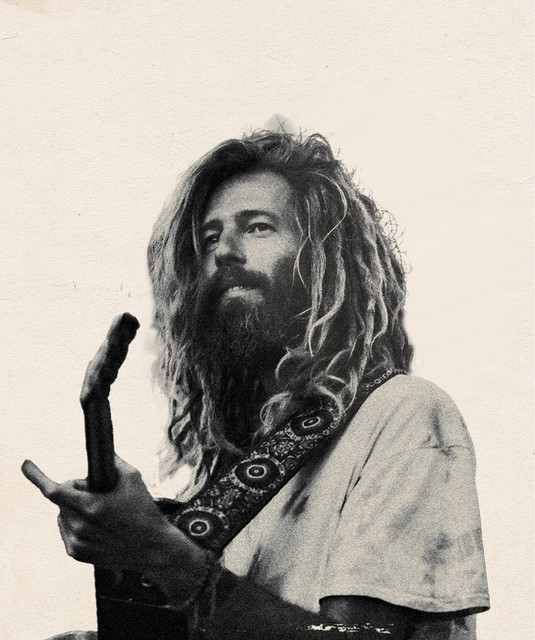
During a tour stop at Union Chapel in London on February 9, 2024, Sam Garrett shares the origin story of the song "I & I"—born from encountering Rastafari teachings on universal unity and the concept that all beings share the same divine consciousness. The video documents the creative process behind the track, explores the theology of "I and I" (the Rastafarian term for the unified self and other), and features live performances that embody these principles of love transcending skin color and religious boundaries.
What Does "I and I" Mean in Rastafarian Thought?
The phrase "I and I" sits at the heart of Garrett's song and represents a profound spiritual principle within Rastafarianism. Rather than a grammatical error or poetic flourish, "I and I" expresses the belief that there is no separation between the self and the other—that the same divine consciousness, the same essential "I," flows through all beings regardless of exterior difference. As Garrett explains in the video, drawing from the teachings he encountered: "The same I am that I feel. The same sense of existence, the same sense of life that I feel, the same breath that I breathe is the same that you breathe."
This unified consciousness dissolves the illusion of fundamental separation. When applied to the tensions of race, religion, and identity, "I and I" becomes a tool for recognizing that righteousness, love, and truth carry no color and belong to no single faith. Garrett articulates this clearly in the song's lyrics: "What color is righteousness? Righteousness carry no color man. Black man righteous color and a white man righteous color. But how them teach us? Them teach us not to love one another."
How Did the Song "I & I" Come Into Being?
The genesis of "I & I" unfolded spontaneously and without deliberate intention. While staying in Portugal, Garrett found himself making coffee one morning and felt drawn to learn more about Rastafari philosophy. He typed "Rastafari wisdom" into YouTube and encountered a teacher—whom the video honors as Elder Ras Bongo Iron Teacher—whose face drew him in. He clicked on the video without expectation but soon heard a message that stopped him: "There is no me and you. There is only I and I."
The impact was immediate and visceral. Garrett recalls: "When I heard his words, I started to cry and I got goosebumps all over my body. And I went I grabbed my guitar." This was significant because he had not played his guitar for an extended period—he had been traveling extensively and, upon returning home, had chosen quiet over music. Yet the power of the teaching drew him to the instrument.
What happened next reveals the collaborative and spontaneous nature of the creative process. A friend visited while Garrett was sitting with the guitar, moved by the moment. Though this friend was not a musician and had never written a song, the spiritual power of the teaching moved him to sing lines spontaneously. They began exchanging phrases:
Garrett: "Praises to the most high."
Friend: "But don't waste your time imprisoned in the mind."
Garrett: "If you seek, you shall find."
Friend: "What you're looking for is right inside."
Garrett had his phone ready and hit record. The song was born in real time, emerging from the collective resonance of the moment rather than from a planned songwriting session. He emphasizes that he cannot claim authorship in the conventional sense: "I can't really claim any of these songs. I cannot say this is my song because I'm not sitting today. I'm going to write a song. It just comes naturally, spontaneously, just like everything else in life."
What Is the Spiritual Teaching Behind Self-Love and Universal Love?
The song opens with a principle that underpins all that follows: "If you don't love yourself, you have no love. You have to love yourself first before you can love I and I." This is not narcissism or self-centeredness but rather recognition that the love within oneself is the same love that animates all beings. Self-love, rightly understood, is the gateway to universal love because the self and the other are ultimately one.
Garrett's teaching challenges the narrative of division that he identifies as a historical tool of control: "Them teach us not to love one another, beat you and teach you what them want to teach you." The remedy is not reactive anger but the cultivation of a consciousness that sees through the illusion of separation. Love, in this framework, is not a sentiment or emotion to be generated but a recognition of an existing unity that can be obscured by conditioned thinking.
How Does Emptiness Relate to Divine Grace in This Teaching?
A key insight Garrett articulates is that spiritual receptivity increases as mental clutter decreases: "The more empty we become, the more full we become with God's grace, God's love." This paradox—emptiness leading to fullness—is central to contemplative traditions across cultures. Emptiness here does not mean nihilism or void but rather the clearing away of fixed ideas, prejudices, and imprisoned thinking that block the flow of grace.
This explains why the song could arrive spontaneously rather than through deliberate composition. When the mind is not attempting to control the creative process, when the ego is not asserting authorship, grace can flow through the vessel more freely. The songwriter becomes a channel rather than a constructor.
What Role Does the Concert Performance Play in the Broader Message?
The video captures the live performance at Union Chapel in London, showing how the teaching moves from individual insight into collective experience. The backing band—including vocalists, keys, drums, bass, and harmonium—creates a sonic container for the message. Before the performance, Garrett invites the audience to participate: "I would love you to sing with us. The chorus goes like this: I and I."
By inviting the audience to sing the chorus, Garrett embodies the principle itself—the distinction between performer and audience collapses. Everyone becomes a voice for the same unified consciousness. The concert becomes a ritual of recognition rather than mere entertainment.
The video also includes a cover of Paolo Nutini's "Candy" and a live performance of "Waves" by Gemiko, suggesting that Garrett's approach honors music and artists across traditions while maintaining focus on the deeper message of love and unity.
How Do Rastafari Teachings Address Religious and Racial Division?
A recurring theme throughout the teaching is the deconstruction of false divisions. The elder teacher's words are clear: "What color is love? No color. What religion is love? No religion, no ideas, just love." This is not a claim that color and religion do not exist at the material level but rather that they do not determine one's capacity for righteousness, love, or truth.
The teaching directly confronts the historical use of division as a tool of oppression: systems have taught people to see each other as fundamentally different, to fear and dominate across color lines. The antidote is not ideology but direct recognition: the same breath, the same consciousness, the same divine spark animates all beings. This recognition, if embodied, dissolves the psychological basis for discrimination.
What Is the Significance of the Spontaneous Songwriting Process?
Garrett's insistence that the song was not "written" in the conventional sense points to a view of creativity as channeling rather than originating. This aligns with many contemplative and spiritual traditions that understand the artist as a conduit for something larger than the individual ego. The song arrived in fragments through dialogue, recorded on impulse, shaped by the power of the moment rather than by revision and deliberate craft.
This does not diminish the artistry involved—the melody, harmony, and lyrical coherence are evident in the performance. Rather, it suggests that true artistry may involve a surrender of control, a receptivity that allows form to emerge from the formless. The presence of the friend who was not a musician yet contributed essential lyrics reinforces the idea that the teaching itself was the real creator, flowing through willing vessels.
Where to Go from Here
For those drawn to the themes in this video, several paths forward are worth considering. First, explore the actual teachings of Rastafari philosophy, particularly the concept of "I and I" and its implications for consciousness and social unity. Second, consider how the principle of emptiness and receptivity might apply to your own creative or spiritual practice—what happens when you stop trying to control the outcome and simply show up? Third, examine where you have internalized narratives of separation and division, and inquire whether direct experience might reveal a deeper unity beneath surface differences. Finally, if you resonate with Garrett's music, follow his journey through future episodes of the tour diaries and explore how these teachings continue to unfold in different cultural and geographical contexts.