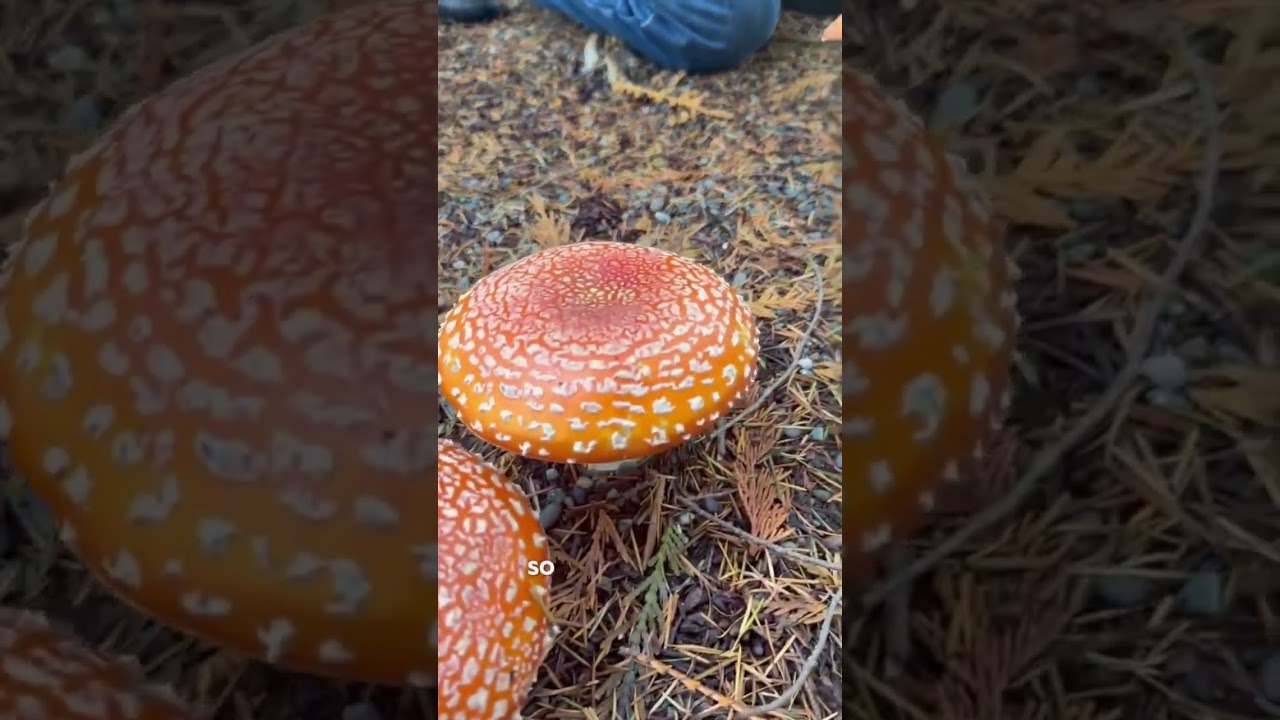
Turkey tail mushrooms (Trametes versicolor) are among the most clinically studied immune-supporting fungi in the world. Beyond their health benefits, they form extraordinary ecological communities that include four species of algae, nitrogen-fixing bacteria, and tree partners—a model of biological interconnectedness that extends from forest floors to human microbiomes. Paul Stamets demonstrates how these fungi illustrate a deeper principle: immune systems exist in habitats, and mushrooms serve as bridges connecting these systems across species.
What Makes Turkey Tail Such a Powerful Immune Mushroom?
Turkey tail (Trametes versicolor, formerly known as Coriolus versicolor) stands out among fungi because it has become one of the most thoroughly researched immune-supporting mushrooms in clinical science. When consumed, turkey tail demonstrates the ability to support the microbiome—the community of microorganisms living in and on the human body. This isn't folklore or theoretical; clinical studies have documented measurable effects on immune function and gut health. The mushroom's bioactive compounds interact directly with human digestive and immune systems, making it a bridge between fungal chemistry and human physiology.
What distinguishes turkey tail from other medicinal mushrooms is not just its documented effects but the mechanism behind those effects. The relationship is not one-directional. When we consume turkey tail, we are participating in an exchange that turkey tail has been conducting for millennia with countless other organisms in forest ecosystems.
How Does Turkey Tail Create Living Ecosystems?
A single fruiting colony of turkey tail is not an isolated organism—it is the visible manifestation of an intricate community. Stamets describes a phenomenon called demilicanization: the ability of turkey tail to coexist with up to four distinct species of algae. This is not parasitism or simple cohabitation. The algae spores land on the hairs of the mushroom, finding shelter and access to moisture. In return, the algae contribute to the nutritional and structural health of the fungal colony.
But the community extends further. Living within and alongside the turkey tail colony is Azobacter, a nitrogen-fixing bacterium. Nitrogen fixation is one of the most critical processes in terrestrial ecosystems—it converts atmospheric nitrogen into forms that plants and other organisms can use. By hosting Azobacter, turkey tail becomes a node in the nitrogen cycle itself. The mushroom provides habitat; the bacterium provides fertility.
This layering of relationships—fungus, algae, and bacteria—creates what Stamets calls "biological successionism." This is the natural progression of ecological communities over time, where early colonizers prepare the ground (literally and chemically) for later arrivals. Turkey tail and its companions are not just sitting passively in an oak forest; they are actively shaping their environment and enabling other life forms to thrive.
Where Does the Tree Fit Into This Fungal Community?
Turkey tail fruiting bodies emerge from dead or declining wood—typically oak and other hardwoods. The mycelium (the fungal network beneath the fruiting body) is decomposing cellulose and lignin, breaking down the complex polymers that make wood strong and durable. This is not destructive in the sense of waste; it is transformative. The fungi convert dead wood into accessible nutrients and return them to the soil.
The presence of algae and nitrogen-fixing bacteria in turkey tail colonies suggests that the mushroom, in its role as decomposer, is also becoming a nutrient factory. As the mycelium breaks down wood, it creates conditions where these other organisms can thrive. The tree, though dead or dying, continues to support life—but now the form of that life has shifted. What was once a tree feeding itself through its roots is now a substrate for a community of decomposers and nitrogen fixers.
How Are Immune Systems Ecosystems?
Stamets makes a conceptual move that reframes how we think about immunity: "Immune systems are in habitats as well as us." This suggests that immunity is not confined to cells and organs within a single body. An immune system requires an environment—a habitat—to function. Our human immune system exists within the habitat of our microbiome, which itself exists within the larger habitat of our digestive tract, our skin, and our environment.
Turkey tail bridges these habitats. When we consume it, we introduce not just a biological compound but a partner organism with a long evolutionary history of living in complex microbial communities. The compounds turkey tail produces have been shaped by its interactions with algae, bacteria, and trees. Those same compounds interact with our microbiome—the bacteria and fungi living in our gut—and from there with our immune cells.
This is why the story of turkey tail cannot be told as a simple input-output model: eat mushroom, improve immunity. Instead, it is a story of nested ecosystems. Our body is a habitat. Our microbiome is an ecosystem within that habitat. Turkey tail is itself an ecosystem, and when we consume it, we are merging our ecosystem with another ecosystem. The outcome depends on the fitness and diversity of both systems.
What Role Do Fungi Play in Connecting Ecosystems?
Stamets emphasizes that "mushrooms join us together." This is both literal and metaphorical. Literally, the fruiting bodies of mushrooms are the reproductive structures of fungi that live as vast mycelial networks in soil and wood. These networks connect plants to each other, decompose dead matter, and cycle nutrients. They are the infrastructure of terrestrial ecosystems.
Metaphorically, mushrooms join us to deeper awareness of our own embeddedness in living systems. We tend to think of ourselves as separate from nature—we eat food, we consume medicine, we interact with the environment. But turkey tail reveals a different truth: we are habitats within habitats. The forests where turkey tail grows, the food chains that sustain us, the microbiomes that digest our food and train our immune systems—all of these are fungal-mediated processes.
When we find a tremendous fruiting of turkey tail in an oak forest, we are witnessing a moment of visible abundance in a process that is largely invisible: the transformation of dead wood into living nutrient cycling, the hosting of algal and bacterial communities, the chemical production of compounds that will, when consumed by humans, interact with our own microbial and immune systems.
Where to go from here
Turkey tail offers a natural starting point for deepening your understanding of medicinal mushrooms and ecological interconnection. If you're interested in the immune-supporting properties of turkey tail, consulting peer-reviewed clinical research on its bioactive compounds (particularly beta-glucans and polysaccharide-K) will provide evidence-based guidance. Foraging or purchasing sustainably harvested turkey tail from reputable sources allows you to participate directly in this ecosystem bridge.
Beyond consumption, studying the visible ecology of fungal fruiting bodies in your own region—whether through guided mushroom walks, citizen science projects, or mycology courses—builds intuitive knowledge of how fungi operate in nature. This embodied understanding complements the clinical data and adds texture to the concept of biological successionism and ecosystem interconnection that Stamets describes. Finally, exploring the broader field of mycology through Stamets' published work and other mycological research deepens the framework for understanding why fungi matter not just to human health, but to the continuity of life on Earth.