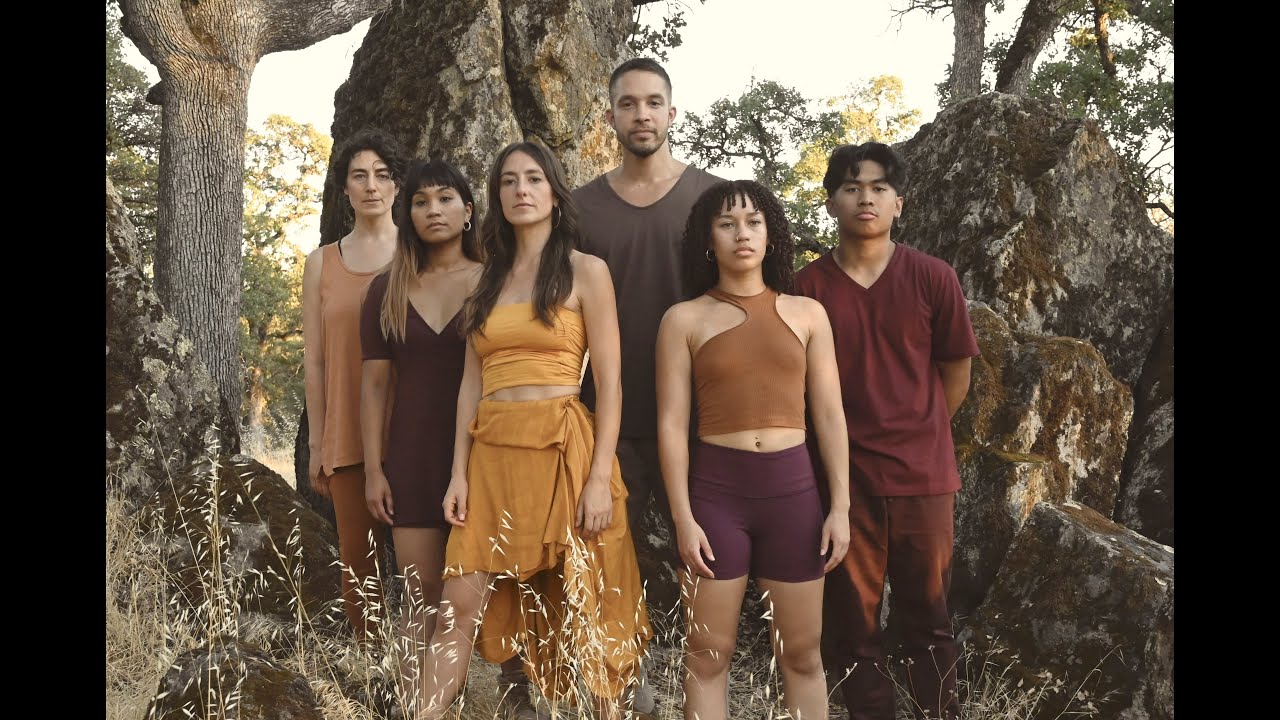
Ayla Nereo's "Feathered Bow" is a poetic exploration of the creative self—one that draws power from ancestral lineage, recognizes the daily choice to kindle one's inner flame, and embraces the paradox of being simultaneously constrained (an arrow) and free (a feathered bow). The song suggests that artistic becoming is not about reaching a final destination, but about honoring the "long long ways to go" with conscious intention each morning.
What Does the Central Metaphor of "Feathered Bow" Represent?
The song's core image—"I'm a feathered bow / I've got a long long way to go"—anchors the listener in a paradox. A bow, as a tool, is designed to draw an arrow. It is, by nature, an instrument of constraint and release. But a feathered bow is also soft, organic, responsive. This duality mirrors the creative life: one must be both structured (the bow's function) and flexible (the feathers' give), both purposeful and open to what emerges.
The repeated refrain "don't unring the arrow" warns against undoing commitment. Once the arrow is drawn and released, it cannot be undrawn. This speaks to the irreversibility of choice—of stepping into one's creative voice, of naming oneself, of deciding. The feathered bow, then, is not a rigid vessel but a conscious actor, continually recommitting to the trajectory set by daily choices.
How Does the Song Connect Individual Flame to Ancestral Time?
Nereo opens with an image of internal fire: "there was a flame there was a flame drawn deep within her chest." This flame does not originate in the present moment alone. The song traces it backward: "there was a spark come from the same place billions and billions of years ago and she knows it." This lineage—stretching back through evolutionary and cosmic time—grounds the singer's personal creative impulse in something far larger than the self.
Rather than presenting this ancestral connection as distant or abstract, the lyrics suggest intimate knowledge: "and she knows it." The singer is not merely inheriting a spark; she is awake to its origin. This transforms the creative act from a personal endeavor into a conduit for something ancient and alive. The flame is hers because it has always been moving through her lineage.
What Role Does Daily Choice-Making Play in Creative Continuity?
A striking section of the song shifts focus to the present moment and its repetition: "choosing her every morning / choosing to be sad / saving herself every morning / naming her every morning." Here, Nereo moves from cosmic ancestry to the granular reality of waking up. The artist's work is not one grand act, but a sequence of small, daily decisions.
The line "choosing to be sad" is particularly notable. It does not suggest unhappiness, but rather the choice to feel fully, to remain open to grief and depth rather than defaulting to numbness or avoidance. "Saving herself every morning" implies that without this daily conscious choice, the self risks being lost or absorbed. And "naming her every morning" echoes the act of artistic creation itself—the singer, by working with her voice and intention, literally brings herself into being each day.
These repeated, humble actions—choosing, saving, naming—become the substance of the feathered bow. Without them, the metaphor of the arrow and its release would be hollow.
What Is the Significance of Water and Light Imagery?
The song weaves in secondary images of water and light, which deepen the portrait of inner life. "There was a wide waterfall down / waterfall around her / only just one" suggests being surrounded by, or flowing within, something immense. Water carries associations with fluidity, emotion, and the unconscious—the territories the creative voice must navigate and channel.
Counterbalancing this, "there was a light come from her eyes / there was a light let it come in" points to both radiation and reception. The light comes from within her (radiation), and she allows light to enter her (reception). This is the openness required of the creative self: the ability to both express and receive, to generate and remain permeable.
How Does the Song Address the Tension Between Movement and Constraint?
The repeated assertion "I've got a long long way to go still / long long ways to go" refuses closure. It acknowledges that the artist's path is not linear or finite. There is no destination where one becomes "fully creative" or "fully free." Instead, there is the acceptance of perpetual becoming—the understanding that the bow will be drawn and released many times over.
The warning "don't unring the arrow" sits in tension with this openness. It says: once committed, the choice endures. You cannot unmake the decision to step into your creative voice. Yet the song does not present this as burden. Rather, it is liberation. The constraint of commitment is what makes the feathered bow itself possible—without the draw, there is no release; without the arrow, there is no trajectory.
This is Nereo's gift in the song: the recognition that creative freedom is not escape from form, but the conscious, repeated choice to work within and through form—to be a feathered bow, both shaped and alive, both directed and free.
Where to Go From Here
If you resonate with Nereo's exploration of creative voice and artistic becoming, her teaching platforms offer structured pathways. She offers "Meeting the Muse," a free five-day journey into creative liberation, and "Empowered Voice," a deeper course on unlocking the power of vocal and artistic expression. For songwriters specifically, "Soul of Songwriting" provides a comprehensive blueprint for translating inner experience into music. You can explore her full catalog at www.aylanereo.com, and follow her evolving work via Instagram @aylanereo.