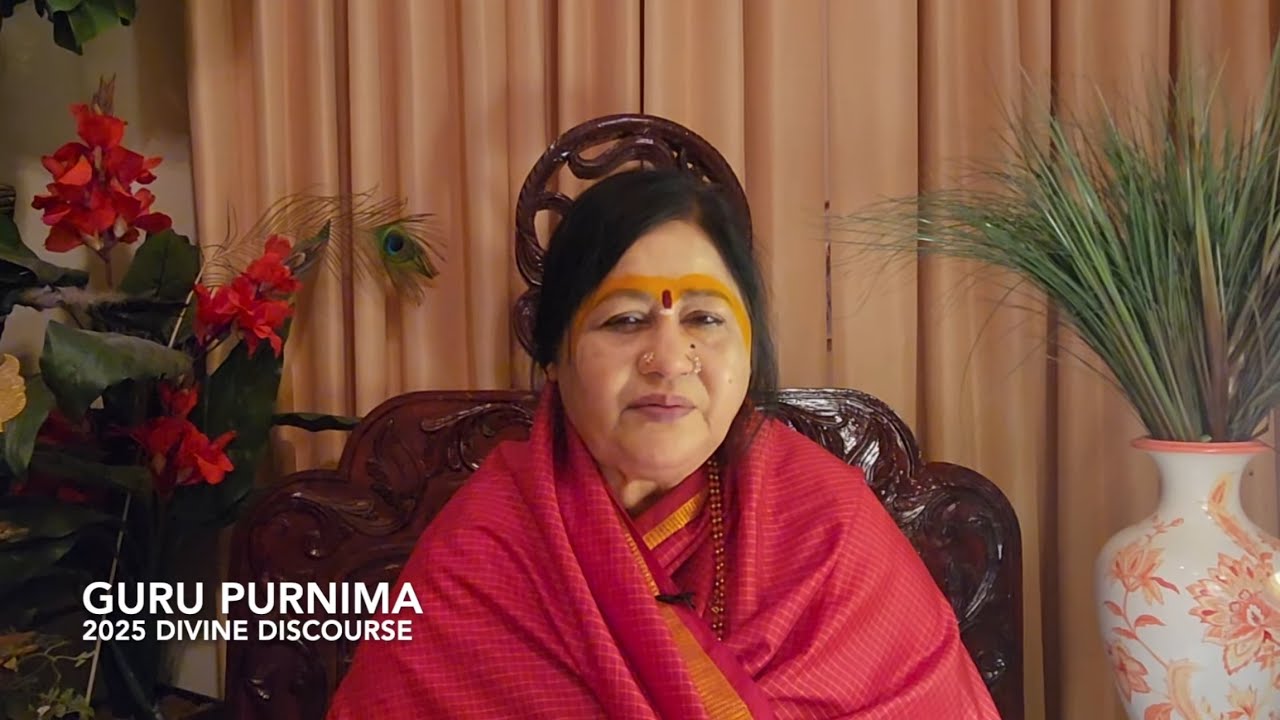
In this divine discourse, Sri Karunamayi provides a comprehensive teaching on Saran Navaratri—the nine-day Hindu festival honoring the Divine Mother in her various forms. The teaching explores the festival's spiritual significance within the broader context of dharmic practice, explains the specific rituals and observances that practitioners undertake during this period, and outlines the concrete benefits that both individuals and humanity at large receive through sincere engagement with this sacred season. Rather than presenting Navaratri as merely cultural or historical, Karunamayi frames it as a living spiritual technology for inner transformation and collective healing.
What is Saran Navaratri and Why Does It Matter?
Navaratri—literally "nine nights"—is one of Hinduism's most significant festivals, celebrated twice yearly in the Hindu lunar calendar. Saran Navaratri specifically refers to the autumn celebration, occurring in September or October in the Gregorian calendar. This nine-day festival honors Devi (the Divine Mother) as she manifests through nine distinct forms, each representing different aspects of shakti—cosmic feminine power and creative force.
Sri Karunamayi's teaching positions Navaratri not as a mere cultural observance but as a profound spiritual practice rooted in the tantric and Vedantic traditions. The festival exists within a living yogic framework where the cycles of nature, the rhythms of the cosmos, and human consciousness are understood as deeply interconnected. During Navaratri, the veil between material and spiritual dimensions is said to become thinner, creating a window of heightened receptivity for sincere practitioners.
The significance extends beyond individual spiritual practice. According to traditional teachings that Karunamayi draws upon, Navaratri represents a time when the collective energy of humanity can be harnessed and directed toward greater harmony, healing, and evolution. The festival operates on the principle that individual spiritual work ripples outward, affecting families, communities, and the world itself.
What Are the Core Rituals and Observances of Navaratri?
Navaratri encompasses several layers of practice, accessible to practitioners at different levels of spiritual maturation and capacity. Traditional observances include:
- Fasting and Dietary Modifications: Many practitioners undertake fasts during Navaratri, ranging from complete abstinence to consuming only sattvic (pure, light) foods. This practice is understood not primarily as physical purification but as a means of refining the subtle body and increasing receptivity to higher frequencies of consciousness.
- Chanting and Mantra Recitation: Devotional chanting, particularly recitations of the Devi Mahatmya (the sacred hymns celebrating the Divine Mother) and the Lalita Sahasranama (the thousand names of the Divine Mother), form central practices. These are not understood as mere words but as vibrational patterns that attune consciousness to the frequency of the Divine.
- Worship of the Nine Forms: Each day of Navaratri is dedicated to a specific manifestation of Devi. The first three days honor Durga (the warrior aspect), the next three days honor Lakshmi (the abundance and grace aspect), and the final three days honor Saraswati (the wisdom aspect). This sequential honoring creates a progressive unfolding of spiritual realization within the individual consciousness.
- Ritual Practices: Practitioners may maintain a dedicated altar space, make offerings of flowers, incense, and food (prasadam), and perform puja (ritual worship) to invoke the presence and blessings of the Divine Mother in her various forms.
- Meditation and Introspection: Beyond external rituals, serious practitioners use Navaratri as a period of intensified meditation, self-inquiry, and contemplative practice, turning inward to connect with the Divine Mother consciousness within their own being.
The structure of these observances is not arbitrary. Each practice serves a specific function within an integrated system designed to purify the physical body, stabilize the emotional body, refine the mental body, and ultimately awaken consciousness to its true nature as non-dual awareness inseparable from the Divine.
What Are the Individual and Collective Benefits of Navaratri Practice?
Sri Karunamayi's teaching emphasizes that Navaratri offers concrete, measurable benefits at multiple levels of being. These are not merely promised in some distant afterlife but can be directly experienced through sincere practice.
Individual Transformation: Practitioners who engage earnestly with Navaratri observances often report increased mental clarity, emotional stability, and spiritual insight. The discipline of the practice itself cultivates willpower and strengthens the capacity for sustained spiritual effort. As one deepens in meditation and mantra practice, blockages in the energy channels (nadis) dissolve, and dormant spiritual capacities awaken. The purification that occurs during this period creates space in consciousness for higher dimensions of awareness to manifest.
Healing and Wholeness: The Divine Mother in all her forms is understood as the supreme healer. Through sincere invocation and worship, practitioners invoke her healing presence within themselves and others. This operates at levels far deeper than physical healing alone—it addresses psychological wounds, unresolved trauma patterns, and the fundamental alienation of ego-consciousness from its true nature. Devotees report profound inner peace, freedom from chronic anxiety and depression, and a felt sense of being held and protected by something vastly greater than themselves.
Removal of Obstacles: In Hindu philosophy, all resistance to spiritual growth—both internal (in the form of negative patterns, fears, and limiting beliefs) and external (in the form of circumstances that obstruct growth)—is understood as a manifestation of demonic or tamasic (inert, dark) forces. The warrior aspect of Devi, particularly Durga, is invoked specifically to cut through these obstacles with the precision of a sword. Practitioners often find that long-standing blocks and limitations that seemed intractable suddenly dissolve during or after sincere Navaratri practice.
Abundance and Grace: The Lakshmi aspect of Navaratri invokes the flow of divine grace—not exclusively material wealth, but the abundance of love, peace, wisdom, and spiritual fulfillment. Through this practice, practitioners often experience a shift in their relationship with material reality, moving from grasping and scarcity consciousness toward a felt sense of divine provision and cosmic generosity.
Wisdom and Self-Knowledge: The final triad of Navaratri days honors Saraswati, the embodiment of transcendental wisdom and the revelatory knowledge that dissolves ignorance. Practitioners using this period for deep study and meditation often experience sudden breakthroughs in understanding, not intellectual understanding alone but direct gnosis of non-dual truth.
Collective Healing: Beyond individual benefits, Navaratri operates as a planetary healing technology. When many practitioners worldwide engage in synchronized spiritual practice during these nine days, a coherent field of elevated consciousness is created. This field uplifts the collective human consciousness, reduces violence and destructive tendencies, and calls forth the emergence of dharma (righteous order) in the world. In times of global upheaval, Navaratri becomes an essential practice for those committed to spiritual activism and planetary healing.
How Does Navaratri Fit Into a Broader Spiritual Path?
Sri Karunamayi's teaching presents Navaratri as integral to a living spiritual path rather than as an isolated festival or quaint cultural practice. For serious seekers, Navaratri functions as a powerful accelerator—a time when the normal obstacles to spiritual progress are temporarily lifted, and the blessings flow more abundantly. However, this window is not a substitute for year-round practice. Rather, it is a catalyst that deepens and accelerates ongoing sadhana (spiritual practice).
The festival operates on the principle that consciousness is not static but cyclical, seasonal, and responsive to cosmic rhythms. Just as the body responds to seasonal changes and the moon's phases influence tides and biological cycles, consciousness too has natural cycles of opening, activation, and integration. Navaratri aligns personal practice with these cosmic cycles, making the flow of grace more accessible and the response of consciousness more immediate.
Where to go from here
If this teaching resonates, the most direct path forward is sincere engagement with Navaratri observances in the coming festival season. This might begin simply—with setting aside dedicated time for meditation, learning basic mantras or chants to the Divine Mother, or maintaining a daily ritual practice. For those without access to a traditional temple, even personal puja in a home altar space, combined with sincere intention and devotional feeling, creates a powerful aperture for grace.
Deeper engagement might include finding a qualified teacher within a living spiritual lineage, studying the classical texts that underlie these practices (such as the Devi Mahatmya), and exploring how the nine forms of the Divine Mother map onto one's own inner landscape and unfolding spiritual journey. Most importantly, approach this not as intellectual study alone but as an invitation to participate consciously in the rhythms of cosmic transformation that unfold constantly, whether we are aware of them or not.