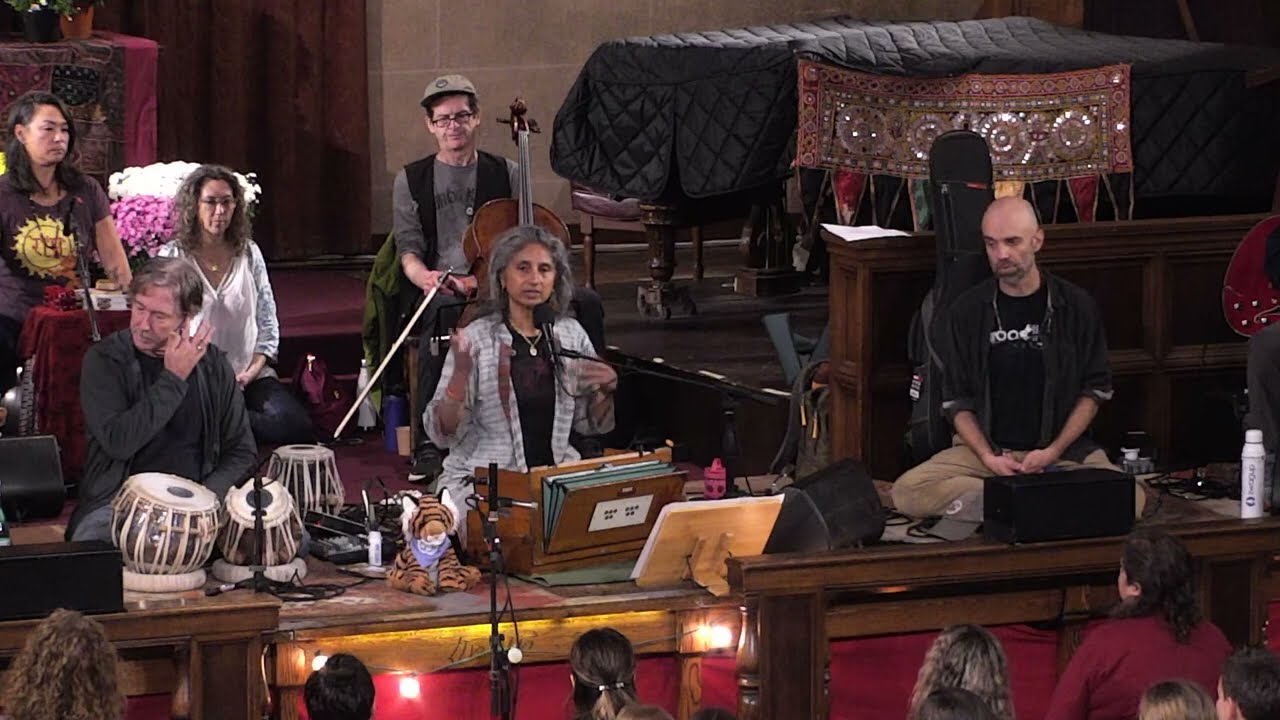
Trevor Hall's song "Strength In One" (featuring Dirtwire) is a call to spiritual awakening and inner reclamation during a moment of global urgency. The track moves through three primary themes: the necessity of preserving one's warrior spirit, the imperative to look inward and meet one's own maker, and the vision of collective building through unified sound. Rather than offering passive consolation, the song frames spiritual practice as an active, embodied response to external crisis—neither resignation nor despair, but disciplined engagement with one's own power.
What Does It Mean To Lose Your Warrior Spirit?
The opening refrain—"People don't you lose your warrior spirit"—establishes the song's central concern: the erosion of inner power under pressure. In the context of spiritual teaching, the "warrior spirit" is not aggression or violence, but the quality of active discernment, resilience, and refusal to be diminished by circumstances. Hall frames this as something under threat, something that can be forgotten or surrendered.
The warrior archetype appears across traditions: the spiritual warrior in Buddhism who faces suffering directly; the kshatriya dharma in Hindu philosophy; the disciplined practitioner who shows up to practice regardless of conditions. Hall's invocation suggests that in times of crisis—whether personal or collective—this quality is precisely what gets abandoned first. People become passive, waiting for external solutions, or they become depleted and give up. The song's urgency lies in naming this tendency and calling it back.
Why Does the Song Call Listeners to Stand in Power?
The second verse shifts the framing slightly: "People this may be the final hour." This is not apocalyptic despair, but a statement of consequence. If the current moment carries real stakes, then standing in one's own power is not luxury or spiritual theater—it is practical necessity.
The phrase "better find a new way" acknowledges that old strategies are failing. When the song says "All upon the sky / I can only see rain," it describes a world that appears to offer no easy answers. In this context, "standing in power" means accessing something internal rather than waiting for external conditions to shift. It means recognizing that the listener's own awareness, intention, and presence are resources—not mystical abstractions, but real agency within one's own life and relationships.
What Does It Mean To Look Inside and Meet Your Maker?
The second half of the song introduces a contemplative turn: "People don't forget your own true nature / People look inside and meet your maker." This gesture points toward self-inquiry—not as escape from the world, but as deepening of resource. To "meet your maker" is to encounter the creative force within oneself, the part that is not conditioned, not reactive, but originative.
In many spiritual traditions, this inward meeting is understood as non-dual encounter: the recognition that the consciousness looking inward is itself divine or unconditioned. Hall does not explain this philosophically in the song; instead, he names it as something people should not "forget"—suggesting it is a knowing already present, a capacity already available, that has simply been obscured by habitual distraction or despair.
How Does Music Function as a Tool for Collective Awakening?
The song's repeated return to the chorus—"Calling on a new sound / Strength in One"—reveals music itself as the mechanism. Dirtwire's production, with its electronic textures layered beneath Hall's vocals, creates an immersive sonic field rather than a message to be intellectually understood.
The phrase "strength in one" contains deliberate ambiguity: it could mean strength found in unity, strength found in singular focus, or strength found in the One (a traditional term for non-dual reality). By not resolving this ambiguity, the song allows each listener to meet it according to their own understanding while still participating in a collective invocation. The applause and live performance elements audible in the recording reinforce this—there is a community present, bearing witness and responding.
What Is the Vision of Building Presented Here?
When the song declares "Evil gonna break down / We about to build up," it does not propose a naive optimism. Instead, it suggests that the breakdown of systems or narratives that do not serve is inevitable, and that simultaneously, construction is possible. The shift from passive resignation ("we're gonna survive") to active building ("we about to build up") is the song's core moral gesture.
This building is not specified—it is not about constructing institutions or accumulating resources. Instead, it appears to be about constructing a new consciousness, a new alignment, a new way of relating to one's own nature and to each other. The repeated invocation of "calling on a new sound" suggests that this building happens first at the level of vibration, intention, and shared resonance before it manifests in material form.
Where to go from here
For listeners drawn to the song's invitation, the next steps might include: (1) examining where you have abandoned your own sense of agency or inner power, and what circumstances triggered that abandonment; (2) developing a regular practice of inward inquiry—meditation, journaling, or contemplation—that allows you to "meet your maker," that creative source within yourself; (3) seeking out communities (musical, spiritual, activist) that operate from unified intention rather than fragmentation; (4) asking yourself what you are building, not just what you are resisting or breaking down; and (5) listening to music and art not merely as entertainment, but as invitations to shift your own frequency and join a larger field of intention.