EveryEvent Barcelona

Ver Todos los Events

Find every event in Barcelona

events

Concerts & Live Music
Festivals
Sports & Recreation
Food & Drink
Arts & Culture
Community
Family & Kids
Nightlife
Comedy
Theater
Destinos Populares
BaliSedonaLos AngelesCosta RicaNew YorkSan FranciscoAustinMiamiJoshua TreeTulum
Ver Todas las CategoríasVer Todos los Destinos

Explorar Todas las Características

Herramientas poderosas para hacer crecer tus eventos

Características de la Plataforma

Precios Dinámicos Inteligentes
Categorías de Entradas
Asientos Asignados
Recuperación de Carritos
Recuperación de Visitantes
Donaciones y Escala Móvil
Motor de Afiliados
Escáner de Entradas
Códigos de Cupón
Preguntas Personalizadas
Compartir Entradas
Ventas Adicionales
Análisis e Informes
Secuencias de Email
Lista de Espera / Notificar / Recordar
Explorar
Discovery HubArtists & PerformersVenuesKnowledge Base
Ver Todas las CaracterísticasSobre Nosotros
PreciosBlog
Language
Saved events
Ver Todos los Eventos

events

Concerts & Live MusicFestivalsSports & RecreationFood & DrinkArts & CultureCommunityFamily & KidsNightlife

Destinos Populares

BaliSedonaLos AngelesCosta RicaNew YorkSan Francisco

Explorar

Discovery HubArtists & PerformersVenuesKnowledge Base

Características de la Plataforma

Precios Dinámicos InteligentesCategorías de EntradasAsientos AsignadosRecuperación de CarritosRecuperación de VisitantesDonaciones y Escala MóvilMotor de AfiliadosEscáner de EntradasCódigos de CupónPreguntas PersonalizadasCompartir EntradasVentas AdicionalesAnálisis e InformesSecuencias de EmailLista de Espera / Notificar / Recordar
Ver Todas las CaracterísticasSobre Nosotros
PreciosBlog
Iniciar sesiónRegistrarseOrganizadores de Eventos
  • Browse All Events
  • Concerts & Live Music
  • Festivals
  • Sports & Recreation
  • Food & Drink
  • Arts & Culture
  • Community
  • Family & Kids
  • Nightlife
  • Todas las Categorías →
  • All Destinations →
  • For Promoters
  • For Artists
  • For Venues
  • For Festivals
  • For Event Spaces
  • For Nonprofits
  • For Bloggers
  • For Speakers
  • Brand Ambassador
  • Case Studies
  • Red de +350K Compradores
  • Recuperación de Carritos
  • Precios Dinámicos Inteligentes
  • Categorías de Entradas
  • Eventos Recurrentes
  • Asientos Asignados
  • Motor de Afiliados
  • Lista de Espera / Notificar
  • Escáner de Entradas
  • Widget Embebido
  • Sindicación de eventos
  • Centro de mensajes
  • Integraciones
  • Reportes
  • Todas las Características →
  • Acerca de
  • El ecosistema
  • Blog
  • Glosario
  • Inspiración
  • Centro de Ayuda
  • Contacto
  • Documentación API
  • Recursos de Marca
  • Carreras
  • Prensa
  • Términos de Servicio
  • Política de Privacidad

Events

  • Browse All Events
  • Concerts & Live Music
  • Festivals
  • Sports & Recreation
  • Food & Drink
  • Arts & Culture
  • Community
  • Family & Kids
  • Nightlife
  • Todas las Categorías →

Getaways

  • All Destinations →

For Organizers

  • For Promoters
  • For Artists
  • For Venues
  • For Festivals
  • For Event Spaces
  • For Nonprofits
  • For Bloggers
  • For Speakers
  • Brand Ambassador
  • Case Studies

Características

  • Red de +350K Compradores
  • Recuperación de Carritos
  • Precios Dinámicos Inteligentes
  • Categorías de Entradas
  • Eventos Recurrentes
  • Asientos Asignados
  • Motor de Afiliados
  • Lista de Espera / Notificar
  • Escáner de Entradas
  • Widget Embebido
  • Sindicación de eventos
  • Centro de mensajes
  • Integraciones
  • Reportes
  • Todas las Características →

Empresa

  • Acerca de
  • El ecosistema
  • Blog
  • Glosario
  • Inspiración
  • Centro de Ayuda
  • Contacto
  • Documentación API
  • Recursos de Marca
  • Carreras
  • Prensa
  • Términos de Servicio
  • Política de Privacidad
EveryEvent
© 2026 EveryEvent Barcelona. Todos los derechos reservados.
Inspiration

What is God?Creator vs Creation

Sadhguru
Sadhguru
Sep 2, 2012
6 min de lectura

Sadhguru addresses a fundamental spiritual question: what is God? He argues that most people's concepts of God are simply exaggerated projections of themselves, shaped by what they observe in the world. He challenges the division many traditions make between a "pure" creator and a "filthy" creation, pointing out this dualism is itself a human construct. The source of creation, he suggests, exists beyond the reach of human understanding—it can only be experienced directly, never grasped intellectually.

Leer · 5 secciones

How Do We Define God?

When people ask "What is God?" they are typically drawing on their immediate experience of the world and enlarging it. Sadhguru observes that whatever idea someone holds about God is "only a definition according to what we see around us." This is not a neutral observation—it is a constraint. Most people, he explains, see God as an exaggerated version of themselves.

This insight cuts to the heart of why religious traditions differ so dramatically. A person who values power will imagine a God who is supremely powerful. Someone drawn to compassion will project a compassionate deity. A culture that prizes justice will envision a God who judges and punishes. None of these are discoveries of what God actually is; they are mirror images cast outward. The definition itself reveals far more about the definer than about the object being defined.

When we try to understand God through reason and language—the tools humans have—we are already limiting something that may exist entirely outside those domains. A definition is, by nature, a boundary. It is a container. But the source of all creation cannot be reduced to a container without losing its essence in translation.

The Creator-Creation Split: A False Division

Sadhguru addresses a common theological problem: the belief that the creator is pure, great, and sacred, while creation is dirty, filthy, or corrupt. This division appears across many religious traditions—the idea that God is perfect spirit while the material world is degraded matter. This creates an inherent contradiction: how could a perfect, pure creator produce an impure creation? And if the creator is responsible for creation, how can the creator be untainted by it?

This dualism is ultimately a human projection. We see ourselves as separate from nature, as agents acting upon an external world. We then magnify this sense of separation into the cosmic order: spirit versus matter, sacred versus profane, good versus evil. But Sadhguru's point is that this division does not reflect reality—it reflects our limited way of perceiving reality.

If creation is indeed a manifestation of the creator, then the creator is fundamentally present in creation. There cannot be a radical split. A creator who produces filth is either not perfectly pure, or the idea of "filth" is itself a human judgment, a label we impose on matter rather than an intrinsic property of creation. This is why Sadhguru challenges both poles of the distinction: the assumption that God is great because God is distant, and the assumption that creation is filthy because it is physical.

Why the Source Cannot Be Understood

The central claim in this talk is that "whatever is the source of creation can only be experienced and not understood." This is a radical statement about the limits of human knowledge. It does not deny that the source exists or that it is knowable; rather, it insists that the mode of knowing available to us is experience, not conceptual understanding.

Understanding typically means breaking something into parts, seeing relationships between parts, fitting new information into existing frameworks. This is how the rational mind works. But if the source of creation is the ground from which all frameworks arise, then no conceptual framework can contain it. Any attempt to fit it into a mental box will fail—not because we lack sufficient data, but because the box itself is too small.

Experience, by contrast, is direct contact. When you experience something, there is no intermediary of thought between you and the thing itself. You are present to it as it is. Sadhguru suggests that encountering the source of creation requires this kind of immediacy—a dropping of the machinery of thought and a simple, open presence to what is.

This distinction also explains why different spiritual traditions can all point toward the same source while using radically different language and theology. A Hindu worshiper, a Christian mystic, a Sufi saint, and a Buddhist meditator may all be approaching the same ground of being through different doors—not because their doctrines are equivalent (they are not), but because the ultimate reality itself transcends all doctrines.

The Problem of Projection in Spirituality

Sadhguru's emphasis on how people construct God in their own image is not merely negative criticism. It points to a real obstacle in spiritual seeking. If you approach the source of creation with a pre-formed image—a God you have already defined—you will only find confirmation of your definition. You will miss the actual encounter because you are too busy recognizing your own reflection.

This is why many spiritual traditions recommend the dissolution of concepts before approaching what is ultimate. In meditation, in prayer, in ritual—the goal is often to quiet the inner chatter, to suspend judgment, to empty the mind of its ready-made categories. Only then is there space for genuine meeting.

Yet most people remain trapped in projection. They grow up with cultural and family definitions of God. They read scriptures and adopt inherited concepts. They build belief systems around these definitions. And then they mistake their beliefs for knowledge. This is the trap Sadhguru identifies: you think you know something about God because you have a clear definition, when in fact you have only produced a sophisticated echo of yourself.

Where to go from here

If you find resonance with Sadhguru's approach, the logical next step is to examine your own ideas about God, divinity, or the ultimate. What words do you use? Where did those words come from? Are they received from others, or discovered in your own experience? Are they descriptions of something you have tasted directly, or intellectual positions you have adopted? What would change if you let go of the definition for a moment and simply asked: what if I don't know? What would it mean to be genuinely open to encountering the source of creation without the filter of my concepts?

This is not a call to abandon all theology or spiritual practice. Rather, it is an invitation to hold your beliefs lightly, recognizing them as fingers pointing at the moon rather than the moon itself. It is a suggestion that the deepest knowing might require a shift from understanding to experience—from analysis to presence. Whether through meditation, prayer, contemplation, or service, the traditions agree: the source can be met, but only by those willing to step beyond the boundaries of their definitions.
Sadhguru
AutorSadhguru

Indian yogi, mystic, and founder of the Isha Foundation. Through his programs (Inner Engineering, Bhava Spandana, Samyama) and books, he has introduced millions worldwide to a cont…

Ver perfilSitio web
Explorar temas
God-conceptCreator-creationSpiritual-experienceProjectionMysticism

¿Tienes Preguntas?

Preguntas Frecuentes

Sadhguru argues that people define God as an exaggerated version of themselves, based on what they observe around them. A person's religious concept of God reflects their own values and nature enlarged—so different cultures and individuals project different attributes onto the divine based on what matters to them.
Sadhguru points out that if the creator is truly pure and responsible for creation, then creation cannot be fundamentally filthy or degraded. This creator-creation split is a human projection that doesn't reflect reality—it reflects our limited way of perceiving and dividing the world into sacred and profane.
Understanding relies on breaking things into parts and fitting them into mental frameworks. But the source of creation exists beyond all frameworks, so rational understanding cannot grasp it. Only direct experience—immediate, unmediated contact—allows genuine encounter with what is ultimate.
If you approach the divine with a pre-formed definition based on your own image, you only recognize your own reflection. You miss direct encounter because you are too busy confirming your existing beliefs. Spiritual traditions address this by encouraging the suspension of concepts and the quieting of the thinking mind.
Yes, according to Sadhguru's view. Different traditions may use radically different language and theology, but if they are pointing toward the same ground of being—which transcends all doctrines and concepts—then their different descriptions need not contradict. The source itself exists beyond any single theological framework.
Belief is intellectual—you accept ideas handed down by tradition or culture. Experience is direct contact without the intermediary of thought. Sadhguru suggests that genuine knowing of the source requires shifting from the conceptual realm of belief to the immediacy of presence and experience.
No. Sadhguru affirms that the source of creation exists and can be known, but through experience rather than intellectual understanding. His point is not that the divine is unreachable, but that reaching it requires a different mode of knowing than rational analysis or doctrinal belief.

Seguir leyendo

More from Sadhguru

Ver Todo
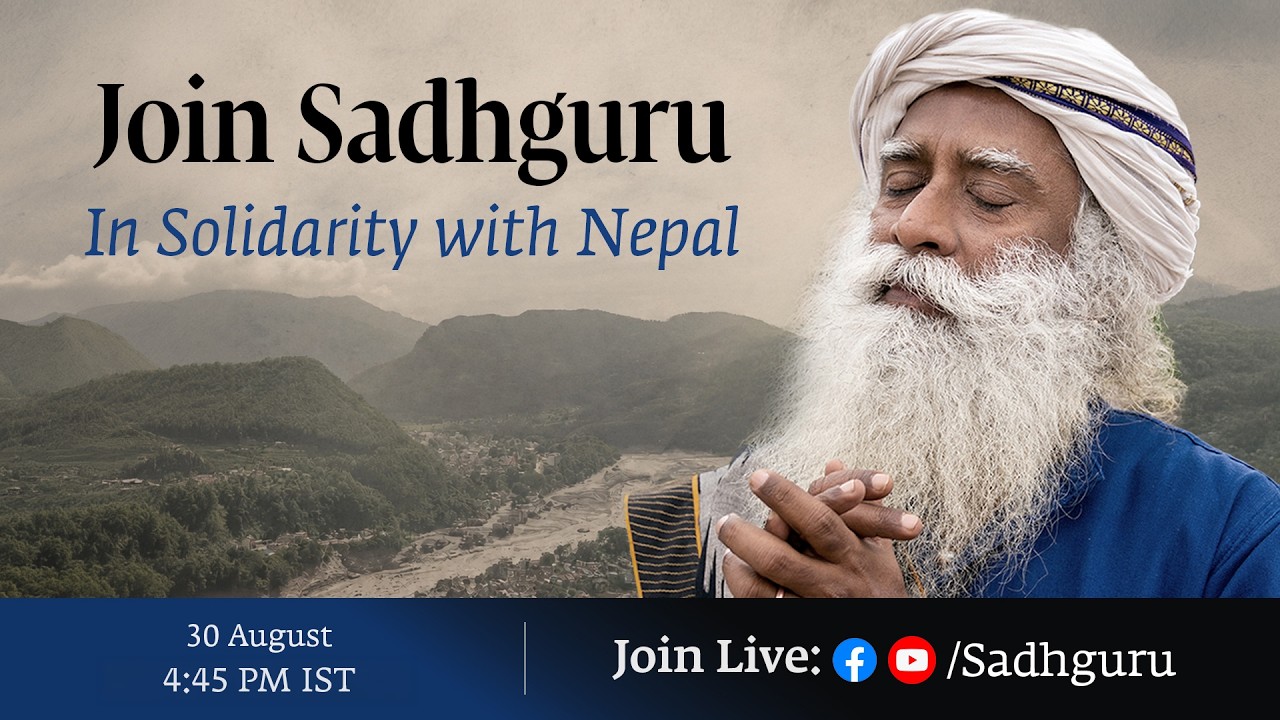
When Grief Becomes a Mirror: What the Nepal Floods Teach
Featured

When Grief Becomes a Mirror: What the Nepal Floods Teach

A flash flood on the Nepal-Tibet border devastated communities and claimed lives. This event became a moment to examine how we respond to tr…

1 min read
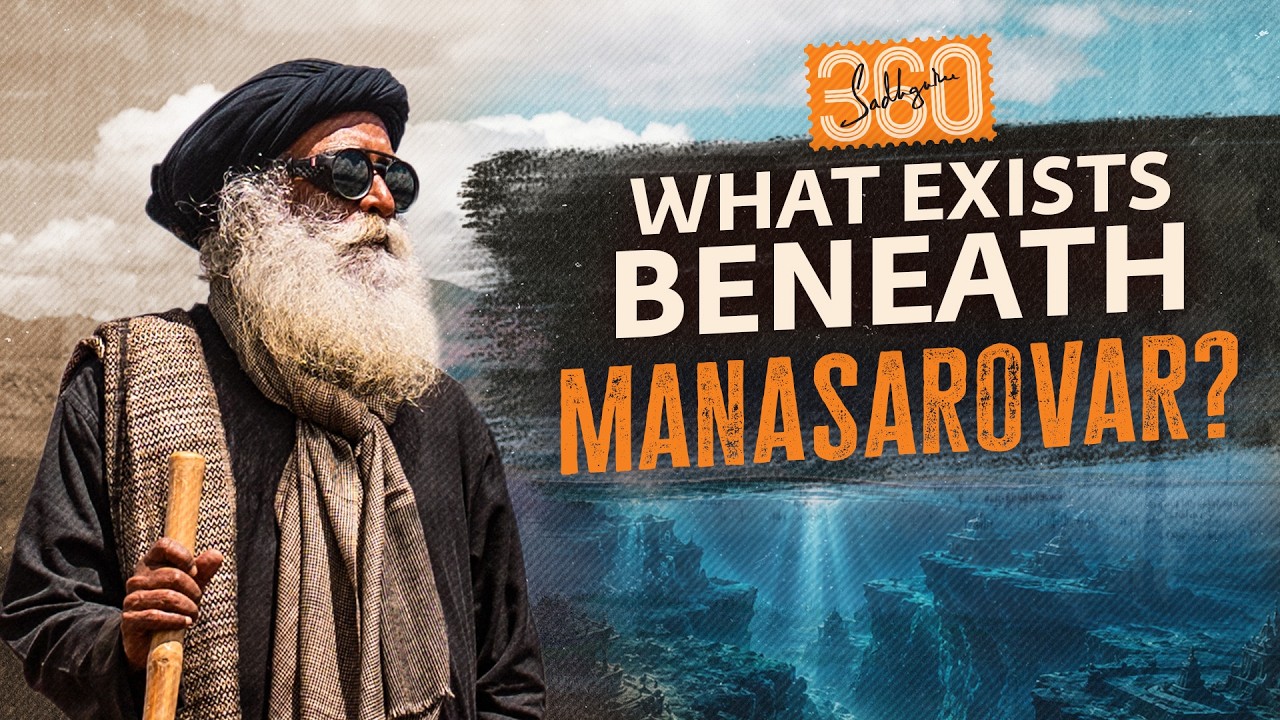
Mount Kailash's Hidden Dimensions: Mystical Phenomena Beyond Logic
Featured

Mount Kailash's Hidden Dimensions: Mystical Phenomena Beyond Logic

A 21-year pilgrimage reveals Mount Kailash and Lake Manasarovar as repositories of consciousness and extraordinary life forms defying conven…

1 min read
How Sitting Still Proves You're Already Awakening
Featured

How Sitting Still Proves You're Already Awakening

Most people can't sit quietly without discomfort, but if you can, you're already further along spiritually than you realize. Eckhart Tolle e…

1 min read
The Missing Piece: How Real Thinking Creates Real Results
Featured

The Missing Piece: How Real Thinking Creates Real Results

Most vision boards fail because people skip the actual thinking. Eckhart Tolle reveals the rhythm that unlocks insight and the two distinct …

1 min read

Sigue explorando

Continúa tu camino

Más sabiduría y encuentros de todo el directorio de BrightStar.

Más artículos

Recorre la biblioteca completa de enseñanzas, entrevistas y guías.

Ver todos los artículos →

Maestros y artistas

Explora los linajes, músicos y guías del mundo consciente.

Explorar artistas →

Encuentra un evento

Kirtan, retiros, baños de sonido, breathwork, festivales — muy pronto.

Ver eventos →