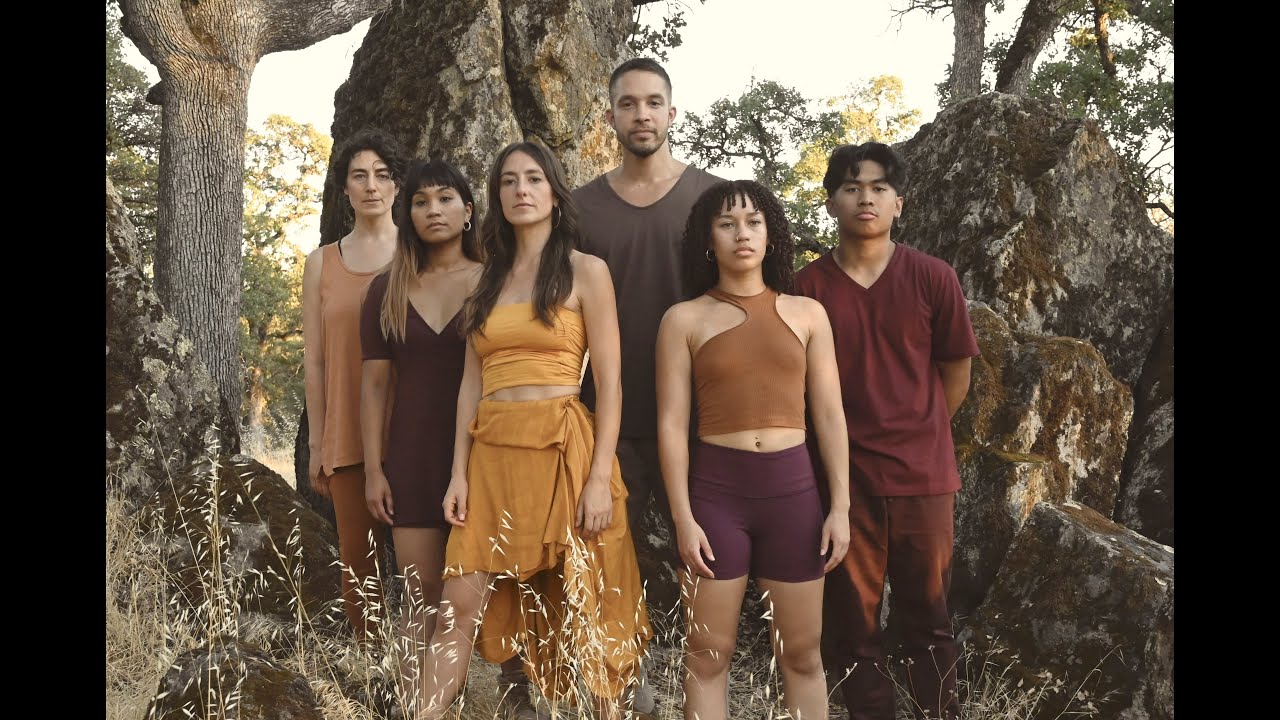
What Does "Winds of the West" Explore?
The song centers on a repeating invocation: "I feel the Winds of the West, out breath, letting go of my leaves, all I do not need, into Darkness of the Fall, Sunset, I release, receive, getting ready for silence." This poetic structure uses natural imagery—autumn, falling leaves, westward movement—as a container for exploring release and surrender. The west traditionally carries associations with endings, dissolution, and the direction of sunset. Here, Nereo uses that geography of meaning to mark a threshold in the cycle of holding and letting go.
Rather than treating autumn as loss, the song frames release as an active, intentional practice. "Letting go of my leaves, all I do not need" suggests discrimination—what stays, what falls away. The progression from "release" to "receive" indicates that surrender is not passive emptying but an exchange, a making-space for what comes next. Getting "ready for silence" positions silence not as death but as fertile ground, the pause before the next movement.
How Does the Music Support the Lyrical Intention?
The performance at the Dhyana Center (a meditation center in Sebastopol, California) places this song in a contemplative context. Ayla Nereo's work bridges songwriting, sound healing, and the activation of creative voice. MaMuse joins as a collaborator, creating a call-and-response or harmonic dialogue that mirrors the duality in the lyric—release and receive, out breath and in breath, darkness and readiness.
The repetition of the verse across the performance allows listeners to move past the cognitive grip of the words and enter a trance or meditative state. Rather than advancing narrative, the song circles back, deepening. This is a structure familiar in both sacred chanting and in the work of voice-centered artists who use sound as a direct pathway to embodied understanding.
What Is the Role of Breath and Voice in This Work?
The explicit reference to "out breath" opens the song as a breathing practice. In yogic and meditative traditions, the out-breath carries association with release, letting go, and parasympathetic activation. By anchoring the "Winds of the West" metaphor to the physical reality of exhalation, Nereo grounds the song in the body. This is not abstract symbolism but an invitation to literally practice release with each breath during the performance.
Ayla Nereo's broader work, including her free 5-day course "Meeting the Muse," emphasizes the connection between unlocking voice and accessing creative aliveness. In this song, voice itself becomes the instrument of release—by singing the words, the performer embodies the letting go they describe. The listener, in turn, breathes along, making the song a shared somatic experience.
Why Does Darkness Appear in the Arc of Release?
The "Darkness of the Fall, Sunset" might initially seem discordant with the theme of readiness and receiving. But in contemplative traditions, darkness is not opposed to light—it is the womb space, the unknowing that precedes transformation. The song does not bypass darkness or skip over it; instead, it moves into it, with intention. "I release, receive, getting ready for silence" suggests that moving into darkness is how one prepares for the next unfolding.
This reflects a mature understanding of seasonal and personal cycles: summer's fullness naturally gives way to autumn's shedding, which requires passing through the dark months before spring returns. To be "getting ready for silence" is to not resist the quiet, the void, the space between breaths—but to welcome it as necessary.
What Makes This Performance a Meditation Rather Than a Concert?
Filmed at the Dhyana Center (dhyana meaning meditation in Sanskrit), this performance takes place in a specifically spiritual container. The repetitive structure, the emphasis on breath, the harmonic collaboration, and the focus on an inward journey rather than a narrative arc all signal that this is offered as a practice, not entertainment. The duration of three minutes also suggests a song designed for integration, not for passive listening. It is short enough to loop, to return to, to use as a meditation timer or a daily anchor.
Nereo's broader approach to music emphasizes it as a tool for awakening and aliveness. This performance invites the listener to sing along, to breathe along, to move into the themes of release and readiness as a lived practice rather than as intellectual understanding.
Where to Go From Here
If "Winds of the West" resonates, explore Ayla Nereo's broader catalog and teaching offerings. Her free 5-day course "Meeting the Muse" dives into unlocking voice and walking the path of creative aliveness—the conditions that allow songs like this one to emerge. You can follow her music on Spotify, Apple Music, and her official website at aylanereo.com. The practice itself is simple: return to this song during a season of change or release in your own life, use it as a breath meditation, or sing it aloud to activate the voice as a tool for embodied transformation.