EveryEvent Barcelona

Parcourir tous les Events

Find every event in Barcelona

events

Concerts & Live Music
Festivals
Sports & Recreation
Food & Drink
Arts & Culture
Community
Family & Kids
Nightlife
Comedy
Theater
Destinations populaires
BaliSedonaLos AngelesCosta RicaNew YorkSan FranciscoAustinMiamiJoshua TreeTulum
Voir toutes les catégoriesVoir toutes les destinations

Explorer toutes les fonctionnalités

Des outils puissants pour développer tes événements

Fonctionnalités de la plateforme

Tarification dynamique intelligente
Catégories de billets
Places assignées
Récupération des paniers abandonnés
Récupération des visiteurs
Dons & Prix variables
Système d'affiliation
Scanner de billets
Codes promo
Questions personnalisées
Partage de billets
Ventes additionnelles & Options
Analyses & Rapports
Séquences d'emails
Liste d'attente / Notifier / Rappeler
Explorer
Discovery HubArtists & PerformersVenuesKnowledge Base
Voir toutes les fonctionnalitésÀ propos
TarifsBlog
Language
Saved events
Parcourir tous les événements

events

Concerts & Live MusicFestivalsSports & RecreationFood & DrinkArts & CultureCommunityFamily & KidsNightlife

Destinations populaires

BaliSedonaLos AngelesCosta RicaNew YorkSan Francisco

Explorer

Discovery HubArtists & PerformersVenuesKnowledge Base

Fonctionnalités de la plateforme

Tarification dynamique intelligenteCatégories de billetsPlaces assignéesRécupération des paniers abandonnésRécupération des visiteursDons & Prix variablesSystème d'affiliationScanner de billetsCodes promoQuestions personnaliséesPartage de billetsVentes additionnelles & OptionsAnalyses & RapportsSéquences d'emailsListe d'attente / Notifier / Rappeler
Voir toutes les fonctionnalitésÀ propos
TarifsBlog
ConnexionS'inscrireOrganisateurs d'événements
  • Browse All Events
  • Concerts & Live Music
  • Festivals
  • Sports & Recreation
  • Food & Drink
  • Arts & Culture
  • Community
  • Family & Kids
  • Nightlife
  • Toutes les catégories →
  • All Destinations →
  • For Promoters
  • For Artists
  • For Venues
  • For Festivals
  • For Event Spaces
  • For Nonprofits
  • For Bloggers
  • For Speakers
  • Brand Ambassador
  • Case Studies
  • Réseau de 350K+ acheteurs
  • Récupération des paniers abandonnés
  • Tarification dynamique intelligente
  • Catégories de billets
  • Événements récurrents
  • Places assignées
  • Système d'affiliation
  • Liste d'attente / Notifier
  • Scanner de billets
  • Widget intégrable
  • Diffusion d'événements
  • Messagerie
  • Intégrations
  • Rapports
  • Toutes les fonctionnalités →
  • À propos
  • L'écosystème
  • Blog
  • Glossaire
  • Inspiration
  • Centre d'aide
  • Contact
  • Documentation API
  • Ressources de marque
  • Carrières
  • Presse
  • Conditions d'utilisation
  • Politique de confidentialité

Events

  • Browse All Events
  • Concerts & Live Music
  • Festivals
  • Sports & Recreation
  • Food & Drink
  • Arts & Culture
  • Community
  • Family & Kids
  • Nightlife
  • Toutes les catégories →

Getaways

  • All Destinations →

For Organizers

  • For Promoters
  • For Artists
  • For Venues
  • For Festivals
  • For Event Spaces
  • For Nonprofits
  • For Bloggers
  • For Speakers
  • Brand Ambassador
  • Case Studies

Fonctionnalités

  • Réseau de 350K+ acheteurs
  • Récupération des paniers abandonnés
  • Tarification dynamique intelligente
  • Catégories de billets
  • Événements récurrents
  • Places assignées
  • Système d'affiliation
  • Liste d'attente / Notifier
  • Scanner de billets
  • Widget intégrable
  • Diffusion d'événements
  • Messagerie
  • Intégrations
  • Rapports
  • Toutes les fonctionnalités →

Entreprise

  • À propos
  • L'écosystème
  • Blog
  • Glossaire
  • Inspiration
  • Centre d'aide
  • Contact
  • Documentation API
  • Ressources de marque
  • Carrières
  • Presse
  • Conditions d'utilisation
  • Politique de confidentialité
EveryEvent
© 2026 EveryEvent Barcelona. Tous droits réservés.
Inspiration

Cauliflower Mushroom: Sparassis Radicata'sUnderground Root System

Paul Stamets
Paul Stamets
Oct 2, 2021
7 min de lecture
À regarder · 6

Sparassis radicata, commonly called cauliflower mushroom, is a choice edible species found in old-growth forests that produces elaborate fruit bodies through an unusual underground architecture—primordia form up to six feet beneath the soil surface before snaking upward as thin stalks that eventually fruit into the distinctive cauliflower-like structures visible above ground. The mushroom produces sporasal, a novel anti-fungal antibiotic that allows it to outcompete honey mushrooms and armillaria species, suggesting it may play a host-defense role for the trees it colonizes.

Lecture · 7 sections

What Is Sparassis Radicata and Where Does It Grow?

Sparassis radicata, also known by the older scientific name Sparassis crispa, is a large, choice edible mushroom that appears to be a mass of delicate, cream-to-tan colored fronds resembling a head of cauliflower—hence its common name. Found in old-growth temperate forests, particularly in the Pacific Northwest, these specimens emerge from the forest floor among mosses and conifer root systems, often appearing as if they have materialized overnight after rainfall.

What makes Sparassis radicata distinctive among edible mushrooms is not just its appearance or culinary value, but the unusual biological architecture beneath the visible fruit body. According to mycologist Paul Stamets, pristine specimens can be "as good as it gets" in terms of size and condition, representing the product of a unique developmental process that operates mostly out of sight.

How Does the Underground Tap Root System Work?

Unlike many mushroom species that fruit relatively quickly after mycelium contacts a food source, Sparassis radicata develops through an extraordinary subterranean phase. The mushroom produces primordia—the precursor structures that will eventually become the visible fruit body—that can literally form up to six feet underground, as noted by Stamets in his fieldwork.

This underground initiation phase represents a remarkable evolutionary adaptation. The primordia do not immediately expand into fruiting bodies where they form; instead, they exist in a dormant or slowly developing state deep within the soil and wood. Over time, these underground structures "snake up, so to speak, as a thin, thin stalk," gradually elongating vertically through the substrate until they reach the surface. Only once this thin stalk has broken through to air and light does it finally expand and blossom into the full cauliflower-like fruit body that foragers recognize and harvest.

This six-foot underground journey helps explain why a single Sparassis radicata specimen can appear suddenly in a forest, and why harvesting requires digging considerably deeper than many other mushroom species. The entire fruit body is essentially anchored by a single deep-running stalk connected to the primary mycelial network located in old wood or root systems.

What Anti-Fungal Compound Does Sparassis Radicata Produce?

Sparassis radicata is not merely a culinary delicacy; it is also a medicinal species that produces a novel anti-fungal antibiotic called sporasal. This compound is significant because it directly antagonizes competitor fungi that also colonize tree root systems and heartwood, particularly the armillaria species collectively known as honey mushrooms (including the laminated root rot fungus, Armillaria ostoyae, and the mating complex Armillaria mellea).

The presence of sporasal suggests that Sparassis radicata occupies a competitive niche in the forest ecosystem. Where both Sparassis radicata and honey mushrooms occur on the same host tree or in the same microhabitat, the anti-fungal compounds produced by Sparassis radicata frequently allow it to prevail over competitors. This is not a case of one species simply being more vigorous; it is an active chemical warfare scenario in which secondary metabolites determine ecological dominance.

Is Sparassis Radicata a Parasite or a Symbiont?

The relationship between Sparassis radicata and its host tree is complex and not fully resolved by current mycological research. Stamets describes Sparassis radicata as "a very weak parasitic" mushroom, meaning it does colonize living or recently dead wood and may cause some decay, but the damage appears minimal compared to aggressive wood-degrading fungi like honey mushrooms.

A hypothesis worth considering, as Stamets suggests, is that Sparassis radicata may actually provide net benefits to its host tree as part of a host-defense strategy. By producing anti-fungal antibiotics and competing successfully against more aggressive pathogens like Armillaria ostoyae, the mushroom may effectively protect the tree from more serious mycological infections. In this model, the presence of Sparassis radicata would represent a form of mutualism—the mushroom gains access to wood substrates and can fruit reliably, while the tree is spared from infection by more pathogenic fungi.

This hypothesis remains speculative, but it aligns with emerging evidence that many fungal associations with trees are not simple parasite-host dynamics but rather complex three-way or multi-way interactions involving chemical signaling, competitive exclusion, and mutual benefit.

Why Do Physicians Engage in Mushroom Foraging?

Stamets notes that an increasing number of physicians are becoming seriously engaged in mushroom collecting and mycology. The reason, he explains, is straightforward: fungi have historically and continue to be a rich source of pharmaceutically active compounds and medicines. Physicians understand at a molecular level how fungi produce bioactive metabolites, and they recognize that foraging for wild mushrooms connects them directly to the organisms that have provided humanity with some of its most important medicines—from antibiotics derived from mold colonies to immunomodulating compounds found in medicinal mushrooms.

In the case of Sparassis radicata, a physician forager like Dr. Pam would recognize both the culinary value (it is a choice edible with excellent flavor and texture) and the medicinal significance of a species that produces a novel anti-fungal antibiotic. The experience of harvesting such a specimen in old-growth forest becomes doubly meaningful—combining the pleasure of sourcing nutrient-dense food with the deeper awareness of the organism's biochemical properties and ecological role.

How to Identify and Harvest Sparassis Radicata

Sparassis radicata is relatively easy to identify once you have seen a specimen or studied clear photographs. The branching structure resembles a dense cluster of noodles or a head of cauliflower, with cream to tan coloring and a somewhat crispy, delicate texture. The fronds branch repeatedly from a central base and do not have the distinct cap-and-gill structure of typical gilled mushrooms.

Harvesting requires patience and care because of the deep tap root. Rather than simply pulling or cutting the mushroom at ground level, foragers must excavate carefully, working downward around the base of the specimen to trace the thin stalk as far down as practicable. Stamets recommends trying "to get down as deep as you can," acknowledging that the full extent of the stalk may extend beyond what can reasonably be excavated. In the specimen shown in the old-growth forest of the Olympic range, the stalk extended visibly deep into the substrate—an impressive structure that demonstrates the mushroom's remarkable architectural commitment to its underground phase.

Where to Go From Here

For foragers and mushroom enthusiasts, Sparassis radicata represents an exceptional target species—large enough to provide a substantial meal, flavorful and versatile in the kitchen, and rare enough to feel like a genuine find when encountered in the field. For researchers and mycologists, the species raises ongoing questions about the nature of host-fungus relationships, the evolution of underground developmental strategies, and the mechanisms by which fungi establish chemical dominance in competitive forest environments.

If you forage in old-growth conifer forests in temperate regions, learning to identify Sparassis radicata and understanding its biology will deepen your appreciation for the hidden architectures and chemical economies of the forest floor. If you are interested in medicinal mushrooms and fungal biochemistry, Sparassis radicata exemplifies how wild edibles often carry pharmacological significance alongside their culinary appeal—a reminder that the boundary between food and medicine, in the fungal kingdom, is often blurred.
Transcript

[0:01] i found dinner you found dinner i found

[0:04] dinner come see what i found

[0:07] we're eating vegetarian tonight oh my

[0:09] gosh

[0:11] fantastic

[0:18] cauliflower mushrooms

[0:21] look at this baby

[0:22] [Applause]

[0:25] this is sporasas

[0:27] rakata also known as

[0:29] crispa

[0:30] and what's amazing about it

[0:33] it has associated with this tree

[0:36] and it has a tap root

[0:38] where the primordia can literally form

[0:42] up to six feet underground

[0:45] so think of that that's crazy

[0:47] and then it snakes up so to speak

[0:50] as a thin thin stalk and then blossoms

[0:54] into this beautiful fruit body

[0:56] and this is a pristine specimen

[1:00] folks this is as good as it gets in my

[1:03] from my experience um

[1:05] and a delicious edible choice mushroom

[1:08] it contains a novel anti-fungal

[1:10] antibiotic called sporasal

[1:13] and sprasol is actually competitive to

[1:16] the laminated root rot mushroom

[1:19] the honey mushrooms armalleria astoye

[1:22] gallica

[1:24] melia complex

[1:25] so where this mushroom occurs is

[1:27] competitive to the honey mushroom so

[1:30] it's just this dance between

[1:32] different species and the fact that

[1:34] honey mushrooms and this mushroom

[1:37] produces the anti-fungal antibiotics

[1:39] the sporasis oftentimes wins so in this

[1:42] case it's winning here

[1:44] fantastico

[1:45] yes

[1:48] i'm so heartened that so many physicians

[1:51] are really into collecting mushrooms and

[1:53] it's because fungi have been a great

[1:55] source of medicine so physicians

[1:57] understand this and dr pam being a

[1:58] physician

[1:59] you know found an edible and choice

[2:01] mushroom that has a strong anti-fungal

[2:03] antibiotic associated with it and

[2:06] go ahead and see if you can harvest it

[2:07] all right

[2:08] okay

[2:10] so i know i know

[2:12] it has a very deep

[2:14] taproot because you told me so

[2:17] i'm gonna try to get down as deep as i

[2:20] can

[2:24] it's here

[2:33] [Applause]

[2:40] whoa

[2:41] so see that right there

[2:50] there you go

[2:52] there you go dinner

[2:59] beautiful okay

[3:04] you see the top rope yeah right there

[3:08] see it

[3:10] it's big

[3:12] wow

[3:14] so the question becomes my mind

[3:16] is um

[3:17] who's cooking

[3:19] is cooking

[3:20] no is sporasas ratacata here protecting

[3:24] this tree

[3:25] uh from quick to paris's ties mushrooms

[3:28] like the honey mushroom you know it's

[3:30] part of this host defense strategy

[3:32] associate with a

[3:34] you know you could call this

[3:36] a parasitic mushroom but it's a very

[3:39] weak parasitic and i think it might give

[3:41] more benefits than

[3:43] it actually threatens the tree

[3:45] that's my hypothesis anyhow

[3:47] congratulations dr pam

[3:51] my baby i'm so proud

Paul Stamets
AuteurPaul Stamets

Mycologist and advocate who has dedicated his life to studying mushrooms and their transformative potential to heal people and restore the planet through medicine, agriculture, and…

Voir le profilSite web
Explorer les thèmes
Sparassis-radicataCauliflower-mushroomAnti-fungal-compoundsMycologyForaging

Des questions ?

Questions fréquemment posées

Sparassis radicata forms primordia—the precursor structures to the visible fruit body—up to six feet underground before slowly elongating as a thin stalk toward the surface. This extraordinary underground phase is one of the mushroom's most distinctive biological features.
Sporasal is a novel anti-fungal antibiotic compound produced by Sparassis radicata that allows it to outcompete honey mushrooms (Armillaria species) in forest ecosystems. The compound gives the mushroom a competitive chemical advantage in shared habitats.
Yes, Sparassis radicata is a choice edible and delicious mushroom species. It has no known toxins and is considered one of the better wild mushrooms for culinary use, though positive identification is essential before consumption.
The mushroom's fruiting body consists of densely branched, delicate fronds in cream-to-tan colors that resemble the florets and overall form of a head of cauliflower, hence the common name.
While Sparassis radicata does colonize wood and can be classified as a weak parasite, evidence suggests it may provide net benefits by producing anti-fungal compounds that protect the host tree from more aggressive pathogens like honey mushrooms.
Sparassis radicata is found in old-growth temperate forests, particularly in the Pacific Northwest, where it colonizes conifer root systems and heartwood, often appearing among moss on the forest floor.
Because of the deep tap root extending up to six feet underground, careful excavation around the base of the specimen is necessary to retrieve as much of the stalk as possible, rather than simply cutting or pulling the visible fruiting body.

Continuer la lecture

More from Paul

Voir tout
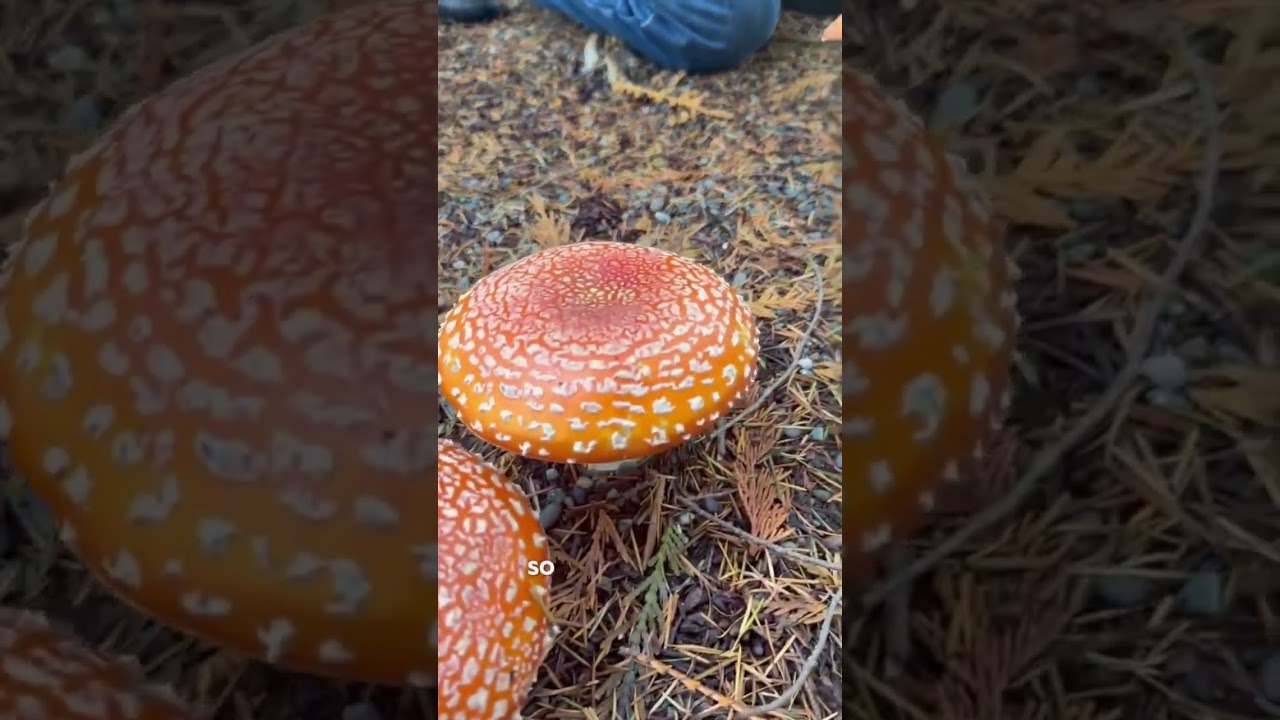
Amanita Muscaria: History, Identification & Safety of Fly Agaric
Featured

Amanita Muscaria: History, Identification & Safety of Fly Agaric

Amanita muscaria, the fly agaric, has ancient roots in pest control and cultural mythology. Despite its striking beauty, this mushroom poses…

1 min read
Lactarius Deliciosus: Identifying & Foraging the Saffron Cap
Featured

Lactarius Deliciosus: Identifying & Foraging the Saffron Cap

The saffron milk cap (Lactarius deliciosus) is an easy-to-identify edible mushroom with striking green staining and orange milk. Learn how t…

1 min read
How Sitting Still Proves You're Already Awakening
Featured

How Sitting Still Proves You're Already Awakening

Most people can't sit quietly without discomfort, but if you can, you're already further along spiritually than you realize. Eckhart Tolle e…

1 min read
The Missing Piece: How Real Thinking Creates Real Results
Featured

The Missing Piece: How Real Thinking Creates Real Results

Most vision boards fail because people skip the actual thinking. Eckhart Tolle reveals the rhythm that unlocks insight and the two distinct …

1 min read

Continue d’explorer

Poursuis ton chemin

Plus de sagesse et de rassemblements dans tout l’annuaire BrightStar.

Plus d’articles

Parcours toute la bibliothèque d’enseignements, d’entretiens et de guides.

Retour à tous les articles →

Enseignants et artistes

Découvre les lignées, les musiciens et les guides du monde conscient.

Explorer les artistes →

Trouver un événement

Kirtan, retraites, bains sonores, breathwork, festivals — bientôt près de chez toi.

Parcourir les événements →