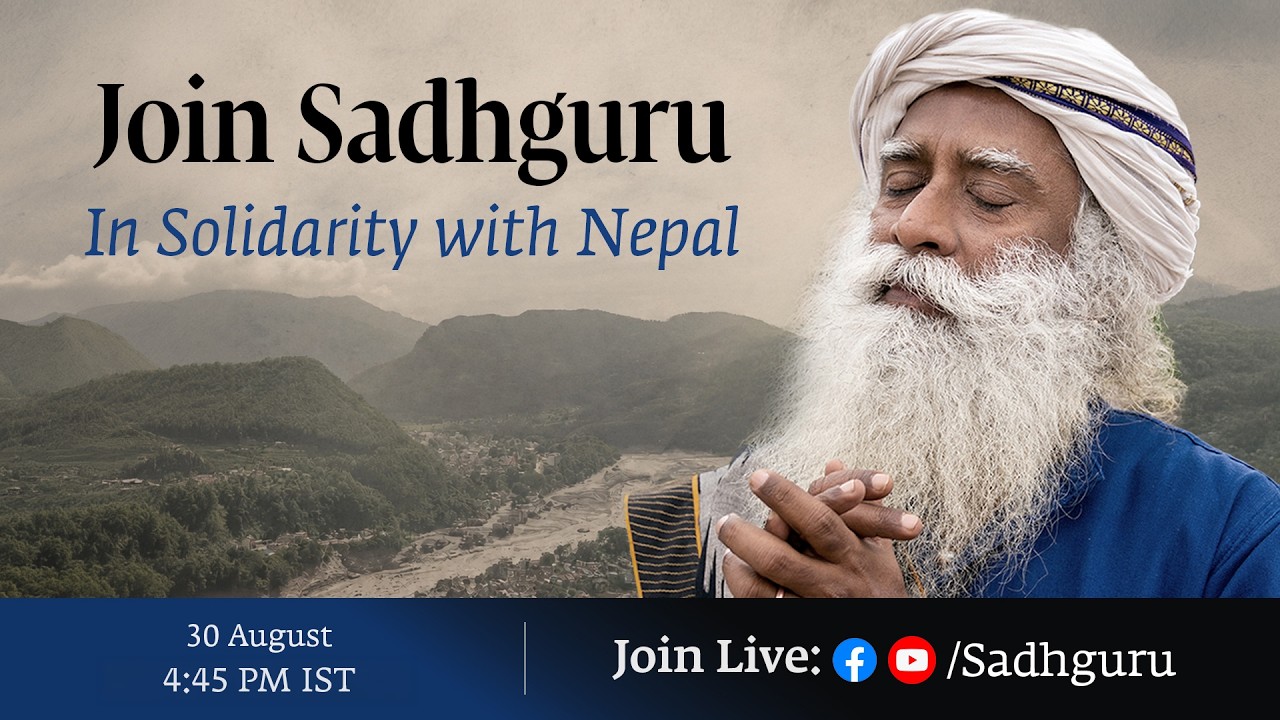
Sadhguru addresses a common assumption about spiritual enlightenment—that advanced practitioners exist in profound isolation. Rather than dismissing loneliness as a spiritual failure, he examines what loneliness actually means for someone who has dissolved the egoic sense of separation. The core insight is that loneliness emerges from a disconnect between one's inner state and external connection, but for those whose consciousness has fundamentally shifted, the nature of that experience transforms entirely. The absence of a constructed self creates a radically different relationship to solitude, presence, and what it means to be "alone."
What Does Loneliness Mean for a Spiritually Evolved Person?
Loneliness is typically understood as painful separation—a gap between oneself and others, arising from unmet needs for connection. For most people, loneliness signals something is wrong: isolation from community, unshared experience, or lack of intimate relationship. Yet this assumes a baseline understanding of "self" that remains constant across all states of consciousness.
When Sadhguru addresses whether he experiences loneliness, he's pointing to a crucial distinction: the experience of being alone changes when the sense of who "you" are changes. In ego-centered consciousness, loneliness arises because the separate self feels cut off from other separate selves. There's a fear of abandonment, a need for validation, an anxiety about being "left out." These are real psychological experiences rooted in the illusion of fundamental separateness.
But in states of expanded or non-dual consciousness, the boundary that creates "me versus others" begins to dissolve. When the sense of individual identity becomes transparent—seen through rather than identified with—the structure that produces loneliness as an emotional pain collapses. This isn't dissociation or numbness; it's a shift in what feels like "self." Without a rigid boundary between inside and outside, the loneliness that depends on that boundary cannot exist in the same way.
The Difference Between Solitude and Loneliness
A critical distinction Sadhguru's question invites is between solitude and loneliness. Solitude is a state of being alone—physically, externally. It can be chosen, peaceful, and generative. Many spiritual practitioners deliberately cultivate solitude through retreat, meditation practice, and minimal external engagement.
Loneliness, by contrast, is a psychological state—a feeling of disconnection, often involuntary. You can be lonely in a crowded room, and you can be alone without feeling lonely. The question Sadhguru implicitly raises is: does enlightenment require or produce loneliness as a byproduct?
For many spiritual traditions, withdrawal from the world has been portrayed as necessary for awakening. Monks retreat to monasteries, yogis to caves, mystics to deserts. Yet this physical withdrawal need not produce psychological loneliness if the inner quality of consciousness has shifted. Someone in deep meditation, alone in a cave, may feel profound connection to existence itself—less lonely than someone scrolling through social media in a city of millions.
Sadhguru's life contradicts the stereotype of the lonely sage. He operates within the world, engages with thousands of seekers, speaks publicly, and builds institutions. His answer to "Do I feel lonely?" cannot be read as simple "yes" or "no." Instead, it opens the question: what would loneliness mean for someone whose sense of separation from others has fundamentally altered?
How Does Consciousness Change the Experience of Isolation?
A central principle in Sadhguru's teaching is that consciousness itself is not individual—that the sense of being a separate "me" is a perceptual overlay on a more fundamental unity. If this is true, then the experience of being isolated depends entirely on how solidly one identifies with the separate self.
In early-stage meditation or spiritual practice, many seekers report feeling more lonely, not less. They become aware of how disconnected they are, how alienated from genuine presence or authentic connection. But as practice deepens, something shifts. The person may spend more time alone (in retreat, in practice), yet the quality of that aloneness transforms. There's less of a felt need to fill the space with others, less anxiety about missing out, less sense of being incomplete without external validation.
This is not coldness or detachment in the pathological sense. Rather, it's a dissolution of the neediness that loneliness depends on. When you're not fundamentally seeking to complete yourself through another person or group, your relationship to solitude becomes lighter. Engagement with others, when it happens, flows from presence rather than hunger.
For someone whose center of gravity has shifted to non-dual awareness, loneliness becomes almost impossible as an involuntary state. Why? Because the existential core of loneliness—the fear of being fundamentally separate and unseen—dissolves when the sense of fundamental separateness itself is seen through. What remains is the capacity to be alone without suffering, and the capacity to engage with others from a place of completeness rather than need.
Does Enlightenment Require Social Withdrawal?
Another layer of Sadhguru's implicit argument is that enlightenment or spiritual maturity does not require becoming a hermit. In fact, one of the markers of genuine realization in many traditions is the ability to engage freely in the world without losing inner stability. Someone who can only maintain peace through isolation may have merely found a comfortable shelter, not transformed their fundamental relationship to existence.
This is why traditions like Zen Buddhism distinguish between the mountaintop sage and the sage who returns to the marketplace. The latter is considered more evolved: not withdrawn but fully present, not isolated but genuinely connected, not lonely because there is no longer a fragmented self seeking completion.
Sadhguru's engagement with the world—teaching, establishing institutions, addressing environmental and social issues—suggests that his spiritual development has not required retreat into loneliness. If anything, it suggests the opposite: that a certain maturity of consciousness allows for deep engagement without being destabilized by it, without falling into the reactivity and neediness that loneliness often masks.
What Loneliness Reveals About Our Sense of Self
The question of whether enlightened beings feel lonely also reveals what loneliness is fundamentally about: it's not about being physically alone, but about being psychologically or existentially alone—feeling that one's true nature is unknown, unseen, unshared. Loneliness is often an expression of the individual self believing it is fundamentally separate, unique in ways that cannot be bridged.
But what if that sense of uniqueness and separateness is itself a misperception? What if, beneath the personality and conditioning, all consciousness is the same fundamental awareness? Then loneliness becomes a kind of existential confusion, a mistaken identity. And the dissolution of loneliness isn't about finding more connection, but about seeing through the illusion of radical separateness in the first place.
This doesn't mean enlightened people feel the same as everyone else, or that emotional complexity disappears. Rather, it means loneliness as a form of existential suffering—rooted in the illusion of being a completely separate, ultimately isolated consciousness—no longer operates in the same way. The person may experience solitude, rest, quietness, preference for depth over breadth in relationships. But they do not experience the pain of loneliness that comes from believing one is fundamentally cut off.
Where to go from here
If Sadhguru's teaching suggests that loneliness is tied to a particular structure of consciousness—one based on the illusion of fundamental separateness—then exploring your own loneliness becomes a contemplative inquiry. When you feel lonely, what is actually happening? Are you physically alone, or are you psychologically cut off? Is the feeling rooted in unmet needs, or in a deeper sense of existential alienation? Begin to notice the difference between solitude (which can be peaceful) and loneliness (which carries a quality of suffering).
Consider also: what parts of your sense of self feel most isolated? Most misunderstood? Most unable to be fully known by another? These edges of isolation often point to places where identity is most rigid, most defended, most invested in being separate and unique. Spiritual practice—whether meditation, inquiry, or other contemplative disciplines—tends to soften these edges, not by making you less unique, but by loosening your investment in separateness as your core reality. From that loosening, loneliness naturally begins to lose its grip.