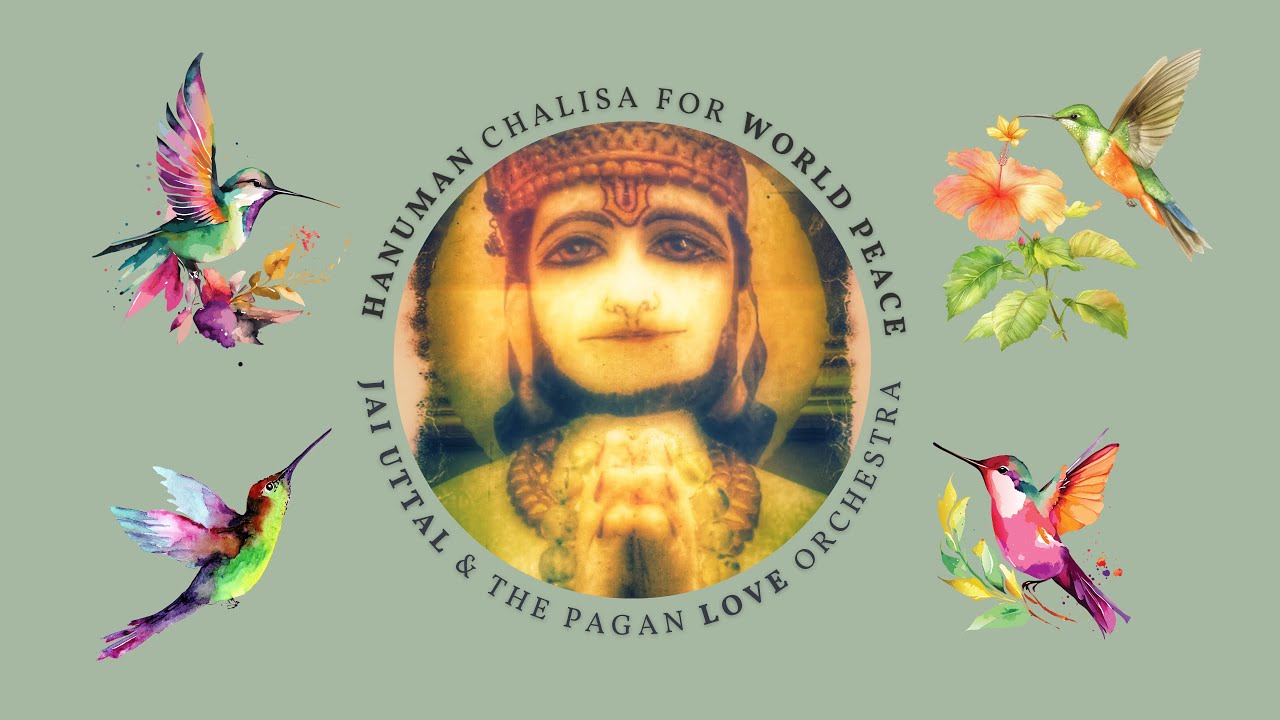
In this live performance from Bhakti Fest 2015, Jai Uttal leads a large ensemble in a genre-blending kirtan that weaves traditional Hare Krishna devotional lyrics with Beatles melodies and newly composed music. The performance demonstrates how ancient mantra practice and Western popular music can coexist within a single devotional framework, creating space for participants across different musical and spiritual backgrounds to engage in collective chanting and call-response singing. This isn't a novelty mashup but an exploration of how the essential function of kirtan—group singing as a path to connection and presence—transcends specific cultural or musical boundaries.
What is Kirtan and How Does It Function as Spiritual Practice?
Kirtan is a participatory call-and-response chanting practice rooted in bhakti (devotional) yoga traditions, particularly those centered on Krishna worship. The practice involves a lead singer offering a melody and lyrical phrase, which the collective then echoes back. This simple structure creates a feedback loop where individual singers dissolve into group consciousness, their attention narrowing to the mantra, the melody, and the shared breath of the room.
Traditional kirtan uses Sanskrit mantras—most famously the Hare Krishna maha-mantra: "Hare Krishna, Hare Krishna, Krishna Krishna, Hare Hare / Hare Rama, Hare Rama, Rama Rama, Hare Hare." These phrases, chanted for centuries, are believed by practitioners to carry specific vibrations that attune the nervous system and consciousness toward the divine. Yet kirtan is not meditation in silence; it is congregational, embodied, and participatory. The group becomes the practice.
How Can Western Music and Eastern Mantras Coexist in One Performance?
Jai Uttal's approach at Bhakti Fest demonstrates a deliberate convergence: the Beatles—themselves products of Western pop culture—wrote songs often concerned with love, connection, and transcendence. Songs like "Help!" carry emotional and thematic resonance that aligns with devotional impulses: the plea for assistance, the recognition of interdependence, the reaching beyond the isolated self.
By layering Hare Krishna lyrics and melodies with Beatles lyrics and new compositional material, Uttal creates a musical space where multiple lineages of seeking are honored simultaneously. This isn't cultural appropriation or dilution; it's an acknowledgment that the impulse to invoke, to sing together, to address something greater than oneself appears across traditions. The mantra functions within this wider musical context as an anchor—a return to a specific, focused invocation that frames and deepens the experience.
The ensemble Uttal assembled for this performance—featuring acoustic and electric guitars, bass, drums, tablas, mridanga (traditional devotional drum), and a large vocal ensemble—creates a sonic container capacious enough to hold multiple musical languages. This is intentional: it lowers the barrier to entry. Someone unfamiliar with Sanskrit or Hindu devotion might recognize the Beatles melody and find themselves already participating. That participation, once begun, opens them to the mantra itself.
What Role Does Group Singing Play in Spiritual Experience?
The performance credits list "a cast of thousands," signaling that this is not a concert in the traditional sense (performer and audience) but a participatory event. Kirtan succeeds precisely through this dissolution of the boundary between singer and listener. Everyone present is invited to sing.
Group singing triggers neurochemical and social changes: synchronized breathing, dopamine release, oxytocin production (associated with bonding), and heart rate coherence. From a subjective standpoint, practitioners report that group kirtan produces a state of expanded awareness, emotional release, and felt connection to others. The repetition of the mantra—the same words, the same melody, over and over—gradually quiets the discursive mind, creating space for direct experience rather than thought about experience.
Uttal's incorporation of new music alongside the traditional mantra keeps the experience fresh while maintaining its core function. The novelty prevents mechanical chanting; the repetition of the core mantra prevents the experience from devolving into mere entertainment. The tension between the familiar (Hare Krishna) and the surprising (Beatles lyrics, new melodies) holds attention in the present moment.
How Do Lyrical and Musical Combinations Deepen Devotional Intent?
When Uttal combines "Help!" with Krishna invocation, he's drawing a parallel between the psychological human cry for support and the spiritual invocation of divine presence. Both songs and mantras operate at the level of *address*—they are utterances directed toward something other than the self. In traditional devotion, this address is directed explicitly toward Krishna or divine reality. In popular music, the address may be more ambiguous (help from whom? assistance toward what?) but the gesture remains: a reaching out, a plea, an acknowledgment that the individual alone is insufficient.
This layering of intent is not decorative. It suggests that devotion itself—the act of singing toward something greater—matters more than the specific theological framework into which that devotion is placed. A person singing "Help!" with mantra awareness may discover that their cry for help and a Krishna devotee's invocation of divine grace are not as separate as they appeared.
The use of new compositions by Uttal further anchors the performance in the present moment. Rather than purely historic texts and melodies, the music generated in real time suggests that this devotional impulse is not preserved in amber but alive, generative, responsive to now. The Beatles were themselves musical innovators; their presence in a devotional context suggests that innovation and tradition, experiment and reverence, can coexist.
What Is the Function of Ensemble and Instrumentation in Kirtan?
The ensemble listed in the credits represents an unusual musical configuration for kirtan. Traditional kirtan often features a single vocalist with hand drums or a harmonium. Here, Uttal uses acoustic and electric guitars, creating a bridge between folk traditions and contemporary rock/pop idioms. The tablas and mridanga (drums essential to Indian classical and devotional music) sit alongside Western percussion (drums, dumbek), creating a polyrhythmic foundation that holds multiple musical vocabularies.
The large vocal ensemble transforms the performance into a collective body. Rather than a single charismatic lead singer performing while others listen, Uttal orchestrates a situation where many voices sing at once—some leading, some supporting, some providing counter-melodies. This mirrors the democratic aspiration of kirtan: no single person's voice dominates the spiritual experience. The collective is the vehicle.
The electric guitar, in particular, deserves attention. Rock and roll electricity, synthesized with mantric repetition, suggests that devotion is not incompatible with contemporary life or modern instrumentation. A person at home with electric amplification and pop music is not excluded from participation in ancient spiritual practice—the music meets them where they are.
Why Does a Performance Like This Matter in 2015 and Beyond?
This performance took place at Bhakti Fest, a gathering explicitly designed to bring together traditional and contemporary approaches to bhakti yoga. By 2015, kirtan had become visible in mainstream American spiritual culture: yoga studios offered kirtan nights, music festivals included kirtan stages, and practitioners like Uttal had developed large followings. Yet this mainstreaming risked domestication—turning a practice rooted in devotion into a feel-good wellness activity stripped of its spiritual dimensions.
Uttal's approach resists this flattening. By insisting on the presence of the mantra alongside Beatles lyrics, by assembling a genuinely multicultural and cross-generational ensemble, by framing the performance as participatory rather than consumable, he asserts that kirtan remains a serious spiritual technology even as it adapts to its new cultural context. The mixing of traditions is not confusion or dilution; it's clarity about what kirtan fundamentally does: it gathers people into shared voice and shared presence.
The title itself—"Hare Krishna/HELP!!!"—with its punctuation and slash, signals this intentional juxtaposition. Not Hare Krishna *or* Help, but Hare Krishna *and* Help, simultaneously. The forward slash creates a both/and rather than an either/or. This grammatical gesture embodies the spiritual claim: that ancient mantra and contemporary cry, tradition and innovation, Eastern and Western, can coexist within a single moment of sincere invocation.
Where to go from here
To deepen engagement with kirtan practice, seek out local sessions in your area—most yoga studios, meditation centers, and communities with Hindu populations offer regular gatherings. If you're drawn to Jai Uttal's approach specifically, his recordings and performances online demonstrate the breadth of his vision. Explore the intersection of your own musical tradition and spiritual yearning: what songs matter to you? What lyrics carry weight? Kirtan's power lies in its accessibility—you need not be Hindu, Sanskrit-fluent, or musically trained to participate. The practice begins when you open your mouth and join your voice to the collective sound.