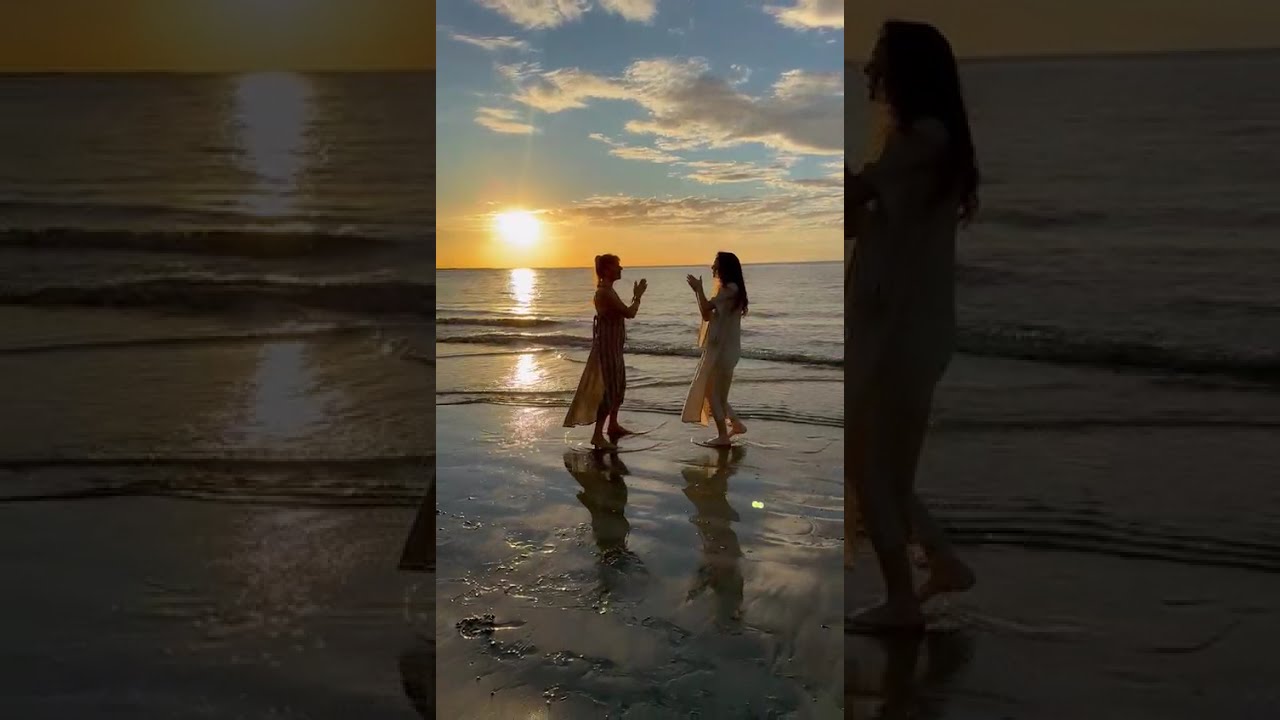
Trevor Hall's "Moon/Sun" is a spiritual music video centered on unwavering commitment, creation mythology, and sacred resilience. The song weaves together themes of natural cycles (moon and sun imagery), divine creation, and the refusal to abandon faith or others through hardship. Shot by Jordan Taylor Wright and produced with elaborate visual effects, the track operates as both a devotional hymn and a meditation on perseverance in the face of life's challenges.
What Is the Core Message of "Moon/Sun"?
The central refrain of "Moon/Sun" is a declaration of non-abandonment: "I won't give up on you." Hall repeats this commitment throughout the track, establishing it as the emotional and spiritual anchor of the song. The repetition is not merely melodic—it functions as a mantra, a vow that frames the entire listening experience. The phrase appears at multiple points in the composition, creating a cyclical structure that mirrors the very moon-and-sun imagery the title invokes. This consistency suggests that the song is not about temporary inspiration but about the practice of sustained commitment, whether to a spiritual path, to another person, or to oneself.
The opening lines—"here we go again creation God for the jubilation"—establish an atmosphere of reverence and cyclical renewal. The phrase "here we go again" acknowledges that this is not a one-time spiritual awakening but an ongoing practice, a return to the altar repeatedly. The invocation of "creation God" ties the personal journey to cosmological themes, suggesting that the speaker sees their own perseverance as aligned with divine creativity and renewal.
How Do Natural Cycles Inform the Spiritual Landscape?
The moon/sun dichotomy is a archetypal pairing in spiritual traditions. The moon represents intuition, the feminine, the inner night, rest, and cyclical time. The sun represents clarity, the masculine, external illumination, and linear progress. By titling the work "Moon/Sun," Hall suggests that spiritual resilience requires honoring both states—the darkness and the light, the receptive and the active. This is not a song that chooses one over the other but rather celebrates their interdependence.
Lyrically, Hall invokes oceanic imagery throughout the track: "like ocean wave with powerful constellation," "I see the ocean holy motion ride that float." Oceans are governed by tidal cycles tied to the moon; they embody both the calm and the turbulent, both surface ripple and deep undercurrent. By positioning the listener in this fluid, lunar-influenced landscape, Hall creates a sonic environment where change and constancy coexist. The ocean does not resist its tides; it is the tides. Similarly, the song suggests that spiritual practice involves not fighting against life's cycles but moving with them.
What Role Does the Refusal to Surrender Play?
The repeated commitment "I won't give up on you" is coupled with a parallel refusal: "I won't give up are you." The shift from object to subject here is significant. Hall is not only refusing to abandon the listener; he is asking the listener to refuse to abandon themselves or others. This reciprocal structure suggests that resilience is not a solo achievement but a collective practice, something that requires mutual commitment.
In many spiritual traditions, the willingness to persist in faith despite doubt, darkness, or difficulty is considered a cardinal virtue. Hall's insistence on this theme—repeating the phrase "I won't give up" multiple times in rapid succession—emphasizes that this commitment is not intellectual assent but embodied practice. The song's structure mirrors the internal work of repeatedly choosing faith, repeatedly choosing not to abandon, again and again.
How Does the Visual Narrative Support the Lyrical Themes?
The music video, directed by Jordan Taylor Wright and shot by Chuck Pappas, complements the lyrical content with a visual narrative rooted in creation mythology and natural splendor. The production credits list Igor Martins (UP Inspiring Motion) for visual effects, suggesting that the video incorporates mystical or transcendent imagery beyond straightforward performance footage. While the transcript does not provide detailed visual description, the production quality and artistic choices indicate that the video is designed to elevate the song from personal devotion to cosmic meditation.
The visual and sonic together create an immersive experience: the listener is not simply hearing about spiritual commitment but is invited into a world where that commitment feels natural, even inevitable. The combination of natural imagery (ocean, waves, constellations) with artistic production suggests that the sacred is not separate from the created world but infused throughout it.
What Is the Significance of the "Shangri-La" Reference?
Hall sings, "I see you live in the park of shangri-la / I see my my she standing holding all those colors filled with glory." Shangri-La is a mythical Himalayan kingdom representing an earthly paradise, a place of spiritual peace and harmony. By positioning the beloved (or the inner self, or the divine) in this idealized space, Hall is not denying the reality of struggle but rather insisting that paradise is perceptible even now, in the present moment. The colors, the glory—these are available to vision if one learns to see.
This is a crucial shift in spiritual perspective. The song does not promise that commitment will deliver external rewards or remove hardship. Instead, it suggests that the practice of commitment itself opens perception: "open up and hear the story." The story—presumably the story of creation, of divine action, of one's own unfolding life—is always present, waiting to be heard. The refusal to give up is thus a refusal to close one's eyes and ears to this ongoing revelation.
What Is the Relationship Between Childhood and Sacred Practice?
Hall includes the line "we sing like a child," suggesting that sacred practice requires recovering or maintaining a quality of childlike openness, wonder, and uninhibited expression. Children sing without self-consciousness, without the armor of adult skepticism. The invocation here suggests that the path of spiritual commitment is not one of increasing complexity or intellectual sophistication but rather a return to simplicity, to singing as an end in itself rather than a means to an end.
This aligns with many contemplative traditions that emphasize letting go of conceptual overlay and returning to direct experience. The song, through its music and repetition, invites the listener to do precisely this: to sing along, to participate, to move beyond the analyzing mind into the singing body.
How Does the Track Function as a Devotional Practice?
Across many spiritual traditions, repetitive chanting, hymn-singing, and musical devotion serve as central practices. The Bhakti traditions of Hinduism, for instance, use kirtan (call-and-response devotional singing) as a direct path to transformation. Christian hymnody functions similarly. Trevor Hall, who has expressed Hindu and Christian influences in his work, structures "Moon/Sun" in ways that invite this kind of participatory devotion. The repeated refrains are designed to be sung, internalized, embodied.
The song is not asking the listener to understand an idea intellectually but to join in a practice of affirmation. Each repetition of "I won't give up on you" is an act of recommitment, a reinforcement of the vow. In this sense, listening to the song is not passive consumption but active spiritual work—the listener is being invited to join Hall in the ongoing practice of refusing to abandon.
Where to Go From Here
If "Moon/Sun" resonates with you, consider exploring Trevor Hall's broader catalog, which frequently bridges folk, spiritual, and contemplative music traditions. Beyond Hall's work, you might investigate devotional music practices more generally—kirtan circles, Christian hymn traditions, or secular contexts where group singing and repetitive affirmation create community and transformation. Consider also the role of natural cycles and mythology in your own spiritual practice: Where do you see the moon and sun in your own journey? What rhythms (daily, seasonal, lifecyclic) structure your experience?
Finally, reflect on the practice of commitment itself. Hall's central message is not about grand gestures but about repeated, small acts of choosing not to give up—on others, on oneself, on the possibility of perceiving the sacred in the present moment. What would it mean, in your own life, to embody this refusal? Not as perfectionism or grim determination, but as a return, again and again, to simplicity and song.