What is "Retoño Mío"?
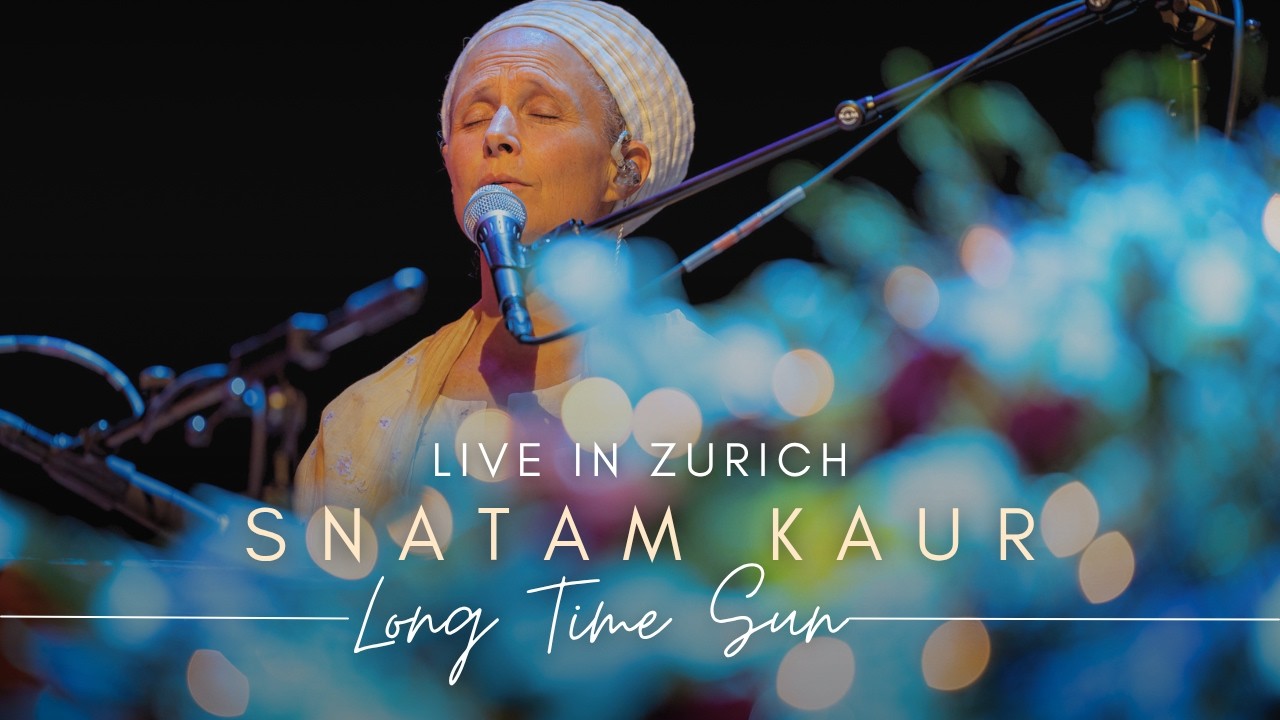
"Retoño Mío" (My Child, or literally "My Sprout") is a bilingual spiritual composition by Snatam Kaur that frames a mother's blessing to her child. Sung in both Spanish and English, the piece weaves together themes of divine remembrance, protection, and ancestral purification. The song operates not as a simple lullaby, but as a comprehensive spiritual teaching delivered through a mother's voice—a device that grounds abstract spiritual concepts in the intimate relationship between parent and child. The blessing calls upon the child to center their entire life around God-remembrance (Smaran), making this act the foundation of all spiritual practice and virtue.
The work draws from Sikh spiritual tradition, specifically echoing the language and concerns of Guru Granth Sahib—the Sikh holy scripture. The central premise is that remembering God purifies past errors, heals ancestral lineages, and creates conditions for inner joy and protection. Rather than offering external guarantees or worldly success, the mother's blessing directs her child toward practices and attitudes that generate spiritual transformation from within.
How does the blessing frame spiritual practice?
The blessing operates through a series of specific invocations rather than commands. Instead of saying "You must do X," the mother says "May you receive X" or "May this be true for you." This gentle structure respects the child's agency while creating a field of spiritual intention. The blessing names concrete practices: never forgetting God even for a moment, continuous worship of the Lord of the Universe, and constant chanting of the divine name "Har Har" (a Sanskrit invocation of God's creative power).
Central to the blessing is the principle that God-remembrance (Smaran) purifies all errors and mistakes. This is not a transactional forgiveness—pay a price, receive absolution—but rather a natural law of consciousness. When the mind aligns with the divine, the heavy weight of past actions dissolves. The blessing extends this purification beyond the individual child to include all ancestors: "Recordando a Dios todos los errores son purificados / Y todos nuestros ancestros son acogidos y salvados" (Remembering God, all errors are purified / And all our ancestors are received and saved). This expands the scope of spiritual work from personal redemption to intergenerational healing.
What protections and conditions does the blessing invoke?
The blessing names nine specific conditions or blessings the mother calls into her child's life:
- True guru's grace: "Que el verdadero gurú te sea amable" (May the true guru be kind to you). In spiritual traditions, the guru represents the teacher or guide who awakens consciousness.
- Holy company: "Que ames estar en compañía de santos" (May you love being in the company of saints). Association with spiritually developed beings is understood as contagious—their consciousness influences those around them.
- Divine garment: "Que tu prenda de vestir sea la protección de Dios" (May your garment be God's protection). This poetic language suggests that divine consciousness itself becomes the child's shield and covering.
- Divine sustenance: "Que tu sustento sea el canto de la alabanza de Dios" (May your sustenance be the song of God's praise). The child's nourishment—physical, emotional, spiritual—flows from praising the divine.
- Eternal life through the divine name: "Bebe el néctar del nombre de Dios y vive una larga vida" (Drink the nectar of God's name and live a long life). The name of God is presented as nectar—sweet, vital, life-giving.
- Unceasing joy: "Que la meditación en Dios te traiga dicha incesante" (May meditation on God bring you unceasing bliss). Meditation is not a practice one does but a state that generates continuous joy.
- Fulfilled love and desire: "Que el amor sea tuyo propio y tus deseos se cumplan" (May love be your own and your desires be fulfilled). This suggests that authentic love and the fulfillment of genuine desires flow naturally from divine alignment.
- Freedom from worry: "Que la preocupación nunca te consuma" (May worry never consume you). Worry is understood as a form of spiritual forgetting—when God is remembered, anxiety loses its grip.
- Right relationship with the mind: "Haz de tu mente el abejorro / Y que los pies de loto de Dios sean la flor" (Make your mind the bee / And let the lotus feet of God be the flower). This metaphor suggests the mind should seek the nectar of God's presence, as a bee seeks nectar in a flower.
What is the significance of the bee and raindrop metaphor?
Near the end of the blessing, a striking image appears: "Como el gavilán encuentra la gota de lluvia y prospera" (Like the hawk finds the raindrop and prospers). The image shifts from bee-and-flower to hawk-and-raindrop. In Sikh poetry, the hawk (often called a "shaheen" in Urdu/Persian mystical tradition) is sometimes used to represent a spiritually acute being who can identify and isolate one vital drop among vastness. The raindrop represents a moment of grace or divine contact. The blessing suggests that just as a hawk can find one drop of water in a vast landscape and drink it to sustain itself, the child should learn to recognize and seize moments of divine connection in the midst of ordinary life.
This image conveys a teaching about spiritual discernment and sustenance: the spiritual path does not require grand external conditions but rather the ability to recognize the sacred in what is immediately available. The child does not need the whole ocean—one drop, identified and received with full attention, provides everything needed to prosper.
How does the song invoke ancestral healing?
A distinctive feature of "Retoño Mío" is its explicit healing of ancestral lineages. The blessing states that through God-remembrance, not only are personal errors purified but "todos nuestros ancestros son acogidos y salvados" (all our ancestors are received and saved). This reflects a Sikh understanding that consciousness and spiritual states are not confined to individual lifetimes but ripple through family systems and ancestral lines.
By invoking this blessing upon the child, the mother is also directing healing energy backward through time—to all those who came before, whose struggles and missteps contributed to the present moment. This is not ancestor worship but rather a recognition that the spiritual work of the living can create conditions of grace that touch the dead. It suggests that the child's spiritual commitment serves a function larger than personal salvation: it heals the past and creates conditions for ancestors to experience peace.
What does the closing invocation reveal?
The blessing ends by invoking Nanak, the first Guru of Sikhism, as a witness and model: "Oh sirviente Nanak, ata tu mente de esta manera" (O servant Nanak, bind your mind in this way). This grounds the blessing in a specific spiritual lineage and suggests that the path described is not new or abstract but has been walked by saints and teachers. Nanak becomes a companion in the practice, someone who understood and embodied the principles the mother is passing to her child.
The closing repetition of the blessing's opening lines—the child is reminded once more to never forget God, and that remembrance purifies all errors and heals ancestors—emphasizes that this is the cardinal teaching. All other invocations flow from or serve this central practice of continuous God-remembrance.
Why does language choice matter in this blessing?
The bilingual structure of "Retoño Mío" (Spanish and English) is not merely ornamental. It suggests that the blessing transcends any single culture or nationality. A mother blesses her child in the language the child speaks, making the teaching accessible and intimate. By offering the blessing in two languages, Snatam Kaur extends it to Spanish-speaking and English-speaking communities, suggesting that the path of God-remembrance and divine protection is universal—not limited by ethnicity, nation, or mother tongue. The blessing becomes portable, able to reach children of the diaspora, bilingual families, and anyone who hears the words in their own language.
Where to go from here
Those drawn to "Retoño Mío" might explore deeper practices of Naam Simran (continuous remembrance of God's name) within Sikh and broader Hindu and yogic traditions. Snatam Kaur has recorded numerous devotional songs that work with sacred sounds and invocations—exploring her broader catalog offers different angles on the themes of divine remembrance and protection. For those interested in ancestral healing and how spiritual practice ripples through family systems, the work of family constellations therapists like Bert Hellinger or the trauma-informed approaches of therapists working with intergenerational healing offer complementary perspectives. Finally, seekers might consider how they personally relate to the idea of continuous remembrance—not as an obligation but as the source of joy, protection, and the purification of past burdens.