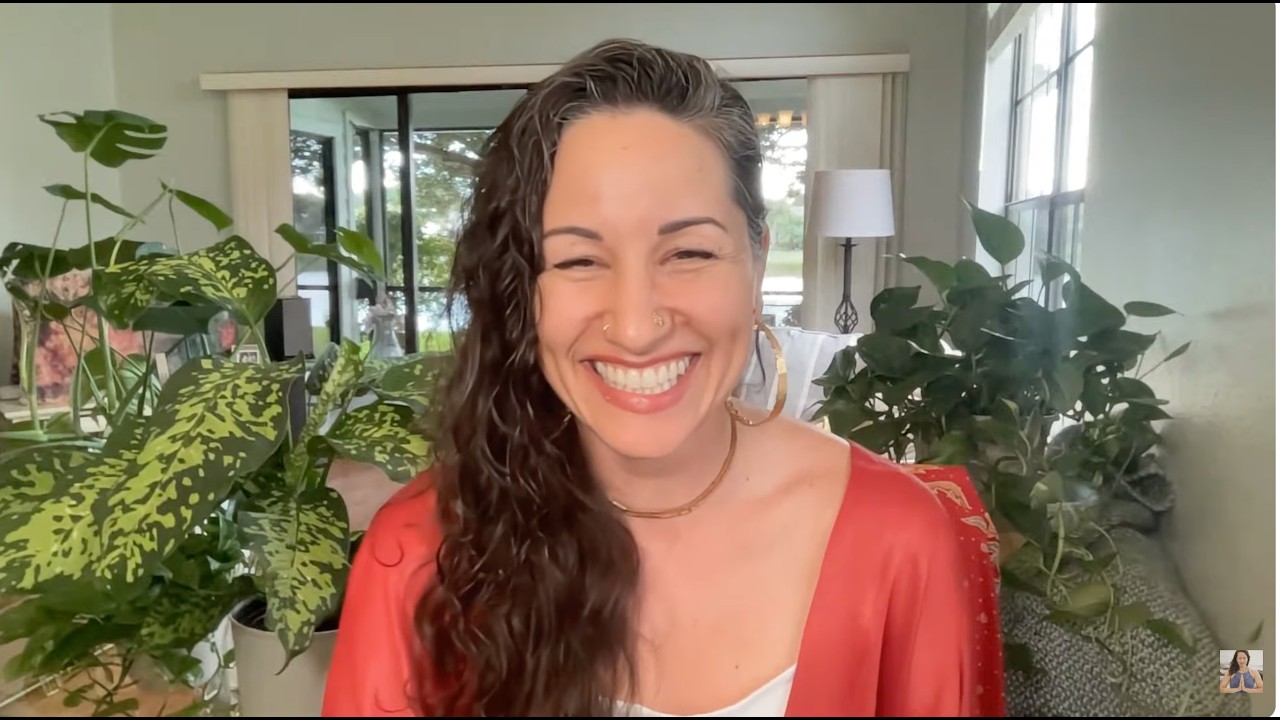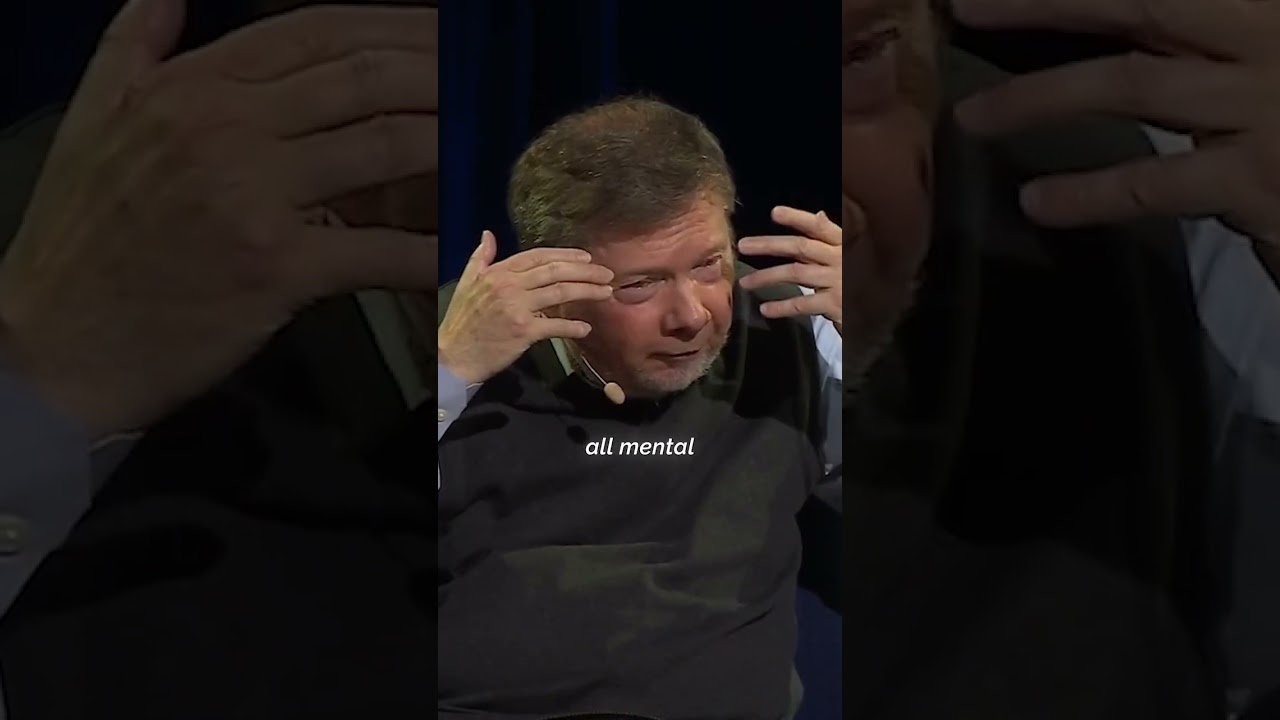
Byron Katie conducts a live session of The Work with a woman struggling with the belief "I need a partner to be happy." Through systematic questioning, Katie helps her examine the thoughts and imagined scenarios—of future loneliness, of other people at reunions with partners, of lack of human touch—that generate suffering in the present. Katie distinguishes between the actual present moment (in which the woman is fine) and the mental movie of a lonely future (which causes all the pain). By turning the statement around to "I don't need a partner" and "I don't want a partner," the woman discovers that the imagined future, not her current reality, is the source of her despair. The Work reveals that self-love and presence matter more than finding a partner, and that when someone is at peace with themselves, partnership becomes secondary to freedom.
What Is The Work and How Does It Address Romantic Loneliness?
The Work of Byron Katie is a four-question inquiry process designed to help people examine the beliefs that cause suffering. In this session, Katie works with a woman whose primary fear is "being totally alone without ever having a partner again" and living out her remaining years in solitude. Rather than offering reassurance or positive thinking, Katie uses systematic questioning to reveal the structure of the woman's suffering. The woman reveals her worry spans a 85-year horizon—she imagines herself at 102 years old, still single, still eating dinners alone, unable to bring a partner to family reunions, waking and falling asleep without human touch. This imagined future feels vividly real to her, yet it exists only as a mental construct.
Katie's core insight is that the suffering comes not from the lack of a partner in the present moment, but from the thought about the lack of a partner, combined with images of a lonely future. When Katie asks the woman, "You're 102 years old, sitting in a chair, all alone. To be happy, do you need a partner—is it true?" the woman pauses and realizes that even in that scenario, she could be at peace. In fact, she says she hopes that by then she'll have been "doing the Work for 85 years" and won't need a partner. Katie notes: "I think you've been in some good company for those 85 years—your own." This reframes the entire inquiry: the question is not whether a partner will come, but whether the woman can befriend herself in the meantime.
How Do Imagined Futures About Romantic Partners Cause Suffering?
Katie introduces a core teaching: "It's not possible to feel fear if you're not witnessing a movie of you as the identity in a future." When the woman closes her eyes and explores what happens when she thinks the thought "I need a partner," she describes feeling "huge tightness in my stomach." Katie asks her to observe the mental images associated with that thought. The woman describes seeing herself at family reunions, at the market, walking down the street—always without a partner, while everyone around her has one and appears happy. She compares her imagined solitary self to the imagined coupled people and feels sadness.
This is Katie's key distinction: the suffering is not real loss (she doesn't have a partner yet, yes, but she is alive and present right now), but rather a vivid mental movie playing on loop. Katie uses the metaphor of dreaming: "You know at night when you're dreaming and you wake up and you think, 'Oh god, that was just a dream'? Well, your phone rings, the dream is over, and you say hello. That phone woke you up out of the dream of this imaginary future where it never changes—you're always going to be alone—and that is a very sad movie." The woman is, in effect, watching a waking dream, believing it as though it were real, and experiencing the emotion that comes with witnessing it.
Katie then strips away the mental movie and asks: "Other than what you're thinking and believing, are you okay [sitting at home at 102, alone]?" The woman replies: "Yeah. If I'm 102, I'm probably sitting there doing a puzzle or something." This is the pivot point: when the imagined future is removed, the present moment is not inherently painful. The woman is fine. The mind is the cause of the suffering, not the actual circumstance. Katie says: "You see that it's the mind that's the cause of your suffering. And you're not guilty—it's not your fault. It's a movie. You're asleep. You're asleep. Lack of awareness. Awareness is just being awake to the dream."
What Happens When You Turn the Belief Around?
The Work's final step is "the turnaround," in which the original statement is reversed or reframed to reveal alternative perspectives. Katie asks the woman to turn around "I need a partner" to "I don't need a partner." Sitting alone in the moment, the woman realizes: "No, I don't need a partner in this moment. Are you okay without a partner in this moment?" "Yeah," she replies. "I like doing puzzles by myself better anyway." Katie responds, "So far, life is looking good—in this moment." This turnaround exposes that the "need" for a partner is not absolute; it's a belief overlaid on the present, not a statement of actual fact.
When examining the statement "I want a partner," Katie pushes deeper. She asks: "Are you sure? Really consider that." The woman feels "a clench" that initially says yes, but acknowledges that with more time, the answer would be no. Katie then asks a pointed question: "How would you know? I mean, how would you know until you have one?" This is a radical inquiry into the nature of desire. The woman has created an imagined partner—a man who meets specific criteria (height, age, interests), who loves her and has no conflicts. But Katie points out: "When you find a partner, your dream husband, now you have two, and one cannot live. Your husband can never live up to your dream husband. It's not possible. The man you thought he was is not the man he was." This joke-like observation contains profound truth: we marry or partner with a real person, but we're often comparing them to an imagined ideal, and the real person always falls short.
What Role Does Desperation Play in Dating and Connection?
Katie asks the woman to describe what she experiences when she's around men and believing the thought "I want a partner." The woman's honest answer is: "There's a desperation, and I can't see people in the moment. I'm already concocting stories about attractive men I meet. Someone will say something in their online profile and like my profile and I'll have this story like, 'Oh! He's into honesty also. This is going to be great.' And it's ridiculous and it drives people away because they don't want a story attached to them."
Katie's response points to a paradox: the woman's attempt to attract a partner by constructing a story or facade actually repels people. She says: "Imagine your life without the thought 'I want a partner.' Your smile is natural, your laugh is natural. Your words are honest. No motives. Then when someone falls in love with you, they've got the real deal. When they say, 'I love you,' it's you they love, not the facade you use to attract them." This suggests that the path to partnership, ironically, may run through releasing the obsession with finding a partner. When someone is present, authentic, and not performing for an imagined outcome, they become magnetic to others. The desperation, the story-making, the projection of a future romance—these things create the very distance the woman is trying to close.
What Does It Mean to Be the Beloved?
A recurring theme in Katie's teaching during this session is the idea that the woman herself is the beloved—the one she is seeking in an external partner. Katie says: "Until you find out that you are the beloved." She emphasizes this by repeating a statement from her own life: "For me, it's the joy of being with Stephen or without Stephen. One is equally as divine as the other. You are the beloved. You're the one you want. You're the one you need. You're the one who is always there for you."
This is not about narcissism or rejecting the possibility of partnership. Rather, it points to a foundational relationship: the one the woman has with herself. If that relationship is characterized by self-abandonment, neediness, or desperation, then any partnership will be rooted in those same patterns. But if the woman can become her own beloved—present with herself, delighted by her own company, comfortable in solitude—then partnership, if it comes, will be an addition to an already-full life, not an attempt to fill an internal void. Katie notes: "When you're not in touch with yourself, it's a lonely world, with or without a partner." This is the crux: loneliness is a state of self-disconnection, not a reflection of marital status.
Why Is The Present Moment So Difficult to Access When Desiring a Partner?
Throughout the session, Katie highlights a recurring pattern: the woman is unable to be present with people because her mind is always elsewhere. When she meets someone, she's constructing a future story rather than seeing the person in front of her. When she imagines being 102 and alone, she's not actually 102; she's ruminating about a hypothetical future. Katie teaches that sadness, fear, and desperation all require a detour from the present moment. They require imagining an identity (the lonely future self) and witnessing that imagined scenario with emotion.
One audience member comments, "They may not like cats," and the woman laughs, recognizing this as "a huge one" for her. This small exchange illustrates how the mind projects unresolved conflicts onto potential partners. The woman hasn't found a partner, but she's already imagining that he might not like her cats, or she's sacrificing her cats for him, or some version of conflict exists. None of this is real; it's all future-and-past thinking.
Katie repeatedly returns to the actual present moment. Even when discussing the desire for human touch—which the woman identifies as crucial to her vision of partnership—Katie asks her to examine the turnaround: "I don't want human touch." The woman initially resists, but then reveals: "When he's trying to touch me, like if he touches you one place and that's not where you want to be touched... until you find out that you are the beloved." This opens a surprising avenue: sometimes the blocks to intimacy are internal. A woman who isn't comfortable in her own body, who hasn't befriended her own skin and presence, will struggle with even the physical intimacy she imagines needing from a partner.
What Is the Relationship Between Solitude and Freedom?
Toward the end of the session, Katie introduces another turnaround: "Life should relent and let me find warm human love." The woman reframes this as: "I should be my partner in my life," and Katie affirms: "You know what that means to me? That you would be choosing the relationship with yourself above all others. And when the choice is that, then you're free." Freedom, in this model, is not the absence of relationship; it's the priority of self-relationship. Katie notes that "my freedom comes first," which doesn't preclude partnership but does reorder the hierarchy of needs.
Katie acknowledges that "some people pray for solitude," and she doesn't dismiss the genuine human longing for companionship. But she distinguishes between the reality of solitude and the story about solitude. A woman can be alone without the mental narrative of "I will always be alone." She can be single without the belief "I'm incomplete." This distinction transforms the experience of being alone from a prison sentence into an opportunity for self-discovery and genuine rest.
Where to Go From Here
The Work invites anyone struggling with romantic loneliness to examine their own beliefs and the mental movies they're projecting. Start by asking: What is the belief I hold about needing a partner? Write it down. Then, close your eyes and notice what images, scenarios, and emotions arise when you think that thought. Are you seeing a past hurt? A future without partnership? A comparison between yourself and coupled people? Recognize that these are mental constructs, not the present moment. Ask yourself: Is it true that I need a partner to be happy—not to desire partnership, but to need it for happiness? What would my actual present moment be like without the thought? Am I okay, right now, in this moment, alone? Finally, turn the statement around: What is the opposite? Can I find examples where the opposite is true? These questions are the gateway to The Work and to a deeper investigation of what's really driving the loneliness you feel. For more resources, visit www.thework.com.